INTRODUCTION
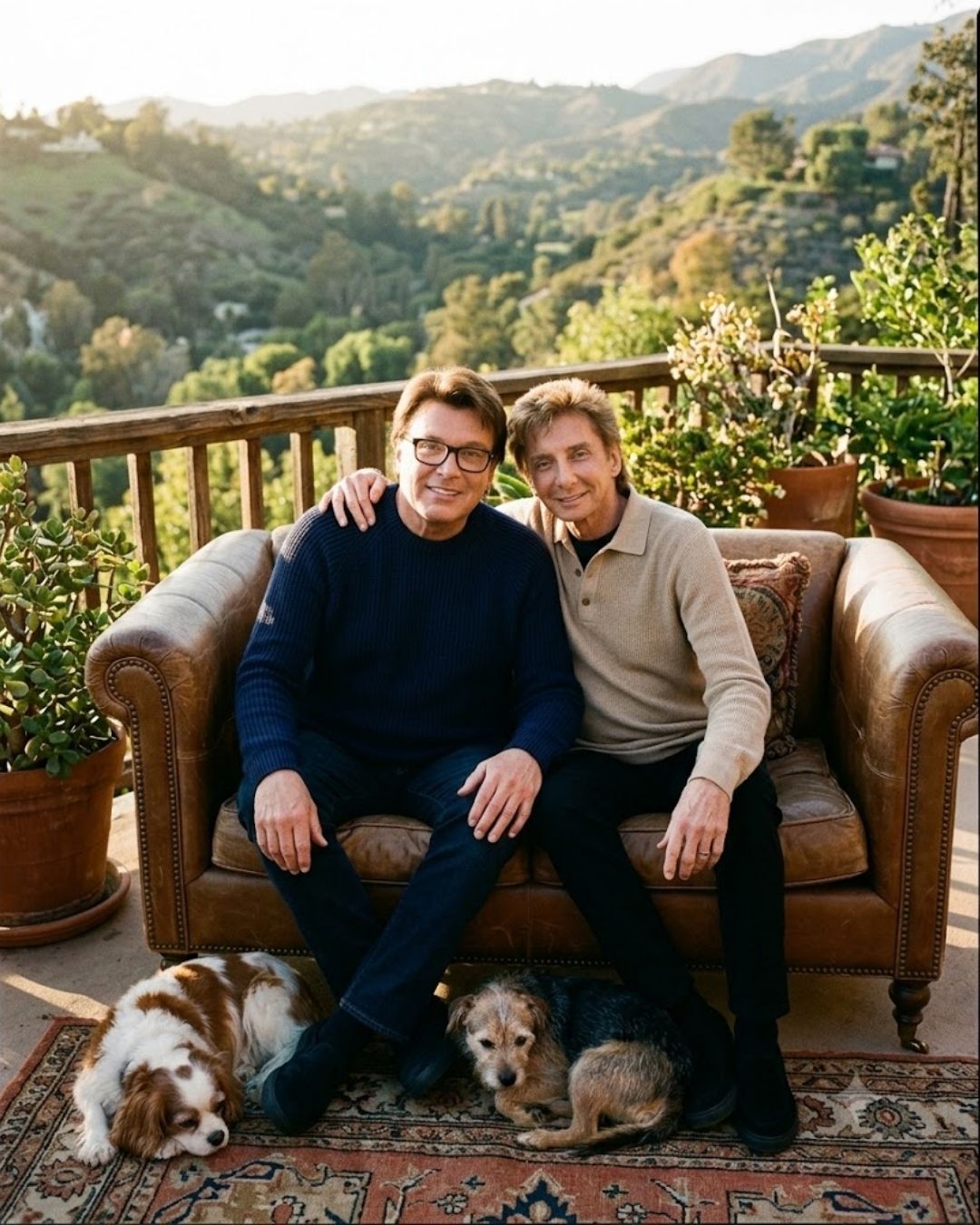
High above the glittering sprawl of Palm Springs, behind the secluded gates of a hillside estate, the soundtrack to Barry Manilow’s extraordinary life is not the roar of a stadium crowd, but the soft footsteps of two rescue dogs and the quiet presence of Garry Kief. For nearly five decades, this sanctuary remained one of modern pop music’s most carefully guarded truths. While the world celebrated anthems like “Mandy” and “Copacabana,” the man behind the grand piano navigated a rigorous, unspoken contract with mid-century celebrity culture: surrender everything to the public, except the one thing that keeps you grounded. Today, at 83, the legendary showman views this enduring partnership not merely as companionship, but as his greatest earthly triumph. How did two men quietly navigate five decades of fame while keeping their sacred bond completely uncompromised?
THE DETAILED STORY
When Barry Manilow and television executive Garry Kief first crossed paths in 1978, the singer was already an inescapable cultural phenomenon. Hit records dominated the Billboard charts, network specials drew millions of households, and the demands of relentless global touring threatened to consume him. Kief soon stepped in as Manilow’s manager and president of Stiletto Entertainment, orchestrating a business empire that generated hundreds of millions of dollars while fiercely protecting Manilow’s creative autonomy. Yet, beneath the commercial triumphs lay an industry profoundly hostile to non-conforming personal identities. In the cultural landscape of the late 1970s and 1980s, public candor regarding his personal life carried the immediate threat of institutional boycotts and career derailment.
Faced with these unforgiving stakes, the pair forged an unspoken agreement of absolute discretion. Their commitment was never about denial; it was a deliberate strategy of artistic preservation. While contemporary public figures were frequently consumed by the tabloid press, Manilow and Kief cultivated an unshakable domestic foundation away from the cameras. In 2014, following decades of quiet devotion, they formalized their union in an intimate ceremony at their private estate, an event kept confidential until reports surfaced in April 2015. When Manilow formally addressed his marriage in 2017, the reaction was not the career catastrophe once feared, but a nationwide outpouring of affection from generations of fans.
Reflecting on their forty-eight-year journey, Manilow views that hard-won privacy as the anchor that sustained his half-century residency at the summit of live entertainment. Rather than expressing regret over the decades spent out of the spotlight, he frames their journey as an inevitable path that preserved his art while protecting the profound peace of home. Today, overlooking the desert hills, their enduring bond stands as a powerful testament to the idea that true longevity in show business is not measured by relentless public exposure, but by the quiet loyalty that waits when the stage lights finally fade.