INTRODUCTION
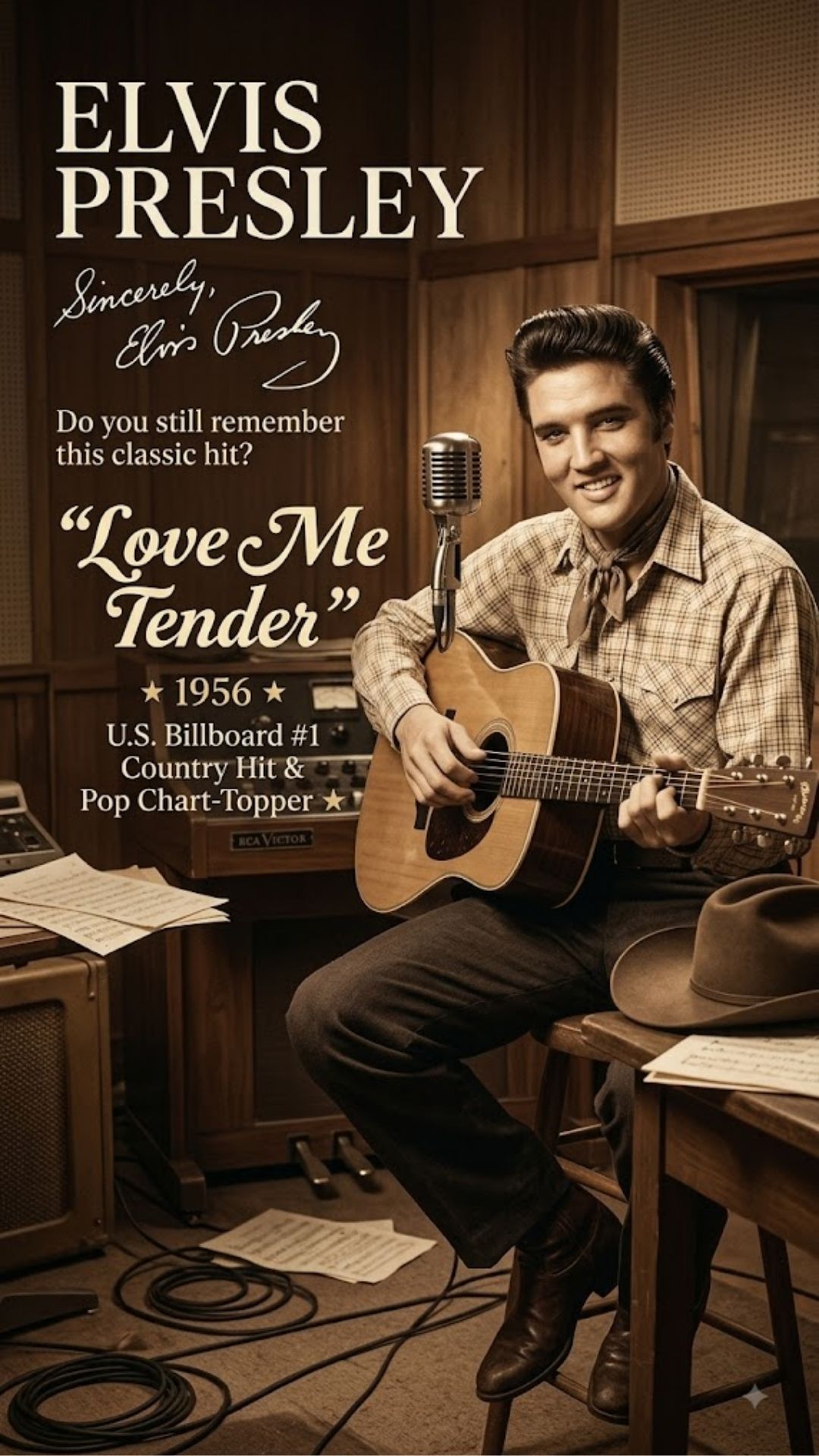
On August 24, 1956, inside a Hollywood soundstage, Elvis Presley stood alone before a single microphone without his explosive rhythm section. Stripping away all ferocious rock antics, he delivered an intimate, acoustic lullaby adapted from a historic folk tradition. How did this quiet studio experiment shatter national sales records and redefine his entire musical identity forever?
THE DETAILED STORY
When film producer David Weisbart began developing the 1956 historical Western originally titled The Reno Brothers, studio executives at 20th Century Fox wanted a poignant musical centerpiece that could reflect the emotional weight of Civil War America. Musical director Ken Darby turned to Aura Lee, a sentimental folk ballad composed in 1861 by George R. Poulton. Darby adapted the traditional melody with tender new lyrics, carefully tailoring the vocal phrasing to suit the natural baritone resonance of Elvis Presley. Rather than relying on loud rhythm sections or heavy orchestration, the arrangement preserved a delicate, acoustic simplicity where every nuanced vocal inflection could convey genuine emotional intimacy.
Recording at Fox Stage One, Elvis chose not to use his standard backing band, stripping the accompaniment down to acoustic guitars and the backing harmonies of The Ken Darby Trio. By tapping rhythmically on the body of his guitar, he established a subtle percussive pulse that grounded the romantic ballad without overpowering its softness. On September 9, 1956, Elvis performed the song before an estimated sixty million television viewers on The Ed Sullivan Show. Dressed in a formal suit and standing relatively still, he astonished the nation by replacing his trademark wild gyrations with pure melodic sincerity and heartfelt restraint.
The television broadcast sparked an immediate national sensation, generating over one million advance orders before the record was even pressed, securing a gold certification prior to official retail release. Stunned by the extraordinary public demand, studio executives capitalized on the momentum by renaming the entire feature film to Love Me Tender. The single officially entered the music charts, rapidly dismantled existing broadcast records, and held number one for five weeks on the Billboard Top 100, dominating radio airplay across multiple generations of listeners.
This monumental achievement decisively dismantled the prevailing critical belief that Elvis was merely a fleeting youth novelty reliant on shocking stage antics. It showcased his extraordinary artistic versatility, proving he could master traditional pop phrasing with the soulful warmth and discipline of a seasoned balladeer. Decades later, Love Me Tender remains an enduring cornerstone of twentieth-century American music, illustrating how gentle vulnerability and pure melody can leave a more permanent cultural mark than sheer volume.