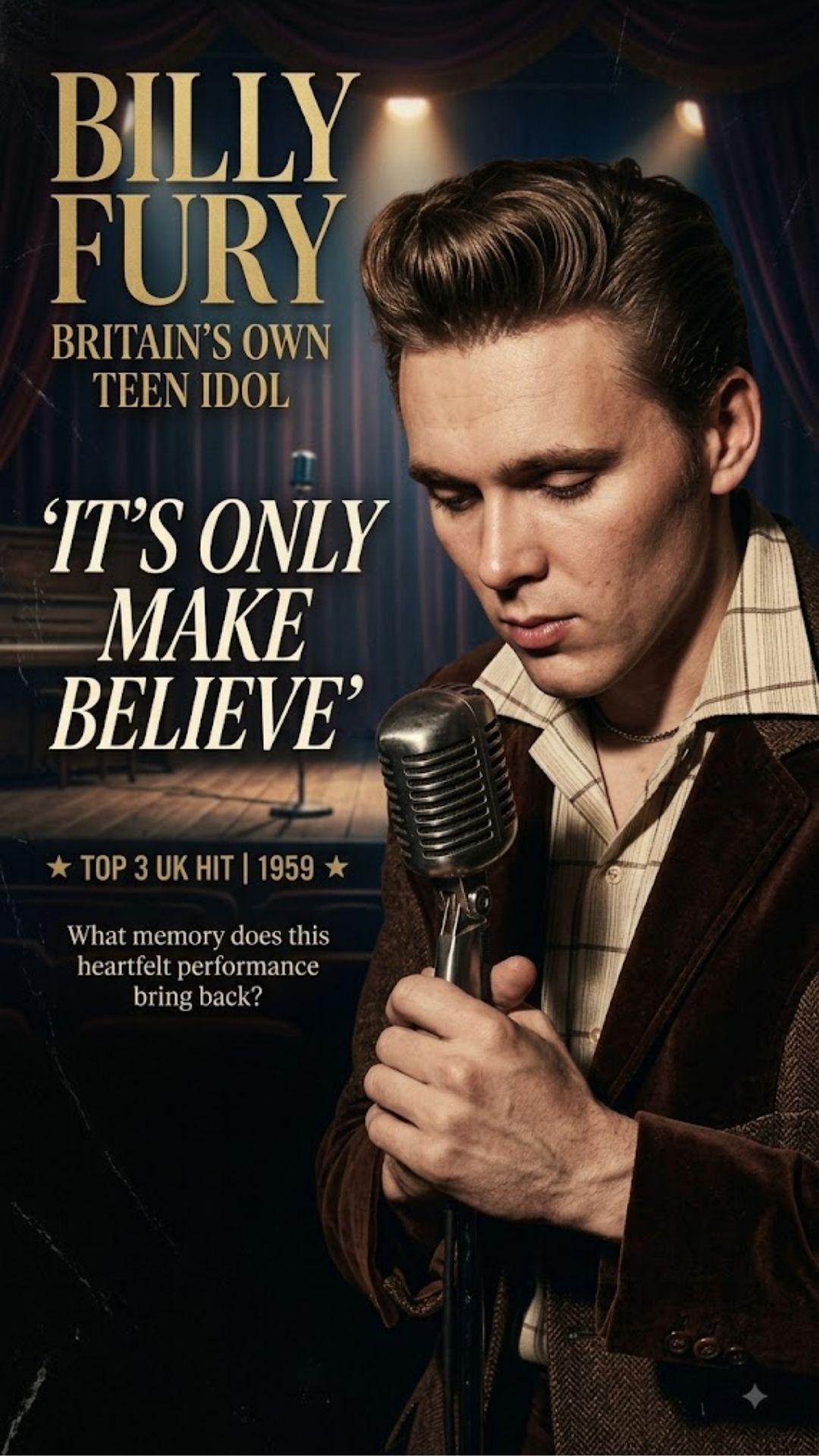
Few singers could capture unrequited longing with the raw theatrical power of Billy Fury. When he delivered this powerhouse performance, recorded in late 1964, he transformed a standard into an orchestral tour de force, reaching the UK top ten. Does hearing his soaring, heartbroken vocal still give you chills today?
INTRODUCTION
Inside London’s Decca Studios in late 1964, the British music scene was surging with raucous beat groups, yet Billy Fury chose an unapologetically grand, operatic path. While facing chronic cardiovascular health battles, he poured immense emotional gravity into a legendary American composition. How did a Liverpool rock pioneer transform a country-rock standard into one of the most unforgettable vocal performances of the decade?
THE DETAILED STORY
When American singer-songwriter Conway Twitty co-wrote and released the impassioned rock ballad, first released in September 1958, the track rapidly became a monumental transatlantic hit. Six years later, the musical landscape had shifted dramatically as beat groups swept across global airwaves. Rather than simply imitating the reigning Merseybeat style, Billy Fury envisioned a grander, far more theatrical sonic canvas. Teaming up with acclaimed producer and arranger Mike Leander, Fury sought an ambitious orchestral reimagining that would elevate the original composition into a dramatic showstopper. Having endured childhood rheumatic fever that left his heart permanently damaged, Fury instinctively channeled his physical vulnerability into artistic power, imbuing every phrase with a profound sense of genuine, heartbreaking melancholy that few contemporaries could rival.
Inside the recording studio, the arrangement completely broke away from basic guitar formulas in favor of a sweeping, symphonic wall of sound. Lush string orchestrations, dramatic brass flourishes, and thunderous timpani rolls were meticulously layered to support Fury’s extraordinary vocal dynamics and emotional range. Lyrically, the composition explores the agonizing self-deception of unrequited devotion, where a wounded lover constructs an elaborate fantasy world to shield his heart from the crushing truth of rejection. Fury’s vocal performance was breathtaking; beginning with a hushed, intimate baritone whisper, his voice steadily climbed in pitch, power, and emotional urgency before erupting into a towering, operatic climax. His flawless phrasing and quivering vibrato generated immense psychological tension between romantic hope and tragic reality, proving his technical vocal command was at its peak.
Released by Decca Records and issued in December 1964, the single struck an immediate, powerful chord with listeners who craved sophisticated, full-throated drama amid a crowded pop market. Defying the overwhelming commercial dominance of guitar-driven beat groups, Fury’s majestic delivery propelled the single up the national charts, peaking at number 10 on the prestigious UK Singles Chart in early January 1965. This monumental achievement reaffirmed his status as one of Britain’s most versatile and commanding vocal stylists, proving that pure emotional artistry could outlast temporary musical trends. Decades later, It’s Only Make Believe remains one of the finest gems in Fury’s legendary catalog, standing as a timeless masterclass in vocal passion that continues to captivate listeners worldwide.