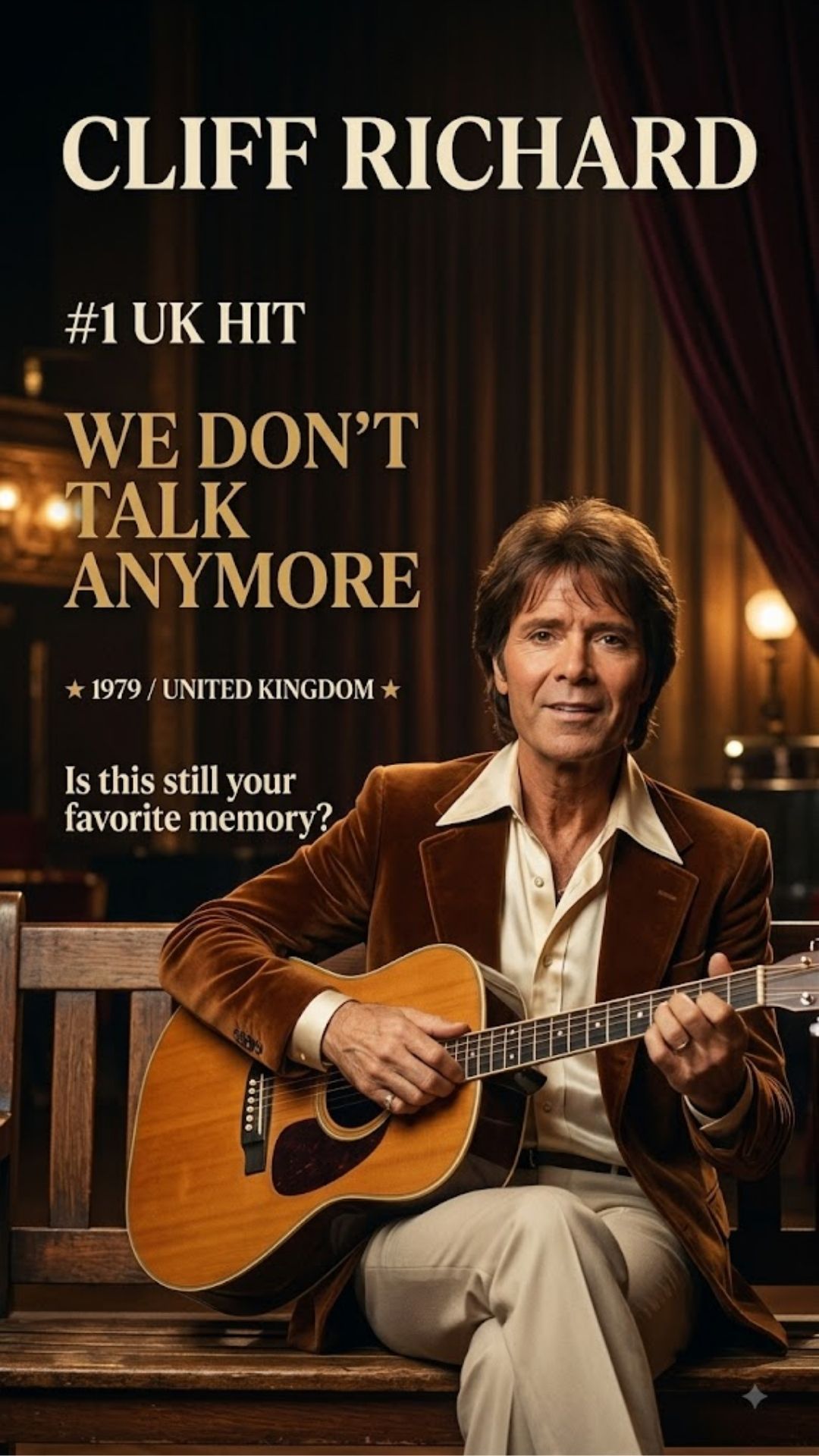
Some melodies instantly transport you back to late-night radio broadcasts and lingering heartbreaks. When Cliff Richard released this irresistible pop anthem, it redefined his career across four separate decades. But what unspoken personal estrangement inspired its bittersweet groove, and where were you the first time you heard it playing
INTRODUCTION
In early 1979, veteran British pop star Cliff Richard found himself at an unexpected crossroads, desperate for a sound that could conquer modern airwaves without betraying his melodic roots. When songwriter Alan Tarney delivered a pristine demo featuring a pulsating synth groove, everything shifted overnight. How did a gentle breakup ballad become the definitive global comeback track of his entire career?
THE DETAILED STORY
By the late 1970s, the global landscape of popular music had dramatically transformed. Punk rock, new wave, and electronic disco dominated international airwaves, leaving many traditional pop performers struggling to maintain cultural relevance. Cliff Richard, who had originally skyrocketed to British rock stardom in 1958, faced immense creative pressure to reinvent his sonic identity without alienating his loyal audience. Having not secured a domestic chart-topper in more than eleven long years, he relied on his trusted producer Bruce Welch to discover forward-thinking material that could bridge generational divides.
The crucial turning point arrived when Alan Tarney, a gifted multi-instrumentalist and songwriter, presented his fresh composition, We Don’t Talk Anymore. Rather than booking a standard studio band, Tarney meticulously constructed the instrumental foundation himself in the recording studio, layering shimmering guitars, an infectious walking bassline, and subtle synthesizer textures. This sophisticated arrangement provided the perfect modern vehicle for Richard’s remarkably agile vocal delivery. Beneath the buoyant, danceable groove lay a poignant lyric exploring emotional estrangement, capturing the agonizing silence and bittersweet isolation when former lovers abruptly become total strangers.
When officially released in July 1979, the single triggered an immediate and staggering commercial explosion across multiple continents. It rapidly surged to number one in the UK, reigning at the summit for four consecutive weeks as the singer’s celebrated tenth UK number-one single. Across the Atlantic, the record crossed over onto American radio formats, climbing all the way to number seven on the Billboard Hot 100 in early 1980. This immense international success propelled the track past four million copies sold worldwide, completely revitalizing his career and introducing his music to millions of younger listeners.
Beyond its extraordinary commercial numbers, the single fundamentally redefined late-seventies pop production by proving that melancholy could thrive within an uplifting arrangement. It permanently cemented Richard’s historical standing as one of the rare solo artists to score major hits across four consecutive decades. The enduring brilliance of We Don’t Talk Anymore remains rooted in its masterful emotional duality: a captivating, disco-inflected rhythm that cloaks the timeless ache of lost romantic connection, ensuring its place as an indelible milestone in modern pop history.