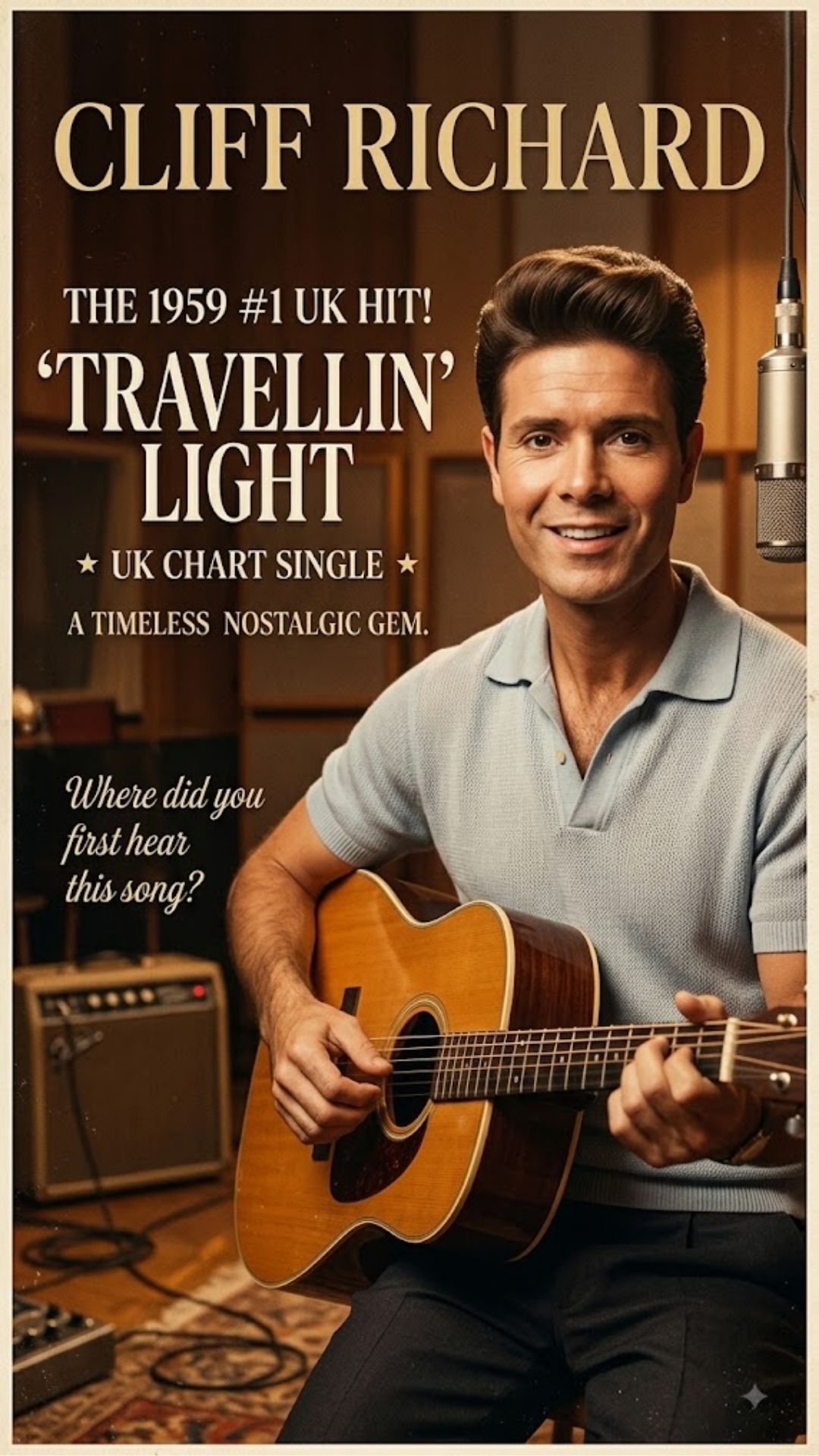
Do you recall the breezy optimism of late fifties pop? Following their historic breakthrough, Cliff Richard released Travellin’ Light in October 1959, securing five weeks at number one while introducing a newly renamed backing band. What unexpected transatlantic partnership turned this carefree wanderer’s acoustic melody into an enduring British masterpiece?
INTRODUCTION
In September 1959, eighteen-year-old Cliff Richard gathered inside Abbey Road Studios facing immense pressure to replicate a monumental chart-topping triumph. Rather than clinging to heavy amplification, the young ensemble embraced brisk acoustic guitars and lighthearted melodic optimism. How did this carefree wandering tune defy industry skeptics and permanently cement a legendary musical group’s identity at the summit of British pop music?
THE DETAILED STORY
Following the monumental summer triumph of Living Doll in 1959, the British record industry watched intently to see whether Cliff Richard could sustain his newfound pop supremacy. Skeptics within the press argued that his initial chart-topping acoustic ballad had been merely a lucky novelty, openly questioning if the young singer would falter without high-octane American rock covers. Instead of retreating into abrasive rockabilly imitation, Richard and his visionary EMI producer Norrie Paramor sought another melodically sophisticated showcase to highlight his expanding vocal maturity. They discovered Travellin’ Light, an infectious composition penned by celebrated American songwriting duo Sid Tepper and Roy C. Bennett, perfectly suited for a lighter, radio-friendly approach.
When the musicians entered Abbey Road’s Studio Two in September 1959, profound structural transitions were already reshaping their future. To eliminate confusing legal disputes with the famous American R&B vocal outfit of the same name, the young backing quartet officially abandoned their original Drifters title. This historic recording session became their inaugural major project proudly billed as The Shadows. Rather than relying on heavy electronic amplification, lead guitarist Hank Marvin and rhythm guitarist Bruce Welch constructed a brisk, sparkling acoustic rhythm driven by bright strums and deft fingerpicking. Propelled by Jet Harris on upright bass and the immaculate brushed snare work of drummer Tony Meehan, the entire arrangement swung with effortless, infectious swagger.
Richard delivered a masterclass in relaxed vocal charisma. Shedding the aggressive, sneering bravado of his earliest rock sides, he adopted an intimate, breezy delivery that captured the optimistic wanderlust of youth. His smooth croon effortlessly communicated the carefree philosophy of roaming the world unburdened by material luggage or lingering romantic sorrow, turning a simple traveling song into an irresistible anthem of personal liberation.
Columbia Records issued the single on October 9, 1959, generating instant public pandemonium. The track swiftly soared across sales rankings, ultimately dislodging Bobby Darin to seize number one in the UK in November 1959. Dominating the national UK Singles Chart for five consecutive weeks, it proved Richard was an enduring pop phenomenon capable of dominating commercial radio across the nation. This pivotal release permanently validated Britain’s evolving melodic beat style, cementing an iconic artistic partnership that reshaped popular music for an entire generation.