Do you remember the electrifying thrill when that opening warning exploded through the radio? Elvis Presley turned a friend’s rockabilly anthem into an unstoppable symbol of youth rebellion. Yet behind its explosive energy lay a remarkable gesture of brotherhood. Did you know why Elvis refused to rush this track onto the charts?
INTRODUCTION
On January 30, 1956, inside RCA’s New York studio, a young singer stepped before the microphone to deliver an incendiary statement of working-class pride. What began as a tribute to a fellow Sun Records pioneer quickly became an enduring anthem of teenage defiance. How did this iconic recording redefine rock and roll while honoring a silent pact between two legendary Southern artists?
THE DETAILED STORY
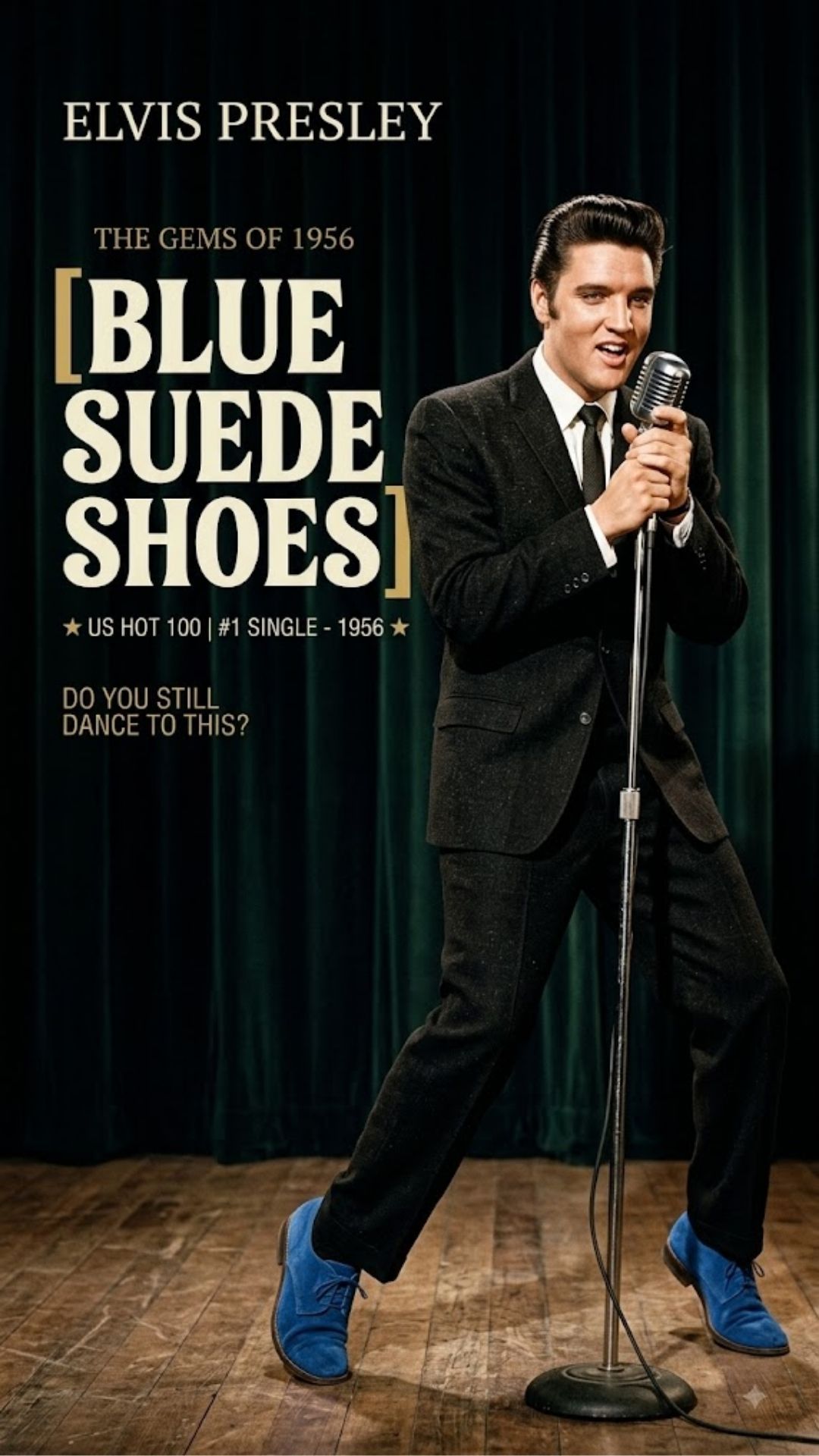
When rockabilly visionary Carl Perkins wrote and recorded the original track in late 1955, he captured the sacred obsession southern working-class youths held for their prized dancehall footwear. Entering RCA Studios in New York on January 30, 1956, Elvis Presley was determined to record his own electrifying interpretation alongside lead guitarist Scotty Moore, bassist Bill Black, and drummer D.J. Fontana. Rather than mimicking Perkins’s country-tinged swing, Elvis injected a relentless urban pulse, accelerated the driving rhythm, and delivered his opening vocal warning with explosive swagger. Scotty Moore matched this fierce energy with two jagged, blistering guitar solos that helped establish the electric guitar as the defining voice of the emerging rock generation.
The narrative gained unprecedented emotional weight in March 1956. While traveling to perform on national television, Carl Perkins suffered a devastating car crash that left him hospitalized for months, abruptly halting his promotional momentum. RCA Victor executives immediately recognized a massive commercial opportunity and urged Elvis to release his fiery cover as a competing national single. In a rare display of artistic integrity and Southern loyalty, Elvis adamantly resisted. He refused to undermine his friend’s chart-topping momentum, deliberately holding back the single release to ensure that Perkins’s original master remained undisturbed at the summit of the national charts.
Instead, RCA placed the dynamic recording as the opening track of his landmark debut LP, Elvis Presley, released in March 1956. The track selection was a masterstroke; those opening words immediately declared a vibrant new cultural era. When Elvis performed the song across multiple television appearances on The Dorsey Brothers Stage Show and The Milton Berle Show, his kinetic stage presence, syncopated rhythm, and raw charisma triggered a nationwide cultural phenomenon. By the time RCA issued the song as an extended-play single in September 1956, it climbed comfortably into the Billboard Top 20, proving that his interpretation had achieved immortality on its own merits.
Decades later, the historic session stands as an undisputed masterclass in interpretive brilliance and mutual respect. Elvis Presley transformed a regional dancefloor warning into a universal declaration of youthful independence, igniting a cultural explosion and cementing a sonic standard that permanently reshaped modern music history for generations of rock musicians.