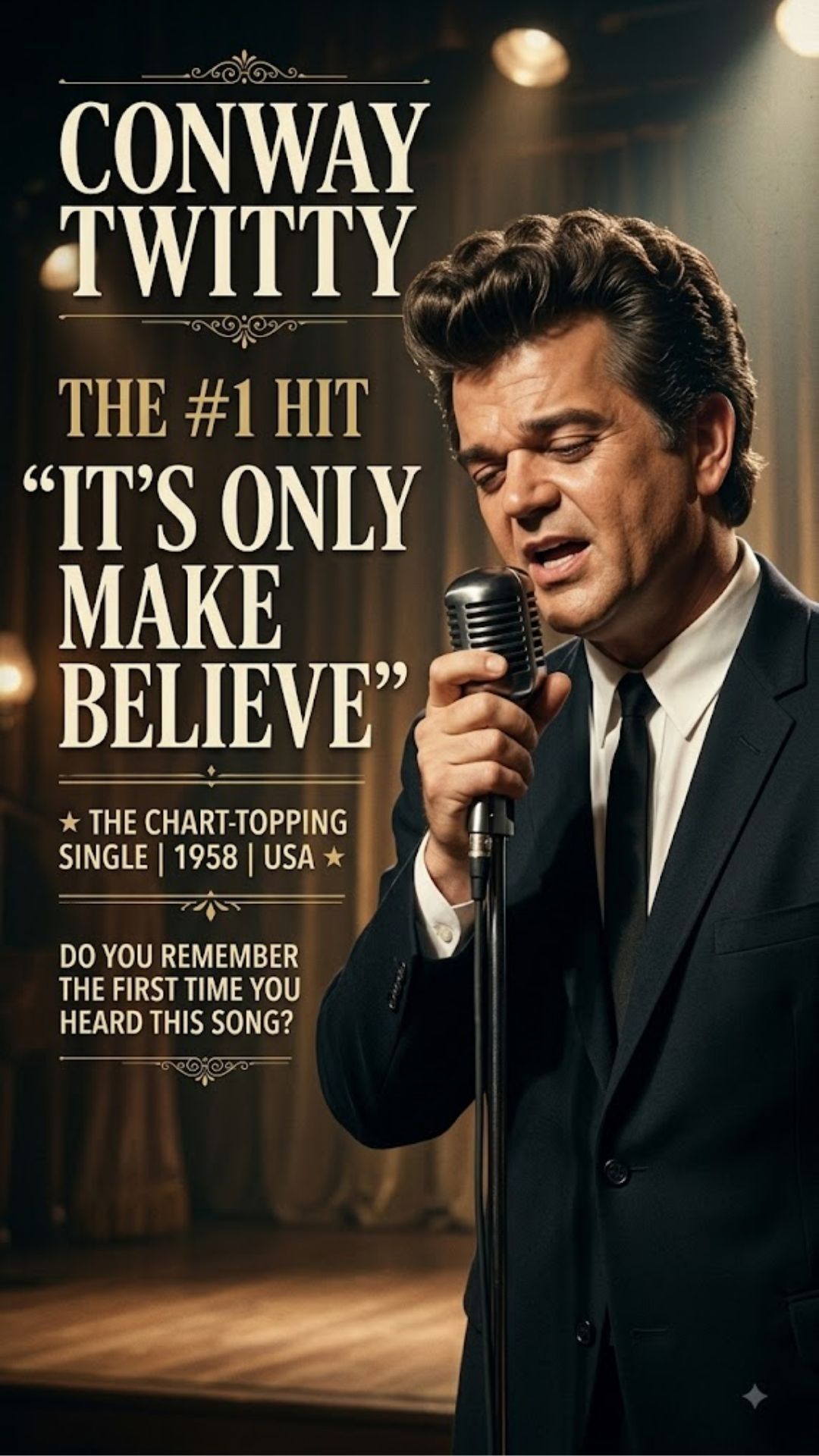
Do you remember the first time that dramatic vocal shook your radio? Recorded in 1958, this masterpiece carried a raw emotional intensity so commanding that listeners initially mistook the singer. Can you recall where you were when Conway Twitty first released this towering number-one breakthrough of unrequited love?
INTRODUCTION
In May 1958, a determined singer named Harold Jenkins walked into the legendary Bradley Studio in Nashville, desperate to save his recording career. What transpired behind the microphone was a performance so astonishingly intense that it stunned producers and mystified radio disc jockeys across two continents. How did a seemingly forgotten session produce one of history’s greatest vocal masterpieces?
THE DETAILED STORY
Long before he became an undisputed icon of country music, Harold Jenkins adopted the memorable stage moniker Conway Twitty, cleverly merging the names of Conway, Arkansas, and Twitty, Texas. In early 1958, while on tour across Canada, Twitty and his drummer Jack Nance sat on the balcony of a motel in Hamilton, Ontario. Strumming an acoustic guitar beneath the afternoon sky, the pair began writing a song exploring the agonizing depths of unrequited affection. They titled the composition It’s Only Make Believe, deliberately constructing a soaring melody that required extraordinary vocal power, dramatic pacing, and sheer emotional endurance.
When Twitty stepped into the historic Nashville studio on May 7, 1958, he envisioned the track not as a fleeting teen pop tune, but as a monumental rock ballad. The arrangement relied on masterful dynamic tension. It opens with an intimate, sorrowful confession cushioned by gentle acoustic strumming and a subtle rhythm section. As each verse progresses, the instrumentation steadily intensifies, gospel-tinged backing harmonies elevate the atmosphere, and Twitty shifts from a restrained baritone murmur into a roaring chest voice. By the final modulation, his delivery explodes into a thunderous, gravel-laced crescendo that lays bare the torment of romantic delusion.
When MGM Records distributed the single, executives initially relegated it to the B-side behind an upbeat rocker titled “I’ll Try.” However, intuitive radio disc jockeys turned the record over, and the response was immediate. Twitty’s rich timbre, impassioned growls, and operatic phrasing bore such an uncanny resemblance to Elvis Presley that listeners widely suspected the King had recorded the masterpiece under an alias. Once listeners discovered the true identity behind the microphone, demand skyrocketed across international airwaves, transforming the obscure B-side into a global phenomenon.
The song soon captured the number-one spot on the Billboard Hot 100 in November 1958 and simultaneously conquered the prestigious UK Singles Chart. Surpassing one million sales worldwide, the monumental track secured gold certification and established Twitty as an elite solo performer long before his historic transition to country music stardom. Today, it stands as an enduring testament to pure vocal mastery, seamlessly bridging early rockabilly energy with the sweeping theatrical grandeur of classic mid-century American balladry.