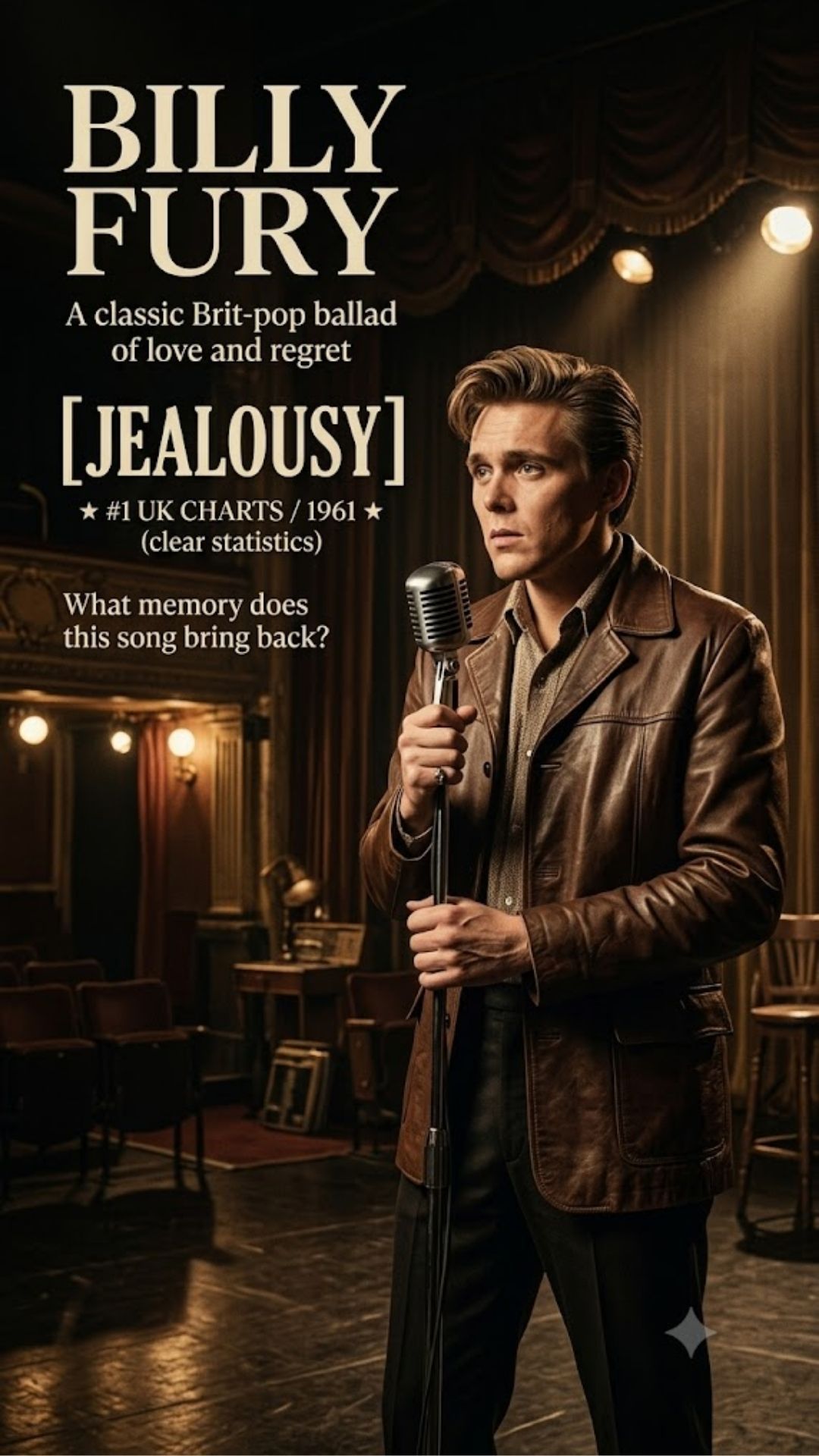
Few melodies capture the torturous sting of unrequited passion quite like this dramatic ballad. When Billy Fury unveiled Jealousy in September 1961, his theatrical intensity surged to number two across Britain. Do you still remember that haunting moment when his anguished voice first echoed through your radio speaker?
INTRODUCTION
In the late summer of 1961, sound engineers gathered inside London’s Decca Studios to capture an astonishing sonic gamble. Fresh from the triumph of his previous hit, Billy Fury chose to transform an iconic 1920s Danish tango into a towering operatic pop spectacle. But how did this vulnerable Liverpool singer turn a vintage instrumental into his biggest chart breakthrough?
THE DETAILED STORY
Following the massive transatlantic success of Halfway to Paradise, Billy Fury found himself standing at the absolute peak of British teen idolatry. However, rather than resting on comfortable formulas, Fury and musical director Ivor Raymonde sought something daringly theatrical. They looked back to Jalousie, a legendary 1925 tango composed by Danish maestro Jacob Gade. Originally written for silent cinema and popularized worldwide as an instrumental, the piece was outfitted with dramatic English lyrics by Winifred May. Adapting such a sweeping European standard for the early 1960s pop market was an enormous artistic risk, yet Fury recognized its brooding emotional potential.
Inside the studio, Raymonde constructed a breathtaking, melodramatic arrangement that completely transcended standard teen pop. Fusing sweeping classical strings with thunderous percussion and dramatic piano rolls, the orchestration created a storm of romantic tension. The backing vocals swelled with operatic grandeur, providing a soaring canvas that reflected the agony of suspicious love. Yet, despite the massive orchestral scale, the true anchor of the record remained Fury’s remarkable vocal delivery.
Haunted by lifelong cardiovascular frailty from childhood rheumatic fever, Fury channeled his physical vulnerability into unmatched emotional authenticity. Unlike polished contemporaries who sang about romance with lighthearted charm, Fury approached the microphone with raw, trembling desperation. His voice ascended from a wounded whisper to an agonizing, operatic crescendo, conveying the suffocating torment of romantic obsession. Every inflection felt earned, laying bare the devastating reality of loving someone while being consumed by suspicion.
When Decca Records officially released the single in September 1961, it struck an immediate emotional chord with audiences across the nation. The song steadily climbed the charts, eventually peaking at number two on the prestigious UK Singles Chart and matching his career-highest chart performance. In an era dominated by lively dance numbers and breezy adolescent novelty tunes, this deeply passionate, brooding masterwork established Fury as an artist of profound emotional depth and uncompromising vocal power.
Decades after its debut, Jealousy remains an enduring testament to the golden age of British pop melodrama. By fearlessly transforming a vintage classical tango into an explosive modern ballad, Fury created an unforgettable listening experience that continues to resonate with generations of music lovers. Today, the track stands as a crowning jewel in Billy Fury’s illustrious catalog, capturing the eternal ache of romantic vulnerability.