INTRODUCTION
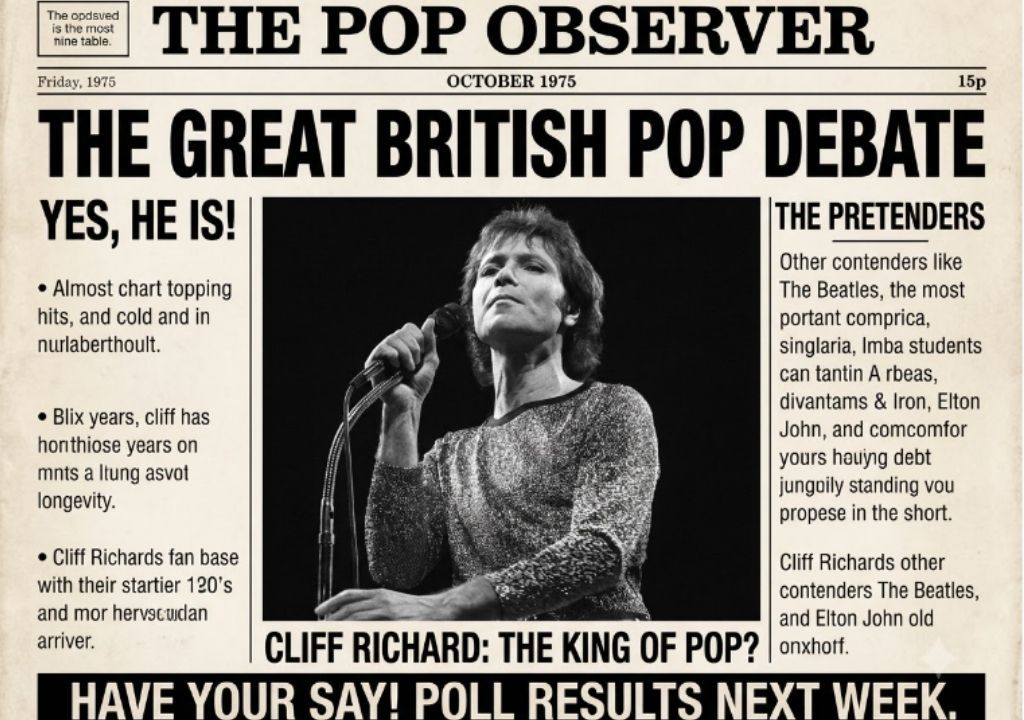
On 08/29/1958, a seventeen-year-old Harry Webb released “Move It,” effectively launching the birth of British rock and roll. Decades later, as music historians evaluate royal titles within popular culture, a fiery debate continues over whether Sir Cliff Richard deserves the definitive designation as Britain’s “King of Pop.” While American counterparts boasted global theatricality, Richard built an unprecedented domestic empire rooted in unmatched consistency and cultural persistence. He achieved chart success across six consecutive decades, outlasting musical revolutions from Beatlemania to punk and modern streaming eras. Yet, critics often question whether pure commercial longevity equates to cultural royalty. How did a teenage rocker from Hertfordshire transform into an indestructible titan of British pop heritage?
THE DETAILED STORY
The argument for crowning Sir Cliff Richard rests upon a statistical foundation unmatched in British broadcasting history. With over 250 million records sold globally and 14 UK number-one singles, his chart dominance places him in the ultra-exclusive pantheon alongside The Beatles and Elvis Presley. On 10/25/1995, Queen Elizabeth II knighted him at Buckingham Palace, making him the first rock star to receive the honor—a watershed moment that legitimized pop music within the highest echelons of British society. His ability to reinvent his sound, transitioning seamlessly from raw 1950s rockabilly with The Shadows to polished 1970s adult contemporary ballads like “We Don’t Talk Anymore,” demonstrated an astonishing artistic adaptability.
However, the debate persists because the moniker “King of Pop” carries heavy stylistic and cultural expectations. Skeptics argue that figures like David Bowie or Sir Elton John exercised far greater global influence, pushing avant-garde boundaries and redefining visual aesthetics across international markets. Critics point out that while Michael Jackson claimed the global crown through earth-shattering album rollouts and revolutionary music videos, Richard’s dominance remained primarily centered in the United Kingdom and Commonwealth territories. Furthermore, his squeaky-clean image and spiritual devotion alienated certain rock purists who associated true pop royalty with countercultural edge and rebellion.
Despite these critiques, industry veterans maintain that Richard’s sovereignty lies in his unmatched resilience. On 12/25/1999, his chart-topping single “The Millennium Prayer” reached number one despite widespread radio bans, proving that his connection with the public transcended corporate gatekeeping. By securing chart hits across six decades, he established a benchmark for endurance that no contemporary UK artist has replicated. The debate ultimately reframes how royalty is defined in popular music: is it measured by explosive, short-lived cultural disruption, or by a lifelong commitment to artistic craft and audience connection? In the ledger of British music history, Richard’s sustained excellence renders his monarchical status an indisputable historical legacy.