Introduction
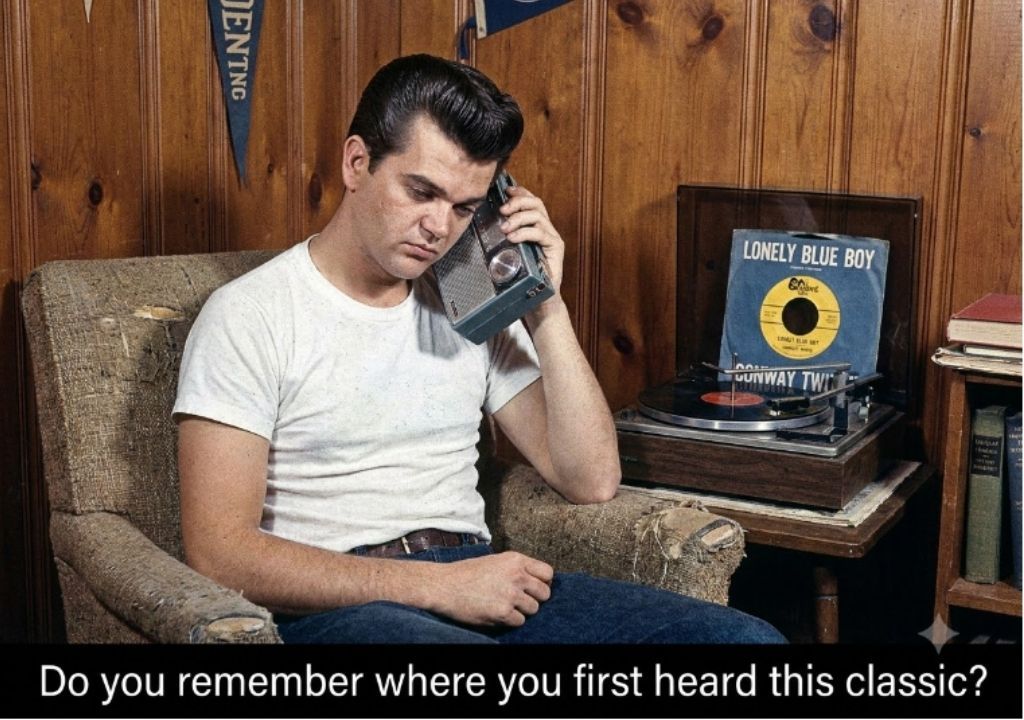
Turn back the clock to the dawn of 1960, a pivotal moment in popular music when the fiery, rebellious momentum of 1950s rock ‘n’ roll was blending into a sleek new decade. Across cities and small towns, in neon-lit diners, crowded ice cream parlors, and cozy bedrooms illuminated by the warm amber glow of vacuum tube radios, teenagers were seeking songs that gave voice to their deepest, unspoken emotions. They wanted music that wasn’t just catchy, but reflected the bittersweet ache of young love and the heavy silence of solitude. Stepping boldly into this electric atmosphere was a handsome, charismatic young star from Mississippi named Harold Lloyd Jenkins—known to the world as Conway Twitty. Before he became a legendary titan of country music, Twitty was a formidable rock ‘n’ roll powerhouse, and in late 1959, he recorded a song that would become one of the defining anthems of teenage angst: “Lonely Blue Boy.”
The history behind “Lonely Blue Boy” is as fascinating as the track itself. Originally written under the title “Danny” by the songwriting team of Ben Weisman and Fred Wise, the piece was initially intended for Elvis Presley to perform in his 1958 film King Creole. However, when the song was ultimately left off the movie soundtrack, Conway Twitty recognized its immense potential and seized the opportunity to record it. Backed by his stellar studio band, Twitty brought a distinct, scorching intensity to the material, reshaping it into a landmark hit that soared to the upper reaches of the Billboard charts in early 1960.
Musically, “Lonely Blue Boy” is a masterclass in atmospheric rockabilly and dramatic pop-rock production. From the very first needle drop, the track envelops the listener in a pulsating, dark rhythm anchored by a heavy slap-bass groove and a steady, hypnotic drum beat. Sharp, echoing guitar lines cut through the arrangement, creating a mood that feels both urgent and hauntingly intimate. But it is Conway Twitty’s vocal performance that elevates the song into an unforgettable masterpiece. He delivers every line with an intoxicating mix of sultry swagger and raw, soul-baring vulnerability. His trademark vocal growl, subtle sighs, and dramatic rhythmic pauses convey a profound sense of emotional isolation. When he sings of walking the lonely streets with a heart full of shadows, you do not merely hear the story—you feel the chilly night air and the heavy weight of melancholy in your chest.
Listening to “Lonely Blue Boy” today is like uncovering a pristine time capsule from a golden era of physical music. It instantly conjures vivid imagery of spinning black vinyl 45s on turntables, shiny jukeboxes glowing red and blue in corner diners, and the simple, profound magic of late-night radio broadcasts. Long before computer-generated production took over, songs like this relied entirely on pure vocal talent, authentic instrumental chemistry, and heart-led storytelling. Decades after its release, “Lonely Blue Boy” loses none of its haunting charm or kinetic energy, standing as an enduring monument to Conway Twitty’s early genius and the timeless power of classic rock ‘n’ roll.