INTRODUCTION
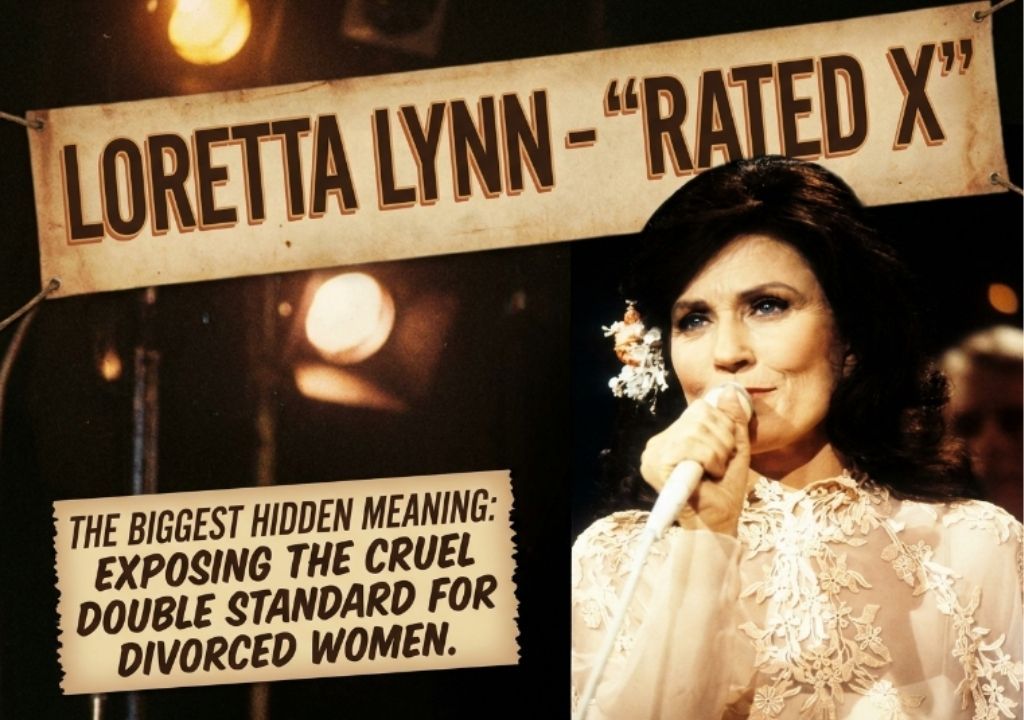
In late 1972, recording engineers at Decca Records in Nashville listened in stunned silence as a soft-spoken mother of six stepped up to the microphone. Loretta Lynn was about to record a track that traditional country radio executives viewed as career suicide. At a time when divorce carried an overwhelming social stigma—particularly for women—Lynn composed a biting, unvarnished indictment of the double standards targeting divorced women. Titled “Rated X,” the composition stripped away the glossy romanticism of Music Row to confront how society stigmatized single mothers while excusing the men who pursued them. Programmers across conservative radio markets immediately pulled the track from their playlists, declaring its subject matter far too provocative for mainstream airwaves. How did a controversial anthem that station managers tried to erase ultimately transform into one of country music’s most triumphant cultural watersheds?
THE DETAILED STORY
When “Rated X” arrived on radio airwaves in November 1972, the socio-cultural landscape of American country music was overwhelmingly conservative. Nashville’s executive establishment favored polished recordings that portrayed women as enduring, long-suffering figures. Loretta Lynn, however, dismantled this patronizing archetype with surgical precision. Drawing from her observations of working-class women across rural America, Lynn penned lyrics illustrating how divorced women were unfairly labeled as sexually permissive targets, while divorced men walked away entirely untarnished. The title itself hijacked the Motion Picture Association’s explicit film rating, brilliantly weaponizing pop-culture terminology as a metaphor for the harsh social exile imposed by polite society on women who dared to exit failing marriages.
Industry pushback was immediate, intense, and calculated. Numerous radio programmers and station managers across conservative heartland markets flatly refused to spin the track, labeling its social commentary inappropriate for family broadcasting. Yet, rather than alienating core listeners, corporate censorship backfired spectacularly. Working-class women flooded radio station switchboards demanding the song be played during peak drive-time slots, recognizing their own lived struggles reflected in Lynn’s plainspoken, uncompromising storytelling. On February 24, 1973, despite systematic blacklisting across key regional markets, the controversial single officially hit number one on Billboard Hot Country Singles chart, marking Lynn’s sixth solo chart-topping landmark.
Beyond its immediate commercial victory, “Rated X” marked an irreplaceable milestone in narrative songwriting. Lynn refused to soften her vocal delivery or sanitize her messaging to appease corporate gatekeepers. She proved that country music could serve as a powerful vehicle for social critique, opening doors for future generations of female songwriters to address systemic inequality without fearing industry ruin. Major trade publications including Billboard, Variety, and The Hollywood Reporter documented how Lynn single-handedly expanded the thematic limits of the genre. By confronting double standards head-on, Lynn demonstrated that courageous authenticity will always triumph over forced conformity, securing her permanent legacy as an indisputable cultural icon of American popular music.