INTRODUCTION
On January 10, 1948, a fifteen-year-old Loretta Webb married Oliver “Doolittle” Lynn in Custer, Washington, stepping directly from the quiet hollows of Kentucky into a volatile domestic reality. Doolittle was a restless, hard-drinking timber worker whose penchant for late-night wandering quickly ignited clashes within the extended Lynn household. Traditional expectations demanded that a young bride submit silently to her husband’s unruly behavior and the protective defense mounted by his kin. Yet, Loretta refused to play the passive victim. Raised on the unyielding resilience of Appalachian coal-mining country, she confronted both her husband and those who shielded his bohemian habits with fierce, uncompromising resolve. Rather than allowing family pressure to break her spirit, she turned every domestic confrontation into fuel for her burgeoning artistic voice. What happened when this unschooled young mother decided to weaponize her marital struggles on the global stage?
THE DETAILED STORY
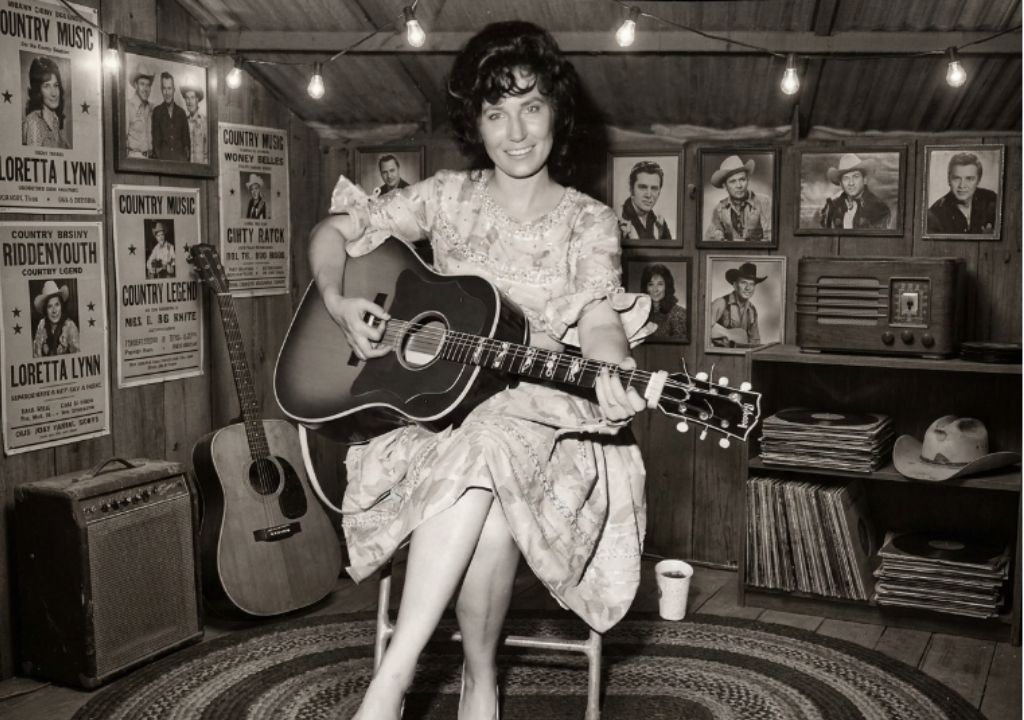
When Loretta Lynn picked up a $17 Sears guitar in 1953, she possessed no formal musical training, but she owned an unfiltered truth that country music desperately lacked. In mid-century rural culture, women were expected to endure marital infidelity and drunkenness behind closed doors. However, Lynn shattered this unspoken code by transforming her fierce domestic battles into unapologetic art. When Doolittle’s late-night excursions and the intense family friction surrounding his wild habits threatened to consume her household, Lynn responded not with quiet submissiveness, but with pen and paper.
Her landmark composition, “Don’t Come Home A-Drinkin’ (With Lovin’ on Your Mind),” released on October 24, 1966, delivered an unprecedented ultimatum to reckless partners nationwide. The track quickly made history, propelling the album to become the first record by a female country artist to achieve certified gold status by the RIAA. Rather than hiding the turmoil created by her husband’s wandering eyes and the defensive pushback from his family, Lynn addressed her critics and romantic rivals directly in bold, chart-topping anthems like “Fist City.” Her candid storytelling turned raw personal conflict into an empowering universal rallying cry for millions of working-class women who had long felt voiceless.
Throughout this domestic warfare, a poignant paradox emerged. Doolittle genuinely recognized his wife’s extraordinary raw talent, driving thousands of miles to promote her early recordings to skeptical radio disk jockeys. This complex interplay of tempestuous love and artistic necessity powered a legendary career spanning over six decades, during which Lynn earned sixteen number one singles on the country charts. By refusing to back down against entrenched familial expectations or corporate norms, the country legend shattered music industry gender barriers, establishing a lasting foundation for female autonomy in modern American songcraft. Ultimately, her courage to confront the harsh realities of her private life elevated her from a struggling Kentucky bride into an indelible icon of cultural history.