INTRODUCTION
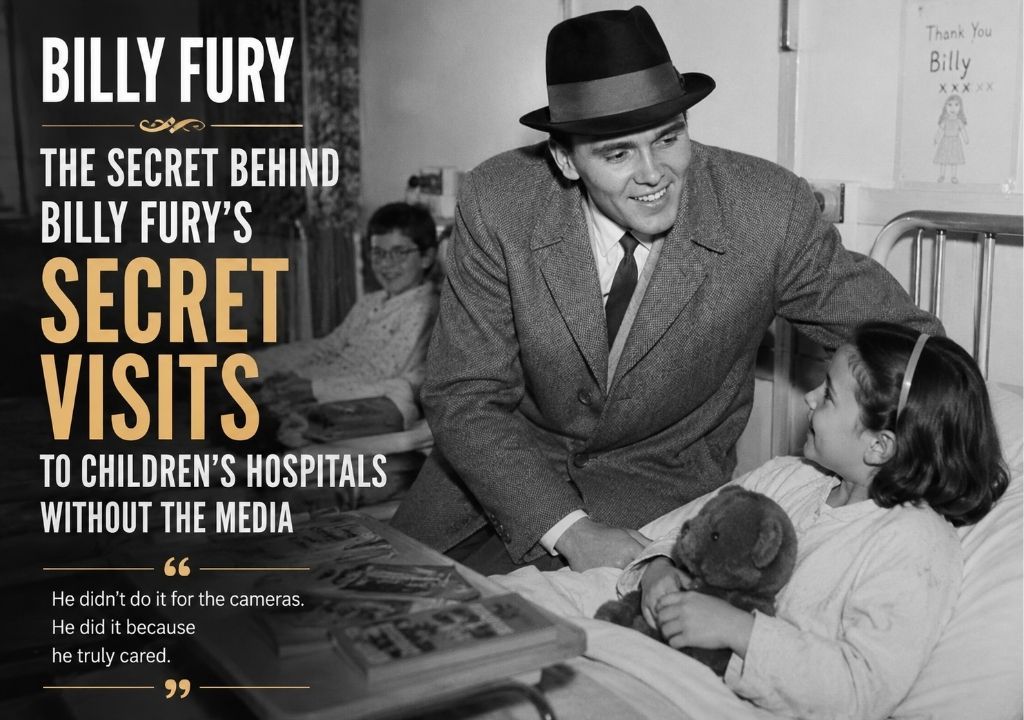
At the height of British rock ‘n’ roll mania in 1963, when screaming crowds routinely mobbed concert halls from London to Liverpool, one of the nation’s biggest heartthrobs frequently disappeared from the public eye. Unaccompanied by publicists, photographers, or news cameras, he would slip into the quiet hallways of pediatric wards across the country. Inside, away from the flashing lights and chart-topping glory, he sat beside bedside tables, holding the hands of bedridden children fighting severe illnesses. To the young patients in those hospital beds, he was not the leather-clad idol commanding millions of record sales, but simply a soft-spoken friend who understood their pain all too well. What drove one of the decade’s most celebrated icons to keep his deepest acts of compassion strictly hidden from the press?
THE DETAILED STORY
The answer lay in the singer’s own fragile childhood. Born Ronald Wycherley in Liverpool in 1940, the young boy contracted severe rheumatic fever at the age of six. The bacterial infection permanently damaged his heart valves, resulting in months of terrifying, isolated stays at Alder Hey Children’s Hospital. Long before he assumed the stage moniker Billy Fury—the brooding sensation whose raw emotion and magnetic stage presence captured the post-war generation—he intimately understood the frightening stillness of a pediatric ward.
When superstardom arrived in the early 1960s, bringing 29 hit records and matching the UK chart footprint of rival contemporaries, Fury refused to let vanity or fame distance him from suffering youth. In 1963, he quietly accepted a patron role for the Children’s Leukaemia Appeal at Stevenage Hospital. However, while traditional pop celebrities utilized philanthropic endeavors to cultivate favorable press clippings, Fury established a strict operational rule: zero media access. He made frequent, unannounced journeys to hospitals across Great Britain, spending unrecorded hours talking quietly with bedridden children, giving signed records, and offering sincere encouragement. In several documented instances, he even attended funerals of deceased children without reporters present, slipping quietly into the back row to support grieving parents.
This extraordinary secrecy was rooted in profound personal integrity. Living under the constant shadow of his own mortal illness, Fury regarded publicizing charitable acts as an unacceptable exploitation of human vulnerability. To him, true compassion required authentic personal presence, not staged photo opportunities. His hospital visits were never corporate public relations exercises; they were quiet, personal pilgrimages born of shared suffering.
When Billy Fury passed away from cardiac failure in January 1983 at age 42, stories of his secret visits finally emerged through grateful families and hospital staff. His enduring legacy rests not merely on chart anthems like “Halfway to Paradise,” but on the unheralded light he brought to dark hospital rooms. He proved that real heroism demands no audience.