Introduction
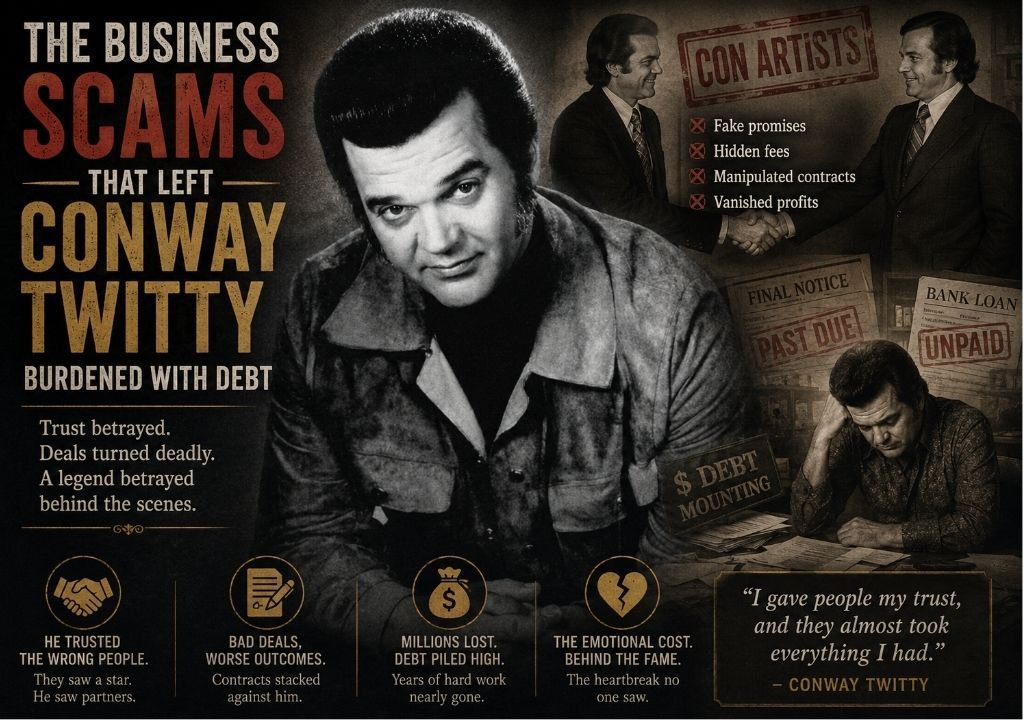
In 1971, the landscape of country music was shifting, yet the headlines surrounding Conway Twitty were fixated on a shuttered fast-food chain. What began as a hopeful investment venture, the Twitty Burger restaurants, had collapsed, leaving seventy-five friends and business associates facing significant financial losses. While most would have filed for corporate bankruptcy and retreated, Twitty took a path defined by profound personal accountability. Rather than hiding behind a corporate veil, he committed to repaying every investor from his own concert earnings. This decision transformed a potential professional catastrophe into a defining moment of integrity, yet the action invited an unexpected interrogation from the IRS, leading to a historic courtroom battle. How did this singular commitment to personal honor navigate the rigid scrutiny of federal tax law?
The Detailed Story
The collapse of Twitty Burger, Inc. by 1971 could have easily relegated the country legend to a footnote in entrepreneurial failure. Instead, the singer, born Harold Jenkins, viewed the financial wreckage not as a corporate liability, but as a direct threat to his integrity as a performer. With zero legal obligation to do so, he personally undertook the repayment of approximately $96,000 to the seventy-five investors who had believed in his vision. This was not merely a fiscal decision; it was a safeguarding of his most valuable asset: his reputation.
However, the federal government viewed the situation through a different lens. When Twitty attempted to claim these repayments as “ordinary and necessary” business expenses on his 1973 and 1974 tax returns, the IRS balked. They argued that because the restaurants had closed, the debt was no longer linked to his active trade as an entertainer. The dispute escalated to the United States Tax Court, setting the stage for one of the most unique legal testimonies in music history.
During the 1983 trial, Twitty offered a candid defense, testifying that he was “99 percent entertainer,” and that protecting his name was inseparable from his survival in the industry. The court’s eventual ruling in Lohrke v. Commissioner became a landmark precedent. The presiding judge not only favored Twitty but famously immortalized the sentiment in a footnote, an “Ode to Conway Twitty,” acknowledging that repaying the investors was the moral necessity required to preserve his professional standing.
This episode remains a testament to the intersection of art and commerce. Twitty demonstrated that in the high-stakes world of fame, the currency of trust is often more valuable than liquid capital. By prioritizing his word over the safety of a corporate shield, he turned a potential downfall into a permanent moral victory. His legacy endures not just through his chart-topping hits, but as a standard-bearer for artist integrity in the face of complex business restructuring and financial pressure.