INTRODUCTION
In the scorching summer heat of Howrah near Calcutta in 1948, a seven-year-old boy named Harry Rodger Webb stood amid the chaotic unraveling of the British Raj. The air was thick with political tension and the haunting echoes of post-partition violence that stained the Hooghly River. For generations, the Webb family had known no other home but India, enjoying a comfortable lifestyle complete with company-supplied housing and domestic staff. Yet, as the newly independent nation fractured into sectarian conflict, their privileged existence evaporated overnight, forcing them to abandon their belongings and flee toward Bombay. Penniless but determined, the family secured passage on a packed passenger liner bound for a distant, chilly island they had never seen. What hidden tribulations awaited this displaced family aboard the vessel, and how did a grueling oceanic migration set the stage for one of history’s greatest musical transformations?
THE DETAILED STORY
The crucible of this transformation was the SS Ranchi, a P&O passenger liner that became a floating sanctuary for thousands of displaced souls fleeing the sub-continent in 1948. Stepping onto the crowded deck, the Webb family left behind the warmth of their ancestral land to face a volatile, three-week voyage across the Indian Ocean and through the Mediterranean. The conditions aboard were grueling; the ship was packed to capacity with refugees, stripped of the luxuries the family once enjoyed in Howrah. For young Harry, the intense journey was a profound awakening, replacing the vivid sounds of India with the rhythmic, churning thrum of the ship’s engines.
Upon arriving at the port of Tilbury in Essex, the family confronted a harsh, gray post-war Britain. They were abruptly reduced from wealth to poverty, transitioning from a spacious company flat to a cramped, semi-detached house in Surrey with five pounds to their name. The stark cultural displacement inflicted immense financial hardship on his parents, yet it simultaneously exposed the young boy to a vibrant, emerging Western musical landscape.
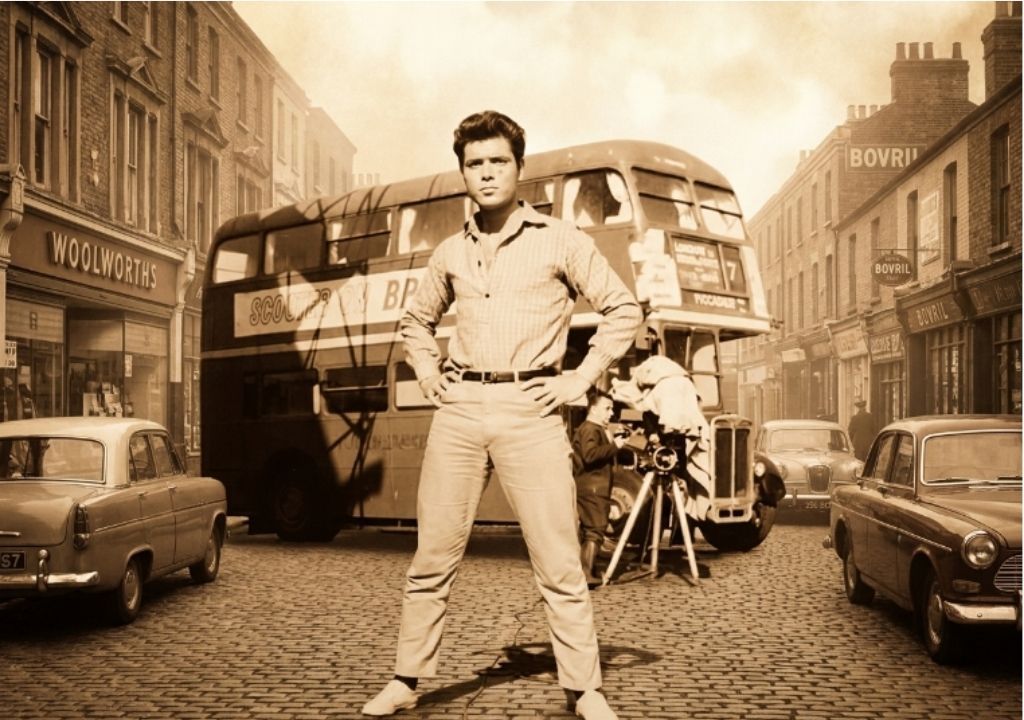
By the late 1950s, Harry reinvented himself as Cliff Richard, channeling the resilience forged during that tumultuous migration into raw rock-and-roll energy. His debut single “Move It” shook the nation, establishing him as the primary British answer to American rock icons. According to historical retrospectives by Billboard, this defining migration was the ultimate catalyst for an unparalleled career. Over the next six decades, he achieved fourteen chart-topping hits in the United Kingdom, selling an estimated 250 million records globally. The displacement that threatened to break his family instead provided the exact cultural friction necessary to ignite his artistic genius. Ultimate triumph arose from the ashes of post-colonial upheaval, proving that the stormy voyage of the SS Ranchi did not merely relocate a family; it permanently redefined the trajectory of global popular music history.