Introduction
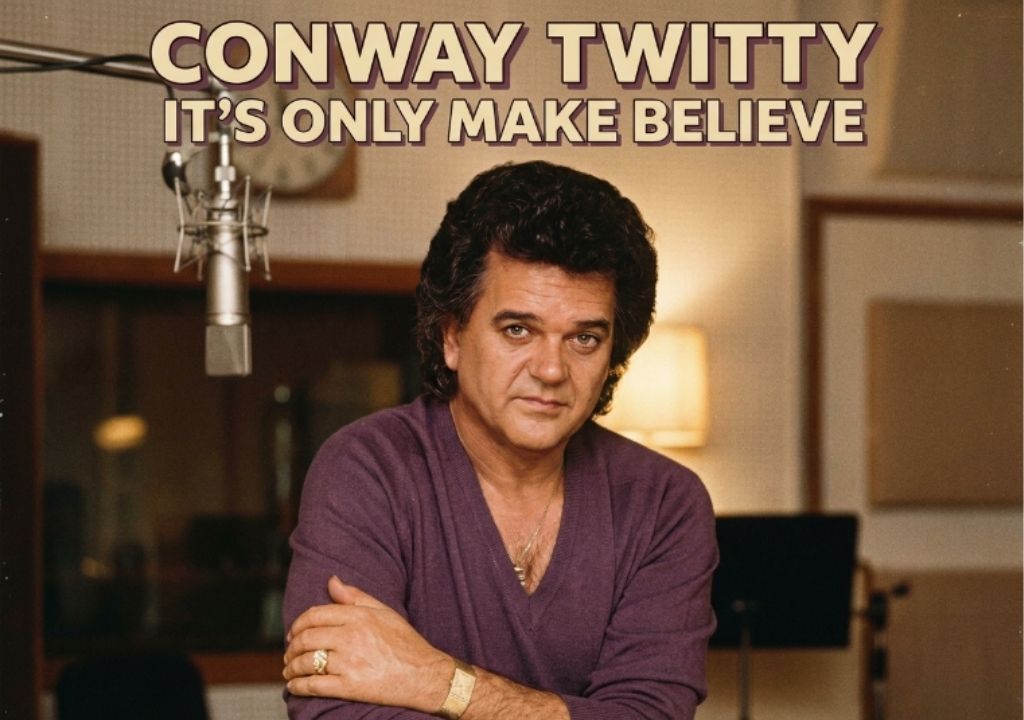
There is a rare, intoxicating vulnerability that belongs exclusively to the late 1950s—a transitional crossroads where the untamed energy of rockabilly collided head-on with the sweeping dramatics of traditional pop ballads. It was during this magical era, specifically in the late summer of 1958, that an unforgettable melody emerged to forever alter the landscape of popular music. When you hear the opening chords of Its Only Make Believe, you aren’t merely listening to a song; you are being pulled directly into a dimly lit, smoke-filled studio where raw heartbreak was captured in its absolute purest form. Written by Conway Twitty and Jack Nance, this monumental track didn’t just climb the charts; it established a masterclass in vocal performance that still resonates with listeners generations later.
At the time of its release, the music world was completely transfixed by the mysterious, soaring quality of the track’s vocals. In fact, when the record first hit the airwaves, many listeners were absolutely convinced that it was an uncredited new track by Elvis Presley, who was away serving in the army at the time. Yet, while Conway Twitty shared that same magnetic, sultry baritone depth, he possessed a distinct, almost desperate intensity that was entirely his own. Its Only Make Believe showcases the early brilliance of an artist who would later become a country music titan, but here, he is a young man walking the razor-thin line between rock and roll and pure teen idol melodrama. His voice begins as a low, intimate whisper, a confidential confession shared between old friends, before gradually gathering an overwhelming, thunderous momentum.
What truly elevates this song into the realm of timeless masterpieces is its extraordinary emotional trajectory, structurally built around one of the most magnificent vocal crescendos in recording history. The arrangement is deceptively simple, grounded by a steady, rhythmic acoustic strumming and a subtle, echoing percussion line that mimics the anxious thumping of a lonely heart. As the narrative unfolds, Twitty slowly turns up the emotional heat. With each passing verse, the underlying tension thickens until he finally unleashes that legendary, full-throated, operatic cry on the high notes. It is a stunning display of vocal power, a moment of sheer sonic release where the agony of unrequited love becomes almost too heavy to bear. The way his voice breaks and soars captures the universal pain of loving someone from afar with breathtaking accuracy.
Thematically, the song touches upon a profoundly human truth that never ages: the tragic illusion of pretending to be loved by someone who doesn’t even notice your affection. Twitty sings from the perspective of a man trapped within the beautiful, agonizing prison of his own imagination, fully aware that his happiness is just a fragile fantasy. This deep-seated emotional honesty is exactly why the song struck such a massive chord worldwide, eventually conquering the number one spot on both the US and UK charts. Decades later, looking back through the warm, golden lens of musical nostalgia, Its Only Make Believe remains an untouchable triumph. It serves as a beautiful reminder of a time when hit records were built on raw talent, immaculate vocal control, and an unyielding commitment to capturing the profound depths of the human condition.