Introduction
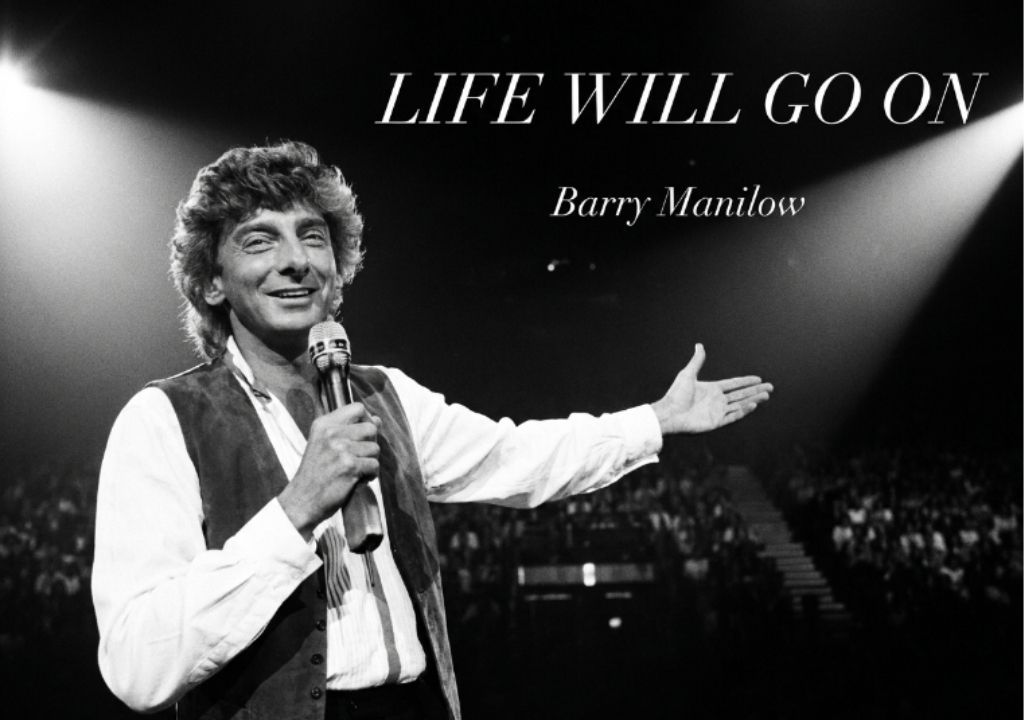
The late 1970s and early 1980s marked a golden era for sweeping, emotionally resonant pop orchestrations, a landscape where Barry Manilow reigned supreme as a master storyteller of the human heart. Released on his self-titled 1980 album Barry, “Life Will Go On” stands as a beautifully hidden gem in his vast discography, capturing the bittersweet essence of resilience following a profound emotional devastation. Written by the powerhouse composing duo of Richard Kerr and John Bettis, the track highlights Manilow’s signature ability to transform personal grief into a universal anthem of survival. It addresses that precise, agonizing moment when a relationship ends, and the world seems to stand utterly still, yet the clock relentlessly ticks forward.
Musically, the song is a masterclass in the classic adult contemporary ballad structure that defined the era. It begins with an intimate, melancholic piano arrangement, mirroring the quiet solitude of an empty room where unbidden tears begin to fall. Manilow’s vocal delivery in the opening verses is remarkably understated, carrying a fragile, conversational weight that draws the listener into a private confession. As the narrative progresses, the arrangement gradually expands, introducing soaring strings, a grounded bassline, and rich background harmonies that build toward a magnificent, sweeping crescendo. This musical escalation perfectly mimics the emotional journey of overcoming grief; it is the slow, deliberate awakening of hope from the depths of despair. The production does not rush the healing process, allowing the listener to sit with the pain before gently lifting them into the reassuring light of the chorus.
What truly elevates “Life Will Go On” is its profound lyrical maturity. John Bettis crafts a narrative that avoids superficial platitudes about moving on, instead choosing to acknowledge the genuine terror and heavy sorrow of saying goodbye. The phrase “Life will go on” is not delivered as a cheap consolation prize, but rather as an inevitable, grounding truth of human existence. Manilow performs this realization with a poignant mix of sorrow and steady determination, showing that while our personal worlds may shatter, the sun will still rise, and we will eventually find the strength to walk forward. For decades, generations of music lovers have turned to this hidden masterpiece during their darkest hours of romantic heartbreak and personal loss, finding immense solace in the shared human understanding that emotional pain, no matter how completely absolute and crushing it feels in the present moment, is ultimately temporary. The track serves as an audio time capsule, preserving the high-caliber songwriting standards of the 1980s where real instruments and genuine poetic vulnerability took precedence over commercial trends. It is a cinematic, deeply comforting piece of music that gracefully reminds us of our own profound capacity to endure, proving once again why Barry Manilow remains an enduring, irreplaceable architect of the nostalgic American songbook.