INTRODUCTION
THE DETAILED STORY
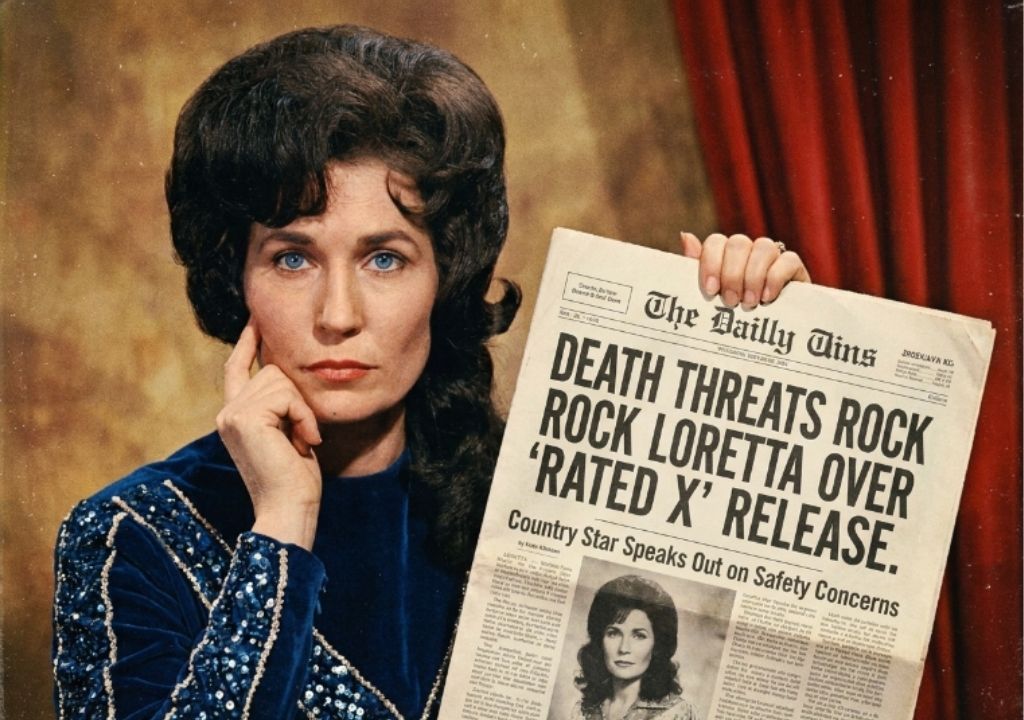
The release of “Rated ‘X'” marked a seismic shift in the cultural landscape of Nashville. Produced by the legendary Owen Bradley at Bradley’s Barn in Mount Juliet, Tennessee, the 2-minute and 35-second masterpiece exposed the hypocrisy encountered by single and divorced women in the early 1970s. While traditionalists in the industry expected standard ballads of heartbreak, the singer delivered a sharp, sociopolitical critique that disrupted the status quo. The resulting backlash was swift. As documented in her celebrated autobiography, Coal Miner’s Daughter, specifically within Chapter 27, titled “Death Threats,” the sudden influx of threatening mail and menacing, late-night phone calls became a stark reality of her soaring mainstream prominence.
Rather than indicating a genuine criminal conspiracy, these hostile communications stemmed from disturbed individuals unsettled by a female artist asserting such immense narrative authority. For a genre deeply rooted in conservative sensibilities, an independent woman addressing topics of sexual agency and societal bias was viewed as an existential threat to tradition. Despite the unlisted phone lines and heightened security measures implemented around her properties, the singer maintained an unwavering composure, interpreting the intense friction not as a signal to withdraw, but as definitive proof that her message was resonating deeply with the public.
Her refusal to capitulate transformed the brewing cultural controversy into unprecedented commercial validation. Audiences nationwide actively bypassed the conservative radio bans, purchasing physical copies of the 45 RPM vinyl single in massive quantities across the United States. On February 24, 1973, “Rated ‘X'” officially replaced Merle Haggard’s latest release to peak at No. 1 on the US Billboard Hot Country Singles chart, securing her sixth solo chart-topper. This definitive commercial victory demonstrated that grassroots listener demand possessed far more power than institutional censorship or anonymous intimidation campaigns. By confronting the dark underbelly of fame with profound professional grace, the country music trailblazer solidified an enduring legacy of fearlessness, proving to the entire industry that authentic artistic truths can never be suppressed by fear.