Introduction
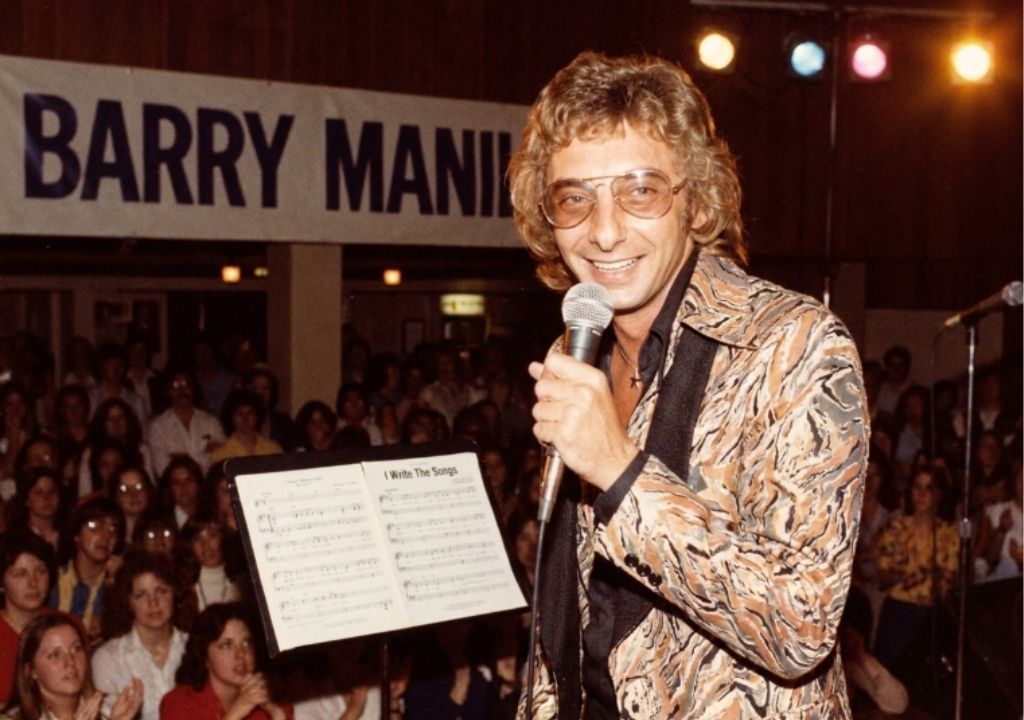
To truly understand the golden landscape of 1970s popular music is to recognize that songs were not merely commercial products; they were cultural monuments that captured the invisible currents of human emotion. At the absolute center of this magical era stood Barry Manilow, a master craftsman of sentimentality who possessed a rare, unparalleled gift for transforming intimate feelings into towering, symphonic experiences. In late 1975, Manilow released a track that would not only define his illustrious career but would also serve as a profound, universal anthem celebrating the very essence of musical creation itself. “I Write The Songs,” featured on his brilliant breakthrough album Tryin’ to Get the Feeling, remains one of the most misunderstood yet deeply revered masterpieces in the history of traditional pop and soft rock.
The fascinating irony of this monumental track lies in its origin and its philosophical depth. While the casual listener might initially interpret the soaring chorus as a declaration of artistic vanity, the song was actually penned by Bruce Johnston of The Beach Boys. When Clive Davis, the legendary head of Arista Records, first presented the demo to Manilow, the singer was deeply hesitant. Manilow, a famously modest artist despite his immense talent, feared that audiences would misinterpret the lyrics as an act of immense hubris, assuming he was boastfully claiming credit for the entire world’s musical catalog. However, under Davis’s masterful persuasion, Manilow looked deeper into the poetry of the lyricism and realized a transcendent truth: the “I” in the song does not represent the mortal singer standing on the stage under the bright spotlights. Instead, “I” is the living, breathing spirit of Music itself—an eternal, divine force that has existed since the dawn of time, moving through humanity to heal hearts, inspire revolutions, and comfort the lonely.
Once Manilow embraced this profound perspective, his performance transformed the composition into an operatic, cinematic marvel. The track begins with a gentle, introspective piano introduction, a signature stylistic hallmark of Manilow’s signature arrangements. His vocals enter with a tender, conversational warmth, singing from the perspective of this ancient, invisible force that “grew up under Ohio sun” and “makes the young girls cry.” As the narrative unfolds, the arrangement begins to swell with an elegant, slow-building intensity. The introduction of lush strings, rich woodwinds, and a soaring backing choir mirrors the unstoppable, sweeping power of inspiration. When Manilow delivers the transcendent, triumphant climax of the chorus, it feels like an emotional release of pure euphoria, a beautiful reminder that music is the ultimate connective tissue binding human souls across generations.
Upon its release, the song resonated deeply with a global audience seeking emotional authenticity. It quickly soared to the absolute top of the Billboard Hot 100 chart in January 1976, cementing Manilow’s status as a definitive musical icon of the decade. The track went on to earn the prestigious Grammy Award for Song of the Year, validating the timeless brilliance of its composition and execution. Looking back from the fast-paced, digital world of today, “I Write The Songs” stands as a magnificent monument to an era when music was grand, unashamedly emotional, and fiercely ambitious. It reminds us of a time when a single melody could stop the world, leaving an indelible mark on our collective memory and proving that while singers may come and go, the music itself remains entirely immortal.