INTRODUCTION
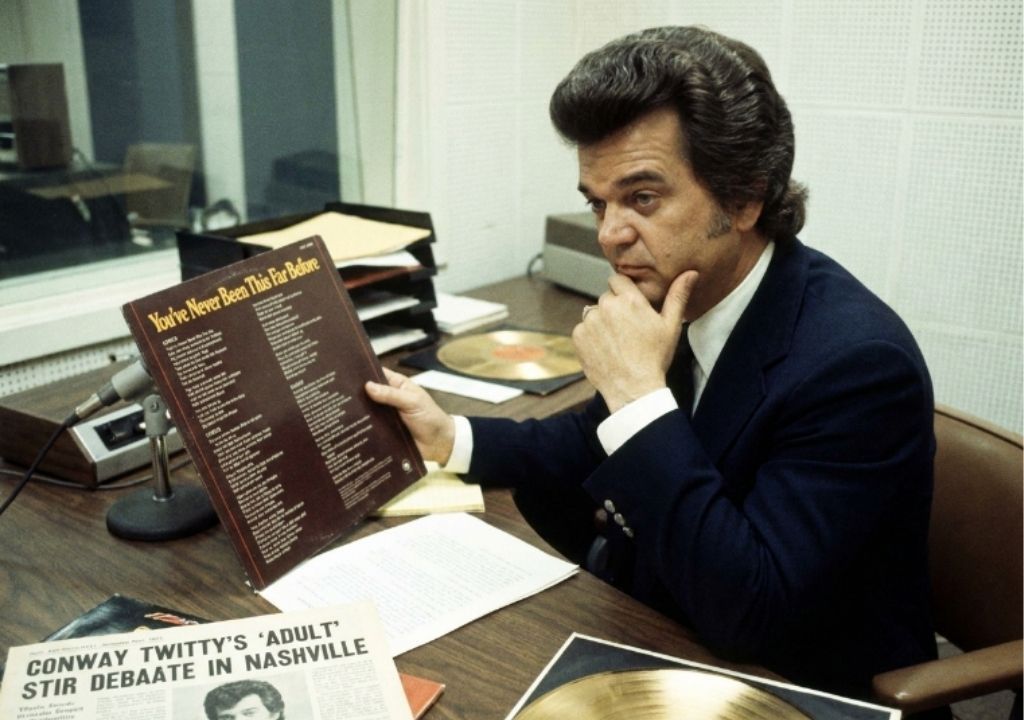
On 09/18/1973, a wave of panic swept through country music radio stations across the United States. Program directors at conservative outlets wrestled with a profound dilemma: pull a runaway hit from rotation or broadcast lyrics that explicitly detailed physical intimacy. The source of their anxiety was a slow-burning, intensely intimate single recorded at Bradley’s Barn in Mount Juliet, Tennessee. Written by a former rockabilly rebel who had successfully reinvented himself as a pillar of the Nashville establishment, the song abandoned the genre’s safe tropes of heartbreak and alcoholism. Instead, it dove headfirst into unadulterated passion. For a culture deeply rooted in traditional values, this was an unprecedented challenge to the status quo, orchestrated by a man whose signature pompadour and deep baritone usually signaled absolute conformity to the industry’s unspoken moral guidelines.
THE DETAILED STORY
The song in question, “You’ve Never Been This Far Before,” released on 07/02/1973 by MCA Records, quickly became a lightning rod for cultural warfare. While country music had long explored themes of infidelity and honky-tonk morality, it did so through a lens of regret, guilt, or religious redemption. Conway Twitty threw out that playbook entirely. His lyrics left little to the imagination, describing trembling fingers touching “forbidden places.” More than just the provocative words, it was the auditory architecture of the track—punctuated by heavy, rhythmic breathing and a low, spoken-word delivery—that sent shockwaves through the Bible Belt. Conservative disc jockeys across the nation instantly instituted a blackout, declaring the material too vulgar for their daytime audiences.
Yet, this institutional resistance completely failed to suppress the record. In fact, the censorship triggered the opposite effect, transforming a musical release into a must-hear cultural event. The single rocketed up the charts, capturing the number one spot on the Billboard Hot Country Songs chart for three consecutive weeks in September 1973. It remained on the country charts for sixteen weeks. More significantly, the controversy propelled Twitty beyond the insular confines of Nashville. The track achieved a massive crossover triumph, peaking at number twenty-two on the all-genre Billboard Hot 100, securing its place as his last top forty pop hit.
By refusing to back down, Twitty effectively forced country music into the modern era of sexual liberation. He demonstrated that the genre’s working-class audience desired mature, honest narratives of desire rather than sanitized, archaic ideals. The album, which boldly shared the single’s provocative title, sold massively, proving that sexual expression was highly profitable. Twitty’s calculated subversion did not alienate his core base; instead, it solidified his status as an innovator. He proved that true artistry involves reflecting the shifting realities of human intimacy, even if it means clashing directly with the self-appointed guardians of public morality.