INTRODUCTION
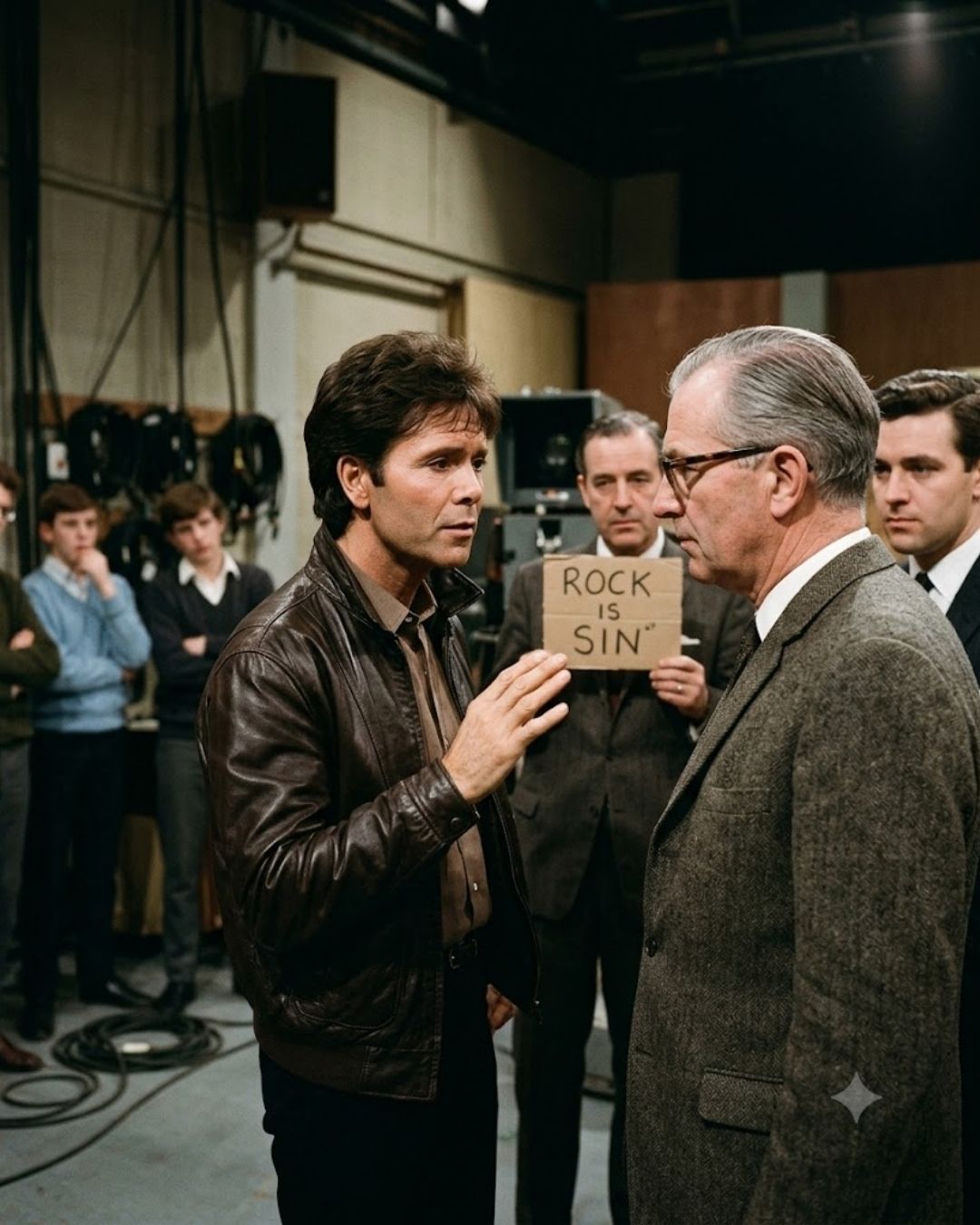
In the autumn of 1958, an eighteen-year-old Harry Webb stepped under the harsh studio lights of British television in a bespoke pink jacket, curling his lip to the opening riff of “Move It.” To a conservative post-war establishment, the newly christened Cliff Richard was not merely an entertainer; he was viewed as a dangerous cultural disruption. Columnists swiftly unleashed scathing assessments, dismissing his swagger as a grotesque imitation of American rebellion and predicting his immediate downfall. Yet, instead of withering under public condemnation or altering his electrifying cadence to appease traditionalists, Richard adopted a remarkably composed strategy that blindsided Fleet Street commentators and music purists alike. How did an embattled teenage singer dismantle nationwide moral outrage to build the blueprint for British rock?
THE DETAILED STORY
When Cliff Richard and The Drifters released “Move It” in August 1958, British popular music was trapped in an era of polite variety theater and sanitized novelty tracks. The record—widely recognized by music historians as Britain’s first authentic rock and roll single—hit the charts like an unexpected shockwave, climbing rapidly to number two on the UK Singles Chart. However, mainstream establishment reaction was swift and unforgiving. Influential publications ran scathing critiques, dismissive columnists labeled his swagger a crude menace to youth morality, and television producer Jack Good famously required Richard to adjust his image and tone down his brooding movements before appearing on Oh Boy!.
Richard’s response to this barrage of public derision was neither defensive rage nor submissive surrender. Instead, he engineered a conscious, strategic evolution in performance discipline. Supported by the impeccable musicianship of guitarist Hank Marvin and The Shadows (newly renamed from The Drifters), Richard decoupled the raw electricity of rock and roll from the stigma of juvenile delinquency. He preserved the driving backbeat and rhythmic vitality of the genre while elevating his stage craft through punctuality, vocal control, and an unassailable standard of professionalism.
This deliberate approach dismantled the establishment’s core argument: that rock and roll was merely an ephemeral, lowbrow fad. By late 1959, breakthrough singles like “Living Doll” and “Travellin’ Light” captured consecutive number-one positions on the national charts, proving his staying power reached far beyond brief teenage sensationalism. Skeptical industry executives who had forecast that his career would vanish within months were suddenly confronted with sold-out theater tours and sustained record sales across multiple demographics.
By declining public spats and letting disciplined artistry deliver his verdict, Richard legitimized British rock as a respectable and commercially powerful medium. He showed that homegrown musicians could capture the genuine spirit of modern rhythm without relying on manufactured rebellion, transforming early outrage into the cornerstone of a legendary six-decade career.