INTRODUCTION
In the damp, neon-lit basement of the Ansonia Hotel on Manhattan’s Upper West Side during the winter of 1971, a young, unknown pianist sat at a worn upright piano. This was the Continental Baths, an infamous gay bathhouse operated by Steve Ostrow, which survived in the criminal underworld through lucrative protection deals with the Colombo crime family. The pianist was Barry Manilow, accompanying a then-rising starlet named Bette Midler. For Manilow, this environment was a masterclass in survival. During an era when organized crime syndicates held an absolute monopoly over New York City’s illicit nightlife, creative geniuses and underworld kingpins shared the same smoke-filled rooms. Far from a dark tale of exploitation, Manilow’s intersection with these syndicate figures reveals a sophisticated narrative of professional resilience, where the shadows of the Mob provided an unexpected sanctuary for avant-garde artistry to flourish.
THE DETAILED STORY
To fully comprehend Manilow’s trajectory, one must understand that the mid-century entertainment industry was structurally dependent on the American Mafia. Venues like the Continental Baths relied heavily on syndicates like the Colombo family to secure illegal liquor distribution and protect vulnerable patrons from discriminatory police raids. Manilow operated as a pure professional, focusing entirely on his craft while maintaining a polite, calculated distance from the venue’s underworld benefactors. This strict professional focus protected him from the volatile legal crossfire that routinely dismantled independent club operators throughout New York City.
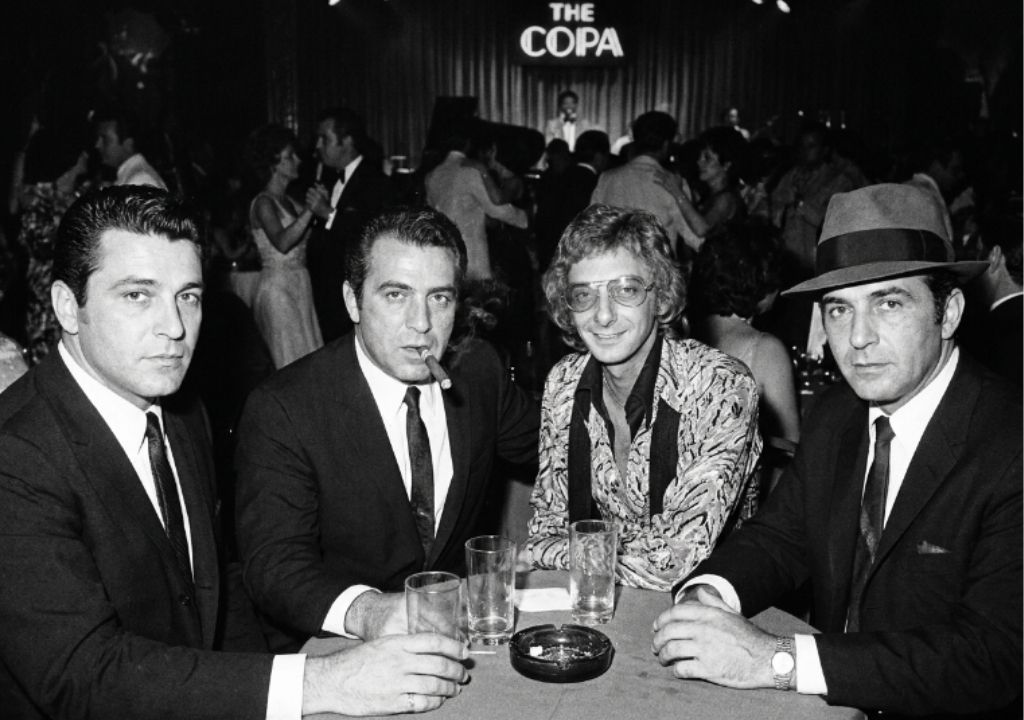
However, his most profound interaction with this criminal matrix was not administrative, but highly cinematic. In 1975, Manilow visited the legendary Copacabana nightclub located at 10 East 60th Street in Manhattan. Originally opened in 1940 under the public front of Monte Proser, the venue was covertly controlled by the notorious Genovese crime boss Frank Costello, who installed a ruthless enforcer named Jules Podell to run the daily, cash-heavy frontline operations. The club was a dazzling oasis where prominent mobsters, Hollywood royalty, and top-tier musical acts routinely converged under neon lights.
Fascinated by the venue’s glamorous yet highly volatile history, Manilow collaborated with co-writers Bruce Sussman and Jack Feldman to construct a compelling narrative that perfectly mirrored the club’s factual danger. Released on 05/18/1978, the smash disco track “Copacabana (At the Copa)” introduced “Rico,” a wealthy, violent underworld figure who directly mirrors the real-world mafiosi who historically dictated the terms of Manhattan’s nightlife. The song became an immediate global cultural phenomenon, netting Manilow a prestigious Grammy Award for Best Male Pop Vocal Performance in 1979 and cementing a multi-million dollar legacy. By translating his firsthand observations of the underworld’s sophisticated, high-stakes atmosphere into a defining pop anthem, Manilow successfully demystified the era. He beautifully transformed a complex relationship with nightclub syndicates into an empowering artistic milestone, demonstrating how a refined creator can distill the dark shadows of organized crime into pure, timeless musical gold.