INTRODUCTION
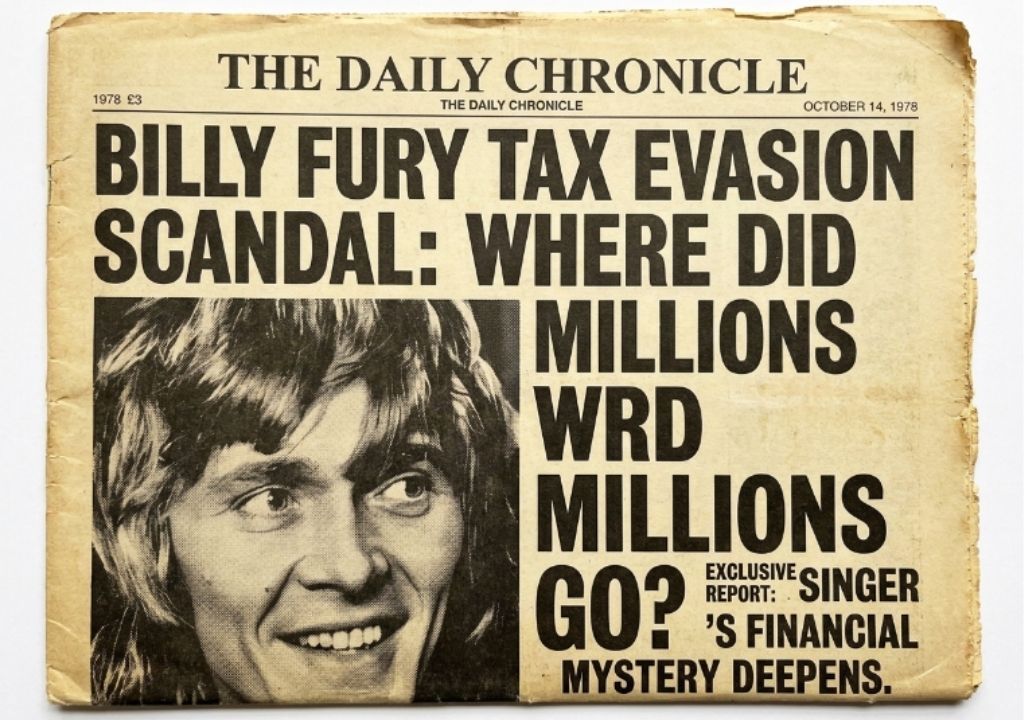
In the late autumn of 1978, the glittering facade of British rock history fractured when the Inland Revenue officially targeted Billy Fury. For years, whisper campaigns and sensational tabloids hinted that the reclusive superstar had secretly funneled millions of dollars into offshore sanctuaries or private estates to evade the tax collector. Yet, the brutal truth that emerged from the bankruptcy courts was far less sinister, though infinitely more tragic. Fury had not masterminded a grand financial heist; instead, he was the victim of a predatory mid-century entertainment machine. The 1978 financial crisis revealed that the legendary singer, who had spent decades generating vast fortunes for record labels and management, was virtually penniless. This investigation untangles the web of historical misconceptions, charting how a mix of devastating health crises, astronomical tax demands dating back to 1962, and structurally flawed contracts left one of Britain’s greatest talents completely exposed to the state.
THE DETAILED STORY
The narrative of Billy Fury treading the waters of tax evasion reflects the systemic vulnerability of 1960s pop icons. During his commercial peak, Fury’s career was steered by the formidable impresario Larry Parnes, whose stable of artists operated under contracts that heavily favored management. While Fury’s records generated massive revenue, the actual cash flow reaching the artist was heavily diluted. When the Inland Revenue caught up with the rock star in 1978, demanding an unpaid tax bill of £16,780—a substantial sum at the time—the public assumed a hidden stash of wealth existed. In reality, the money had never belonged to Fury in the first place; it had been absorbed by the machinery of the music business and the high costs of maintaining his public image.
Compounding this financial strain was Fury’s deteriorating health. Having suffered from rheumatic fever as a child, his heart was a ticking time bomb. By the mid-1970s, he had undergone two grueling open-heart surgeries to replace damaged valves. Forced into semi-retirement on a modest farm in Wales with his partner Lisa Rosen, his ability to tour and generate fresh income vanished. The 1978 bankruptcy proceedings did not uncover hidden millions; instead, they forced Fury to sign over his remaining future royalties and publishing income directly to the Inland Revenue. Rather than a calculated evasion tactic, the debacle stood as a stark monument to how quickly the industry could discard its architects, leaving a frail cultural giant to pay for the bookkeeping errors of his youth with his own artistic legacy.