INTRODUCTION
On the afternoon of 11/15/1965, inside the historic walls of Columbia Recording Studio in Nashville, Tennessee, a fiercely independent artist stepped up to the microphone to record a track that would shock the American establishment. Produced by the legendary Owen Bradley, the session seemed typical for Decca Records, yet the lyrical content was unprecedented. Written entirely by the artist herself, the track painted a heartbreaking picture of a working-class woman watching her beloved answer a draft notice to fight in the escalating Vietnam War. At a time when the country music genre served as an unquestioning bastion of conservative patriotism, this raw, unfiltered look at the domestic toll of military intervention crossed a dangerous cultural line. What began as a personal letter to a symbolic patriarch quickly transformed into an institutional crisis, igniting a fierce national debate about dissent, loyalty, and the limits of artistic freedom.
THE DETAILED STORY
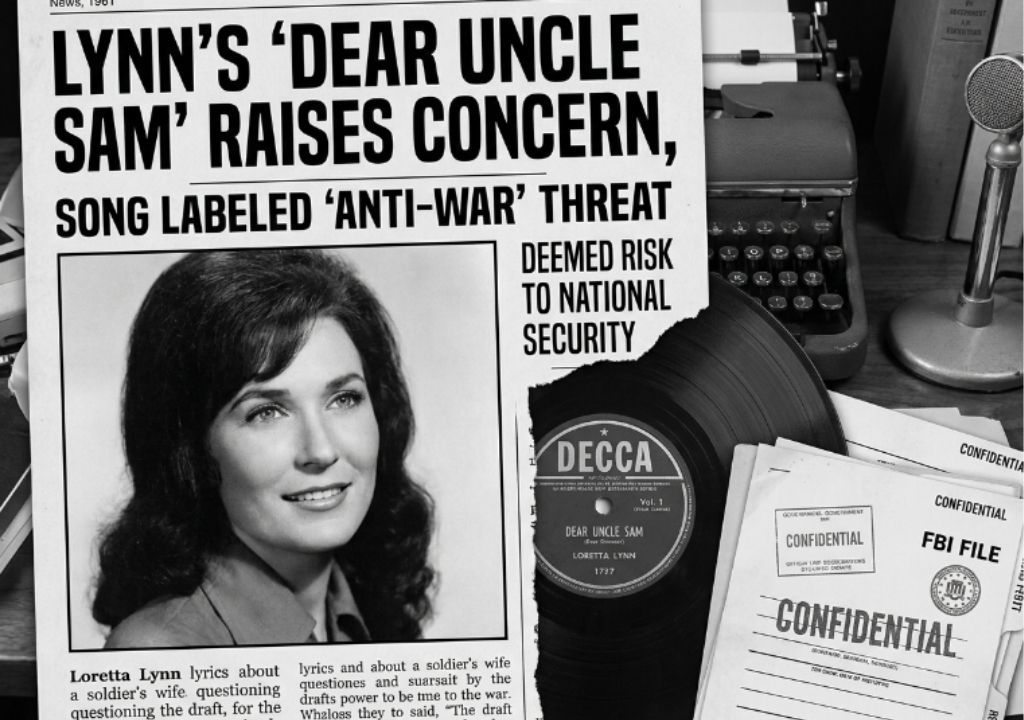
When the single titled “Dear Uncle Sam” hit airwaves in January 1966, it immediately upset the rigid political orthodoxy of the mid-twentieth-century music industry. The track did not utilize the aggressive, overtly political rhetoric of Greenwich Village protest singers; instead, it achieved its power through devastating intimacy. It chronicled a wife who proudly acknowledged her husband’s duty to his country, only to be left shattered when a tragic telegram arrived as a somber trumpet played “Taps.” This honest portrayal of grief was viewed by conservative gatekeepers as an active threat to national morale during a period of intense military mobilization under the Lyndon B. Johnson administration.
As the song rapidly climbed the charts, a wave of institutional pushback followed. Rumors swirled within the industry that the track compromised national security by stoking anti-draft sentiments among working-class families. Although federal agencies never formally intervened, conservative cultural forces enacted a sweeping corporate embargo. The single was ultimately banned by sixty radio stations nationwide, as programmers feared that broadcasting such profound grief would undermine the war effort. In one notable incident, a Kentucky preacher publicly condemned the track from his pulpit, characterizing its realism as a subversive attack on American values.
Yet, the censorship backfired entirely. The public’s desire for the truth over government-approved narratives propelled the track forward, and it ultimately peaked at number four on the Billboard Hot Country Singles chart, securing its place as the artist’s first self-penned top-ten hit. Rather than a calculated political manifesto, the song was born out of raw empathy; the artist’s husband, Oliver “Doolittle” Lynn, had suggested the topic after listening to devastating radio reports about rising casualties. By refusing to sanitize the human cost of global conflict, the track paved the way for subsequent boundary-pushing releases that challenged institutional power, cementing a legacy of fearless, authentic songwriting that remains utterly unmatched in American cultural history.