INTRODUCTION
On a humid afternoon in August 2021, the rushing waters of Hurricane Creek suddenly broke their banks, instantly reframing the delicate relationship between rural commerce and environmental stewardship in Hurricane Mills, Tennessee. Nestled within the rolling hills of Humphreys County, the legendary 3,500-acre Loretta Lynn’s Ranch has long stood as a crown jewel of American country music tourism. However, the venue’s immense scale—drawing thousands of visitors annually for campgrounds, music festivals, and the world’s largest amateur motocross championships—has recently drawn serious environmental attention from local agrarian neighbors. Residents and regional conservationists have expressed localized concerns regarding soil erosion, agricultural runoff, and the systemic ecological strain placed on the surrounding floodplain. This unfolding dialogue spotlights the complex challenge faced by historic celebrity estates as they attempt to balance massive public entertainment operations with modern ecological accountability.
THE DETAILED STORY
The organizational evolution of Loretta Lynn’s Ranch reflects the complex challenges of managing a massive, multi-use agritourism destination. Established in 1966 when the country music icon purchased the historic Hurricane Mills property, the estate expanded from a private sanctuary into a bustling commercial hub. The primary source of local environmental friction stems from the infrastructure required to host premier national events, most notably the legendary AMA Amateur National Motocross Championship, which has drawn elite global competitors annually since 1982. Local agrarian landowners and conservation advocates have raised nuanced questions regarding the localized impact of heavy recreational vehicle traffic, extensive dirt track modifications, and campsite waste management on the delicate regional watershed.
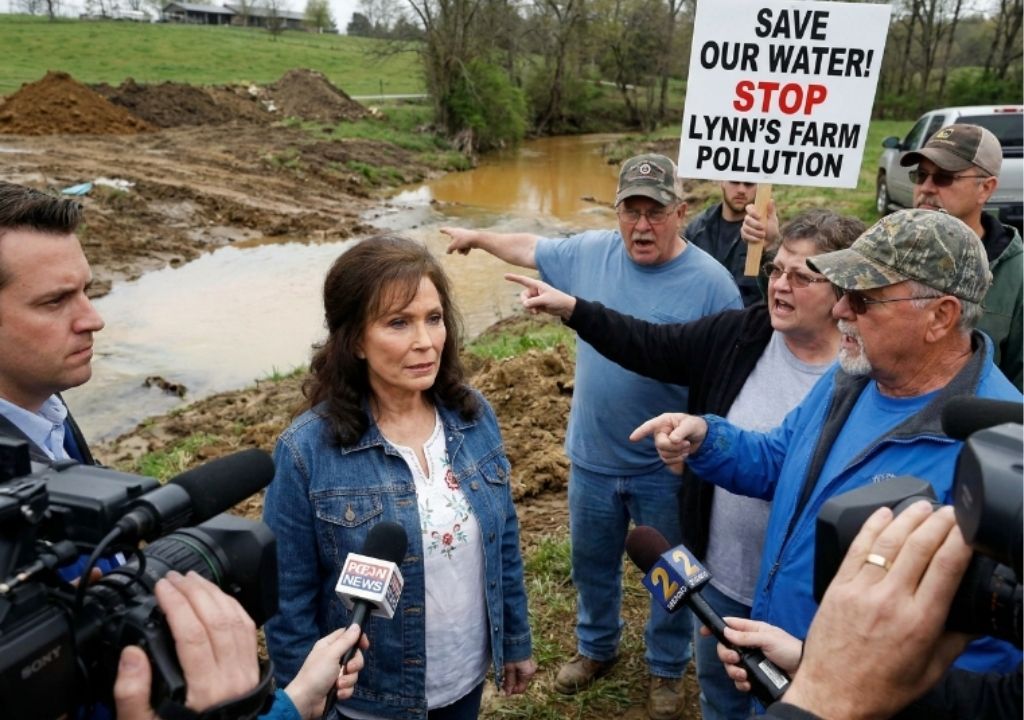
Central to the community dialogue is Hurricane Creek, a crucial tributary winding through the 3,500-acre property. Critics have argued that intense seasonal land use could accelerate soil erosion and increase sediment runoff, potentially impacting the aquatic biodiversity of the nearby Duck River ecosystem. In response to these natural resource challenges, the estate’s operations team has consistently engaged with the Tennessee Department of Environment and Conservation to maintain strict adherence to state environmental frameworks and wastewater compliance standards.
The urgency for resilient land architecture reached a critical turning point on 08/21/2021, when a catastrophic meteorological event dropped over 15 inches of rain on Middle Tennessee, triggering devastating flash floods. The disaster underscored the absolute necessity of advanced floodplain management. In May 2022, event organizers launched “Operation Ranch Rebuild,” an extensive corporate and voluntary initiative designed to restore the facility with a modern emphasis on ecological stability. Partnering with major industrial leaders, the project introduced advanced drainage networks, reinforced creek bank stabilization, and sustainable soil management practices. This proactive shift highlights a sophisticated corporate strategy: transforming localized environmental concerns into an industry-standard blueprint for sustainable rural tourism, thereby preserving the environmental integrity of a legendary American landmark.