INTRODUCTION
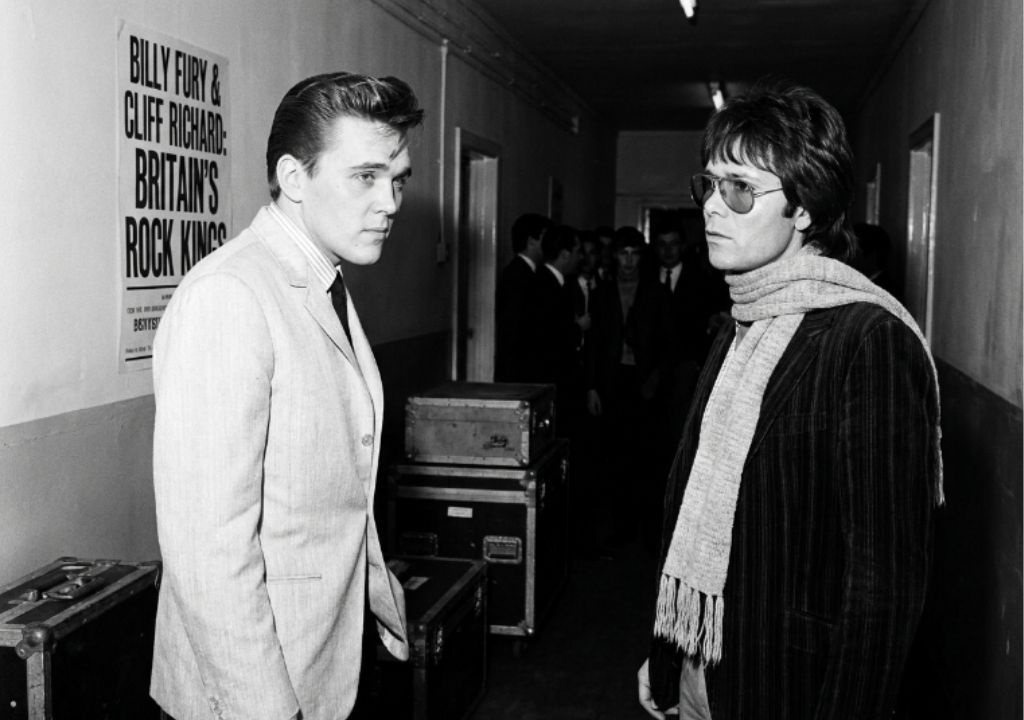
In the austere landscape of post-war Great Britain, a seismic cultural shift occurred as American rock and roll crossed the Atlantic, igniting an urgent search for a homegrown answer to Elvis Presley. On 08/29/1958, this musical evolution reached a boiling point with the release of Cliff Richard’s seminal track “Move It,” a record that galvanized the nation with its crisp, infectious energy. Concurrently, a raw, brooding talent from Liverpool named Billy Fury emerged under the guidance of impresario Larry Parnes, weaponizing an authentic, angst-ridden vulnerability that rivaled Presley’s primal appeal. This kicked off a sophisticated, high-stakes commercial duel between Richard’s emerging pop supremacy and Fury’s uncompromised rockabilly ethos. It was a silent proxy war that fundamentally altered the financial and artistic architecture of the British entertainment industry, proving that youth culture could generate millions of USD ($) practically overnight.
THE DETAILED STORY
While Billboard frequently chronicled the mid-century American invasion of global charts, the United Kingdom was quietly engineering its own internal gold rush. Cliff Richard quickly consolidated his power with institutional backing, partnering with EMI’s Columbia label and his legendary backing band, The Shadows. Richard represented a highly calculated, clean-cut adaptation of the Elvis phenomenon. He possessed the looks and the vocal control, but as the 1960s dawned, he strategically pivoted toward a broader, middle-of-the-road entertainment profile, securing massive box-office returns with films like The Young Ones. This shift guaranteed him an enduring multi-million-dollar empire, positioning him as the ultimate establishment King of Pop.
Conversely, Billy Fury operated as the dangerous, poetic alternative. Signed to Decca Records, Fury’s 1960 landmark album, The Sound of Fury, was a masterclass in raw, self-penned rockabilly that many purists argued captured the true, untamed spirit of Presley far better than Richard’s polished hits. On stage, Fury was a revelation of primal energy; his hip-swiveling, intense performances frequently drew gasps and censorship threats from conservative promoters. Yet, while Richard accumulated number-one singles, Fury achieved a different kind of commercial miracle, spending an astonishing 332 weeks on the UK charts without ever hitting the top spot, a testament to a deeply devoted, generational fanbase.
This underground rivalry was defined by two distinct philosophies of stardom. Richard accepted the demands of mass-market longevity, while Fury, battling severe health issues from childhood rheumatic fever, poured a fragile, finite energy into every vocal performance. Their parallel careers showed that the race for cultural supremacy wasn’t merely about record sales, but about defining the soul of British youth culture. When the dust settled, Richard secured the historical longevity, but Fury retained the mythic, unblemished prestige of a true rock-and-roll martyr. Their quiet war proved that a crown can be won through polished diplomacy or earned through the raw, unyielding power of absolute authenticity.