INTRODUCTION
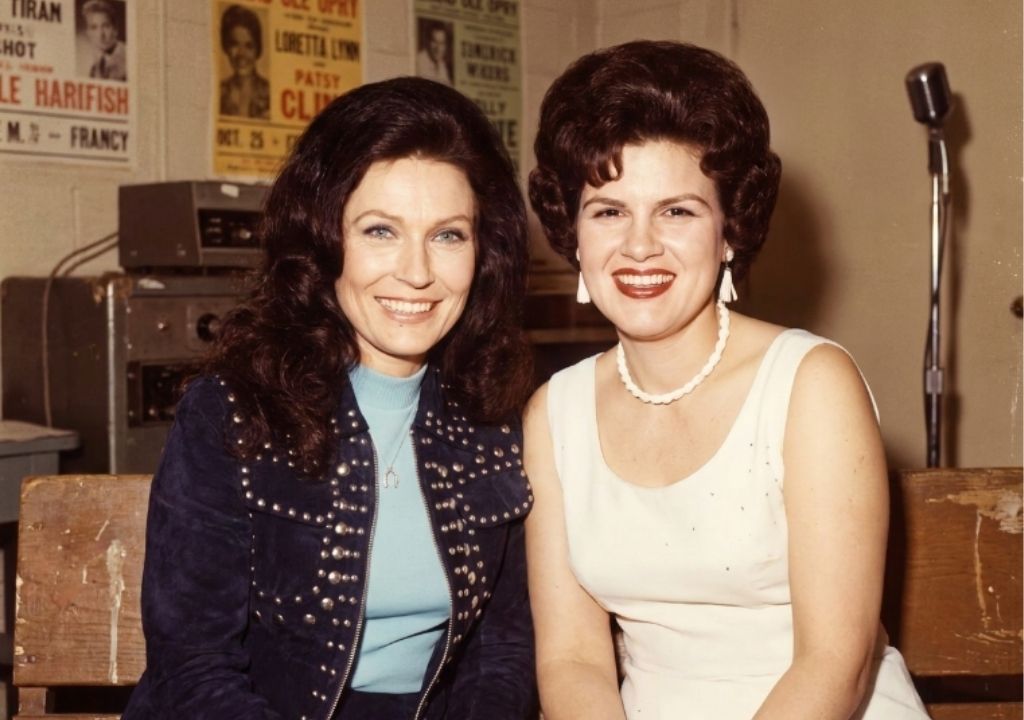
In the sweltering heat of July 1961, country music superstar Patsy Cline lay immobilized in a Madison, Tennessee hospital bed, recovering from a horrific head-on car collision that occurred on 06/14/1961. As her chart-topping anthem “I Fall to Pieces” echoed across national airwaves, a completely unknown singer named Loretta Lynn stepped onto the stage of the Ernest Tubb Midnight Jamboree. With a raw $17 guitar and an unyielding sense of respect, Lynn dedicated her televised performance to the ailing icon. Deeply moved by the gesture, Cline dispatched her husband to locate this audacious newcomer. What industry skeptics initially dismissed as a calculated public relations stunt or a veteran artist exploiting a vulnerable rookie instantly evolved into something entirely different. It became the foundation of the most revolutionary, deeply protective sisterhood in the history of American popular music.
THE DETAILED STORY
During the early 1960s, Music Row operated under a rigid, cutthroat patriarchy that purposely kept female artists isolated and competitive. Rumors frequently circulated that established stars only maintained alliances to safeguard their own commercial territorial rights. However, the private reality between Patsy Cline and Loretta Lynn completely upended this narrative. Instead of using her immense leverage to exploit or overshadow the younger Decca Records artist, Cline actively protected Lynn from predatory contracts and industrial manipulation. She routinely gifted Lynn customized stage dresses, financially subsidized her basic living expenses during lean tour cycles, and meticulously coached her on the nuances of performance confidence, makeup application, and technical stagecraft.
When male Grand Ole Opry members attempted to minimize or alienate Lynn, Cline leveraged her immense star power to force her integration into prominent showcases, culminating in Lynn securing her official Opry membership in September 1962. This legendary alliance was built on an exceptional foundation of mutual respect rather than professional transactional utility. Cline, who had fought relentlessly since 1954 to secure her own financial independence from unfair publishing deals, recognized Lynn’s raw, authentic genius as a songwriter and refused to let external forces commodify it.
The tragic culmination of this brief but foundational sisterhood occurred on 03/05/1963, when Cline perished in a catastrophic plane crash in Camden, Tennessee. The devastating loss left Lynn completely untethered, yet permanently empowered by the fierce legacy of her late mentor. Sitting on the front steps of Cline’s home shortly after the crash, Lynn penned the haunting track “This Haunted House,” immortalizing her sudden grief. Decades later, Lynn’s 1977 tribute masterpiece album, I Remember Patsy, formally certified their enduring bond, highlighted by her breathtaking rendition of “She’s Got You” which dominated the Billboard country charts at No. 1. Rather than an asymmetric narrative of celebrity exploitation, their shared history stands as a definitive, timeless blueprint of genuine artistic solidarity and unconditional love.