Introduction
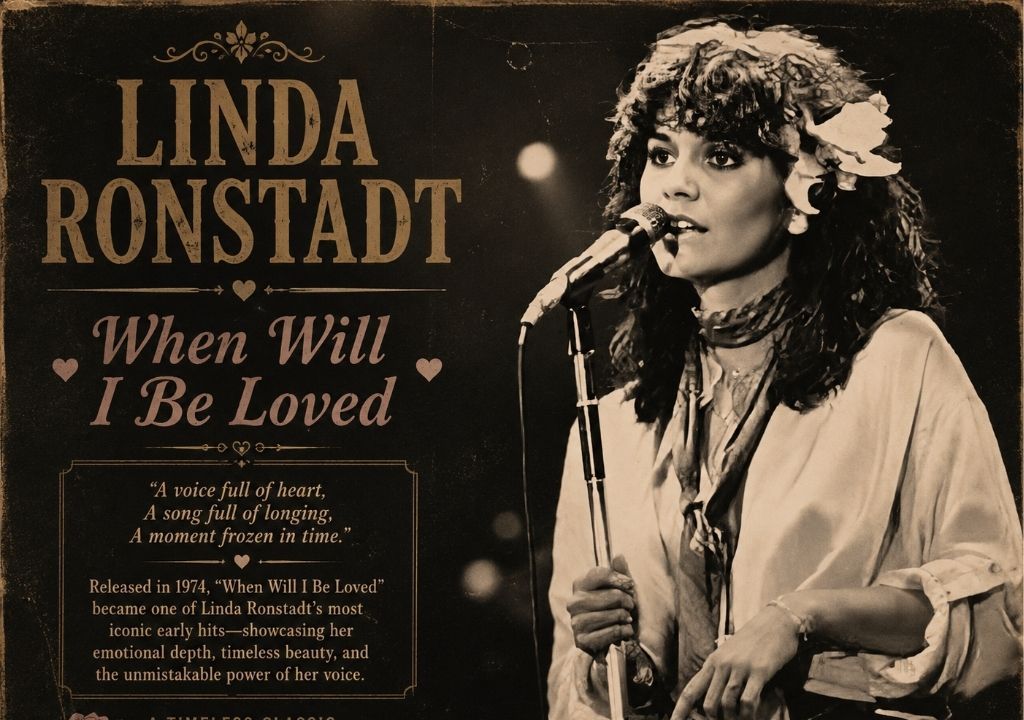
Let us trace the essence of mid-1970s Southern California, where the air was thick with the scent of eucalyptus and the shifting tides of the rock revolution. At the absolute center of this musical universe stood Linda Ronstadt, a visual and vocal force of nature who possessed an uncanny ability to breathe fierce, independent life into vintage classics. When she laid her hands on Phil Everly’s “When Will I Be Loved” in late 1974 for her landmark album Heart Like a Wheel, she did not just cover a song; she completely liberated it from its 1960 fraternal origins and turned it into a definitive anthem of modern feminine resilience.
The Everly Brothers’ original version was a beautiful, melancholic piece of close-harmony pop, steeped in a sort of polite teenage bewilderment. But Ronstadt, backed by the masterful production of Peter Asher and the stinging guitar work of Andrew Gold, injected the track with a raw, propulsive energy that bridged the gap between traditional country and hard-edged rock and roll. The opening beat hits you like a sudden downpour on a warm afternoon—crisp, demanding, and utterly impossible to ignore. Then comes that voice. Ronstadt climbs into the upper registers with an effortless, thrilling power, transforming what once sounded like a victim’s lament into a soaring declaration of self-worth.
There is an aching vulnerability embedded in the lyrics, a universal question that every lonely heart has whispered into the dark: “When will I be loved?” Yet, when Ronstadt sings it, she sounds far from defeated. Her delivery carries the dust of the Arizona desert where she grew up, mixed with the neon-lit sophistication of the Los Angeles club scene. She captures the precise emotional twilight of someone who has been pushed around, cheated on, and left behind, but who still refuses to let the world harden her spirit. It is a masterclass in emotional duality—simultaneously heartbroken and defiant.
During this golden era of AM and FM radio, Ronstadt was rewriting the rules for women in popular music. She was not just a singer; she was a brilliant curator of American songcraft, seamlessly blending genres at a time when the industry demanded strict boundaries. “When Will I Be Loved” became a massive crossover smash, capturing the number one spot on the Billboard Hot Country Singles chart and climbing all the way to number two on the Hot 100. It proved that a song could possess a country pedigree while rocking hard enough to shake the rafters of any stadium.
Listening to this track decades later feels like opening a pristine time capsule. It conjures up images of spinning vinyl records, wood-paneled station wagons, and the warm, analog glow of old stereo receivers. It reminds us of a time when music felt tactile, organic, and deeply human. Linda Ronstadt’s performance remains an undisputed touchstone of vocal excellence, a timeless reminder that while love may be fleeting and treacherous, a truly great song lasts forever.