INTRODUCTION
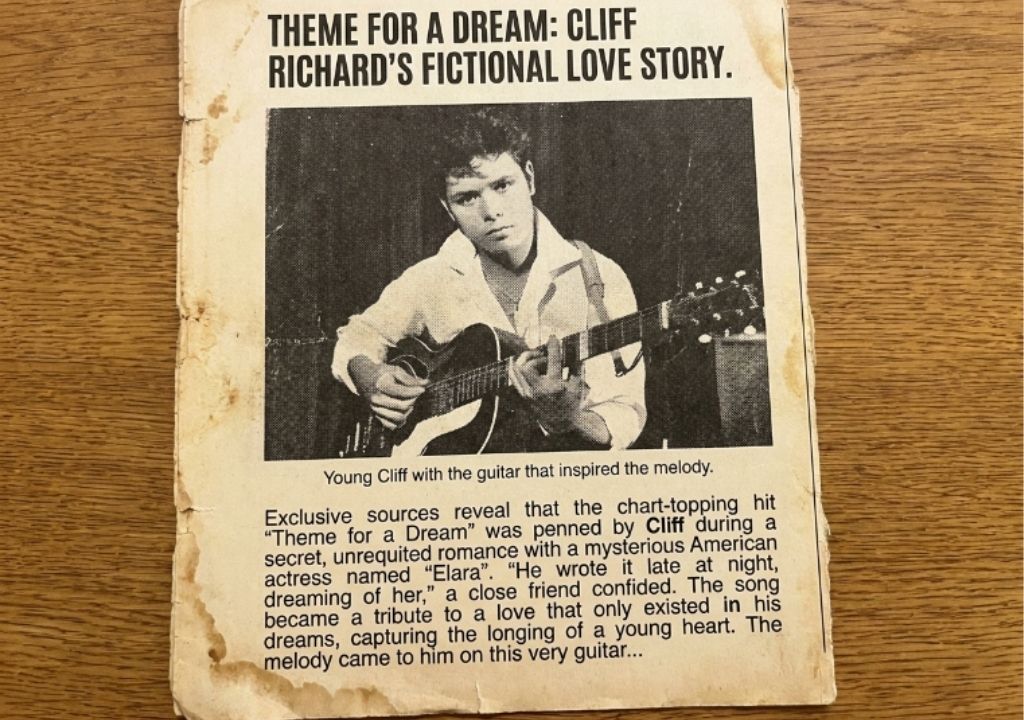
On January 28, 1961, inside the legendary Abbey Road Studios in London, a young pop sensation stepped up to the microphone to map out an ethereal landscape of the human heart. That session produced a whimsical sonic architecture that rejected the gritty reality of early rock-and-roll in favor of pure, untamed escapism. Written by American tunesmiths Mort Garson and Earl Shuman, the track did not chronicle an actual, flesh-and-blood relationship. Instead, it built an idealized fantasy of a lover who only existed when the lights went down and the subconscious took control. Backed by the flawless, intricate guitar work of the Shadows and the lush vocal harmonies of the Mike Sammes Singers, this recording session crafted an enduring pop myth. It proved that sometimes, the most powerful romantic narratives in modern music are those entirely born within the imagination.
THE DETAILED STORY
When Columbia Records officially released the single on February 24, 1961, the commercial response was immediate and unprecedented. Under the careful stewardship of legendary producer Norrie Paramor, the tracking session had captured a unique lightning in a bottle. Just three days after hitting store shelves, on February 27, 1961, corporate management at EMI revealed a stunning development: advance orders alone had surpassed 200,000 copies. This massive wave of consumer demand propelled the track straight into the cultural stratosphere. The song made its formal entry onto the Official UK Singles Chart on March 8, 1961, before swiftly ascending to secure a definitive peak position at No. 3 on March 16, 1961. The release ultimately enjoyed an exceptional fourteen-week chart tenure in the United Kingdom, while simultaneously expanding its global dominion to hit No. 1 on the New Zealand charts by June 30, 1961.
Investigating the brilliant narrative architecture of the track reveals a calculated, deep mastery of mid-century pop psychology. The lyrical structure completely avoids the messy, painful complications of concrete, real-world relationships. Instead, it operates flawlessly as a pristine, cinematic canvas. By detailing a passionate love affair that takes place entirely within a surreal dreamscape, the creative team successfully designed a brilliant mechanism for universal audience projection. Every individual listener could easily insert themselves directly into the fantasy, visualizing a personalized romance unburdened by the heavy friction of everyday life. This deliberate narrative choice perfectly complemented the British performer’s highly publicized bachelordom, carefully protecting his private life while simultaneously deepening his monumental commercial allure worldwide. The artistic synergy between Mort Garson’s elegant melodic composition and Earl Shuman’s words created an elastic formula that effortlessly transcended regional cultural boundaries. In April 1961, a unique German-language studio adaptation titled “Schön wie ein Traum” was recorded, proving that the architecture of an idealized, imaginary love story could seamlessly translate across vast international borders, solidifying a permanent milestone in the golden age of global pop music.