Introduction
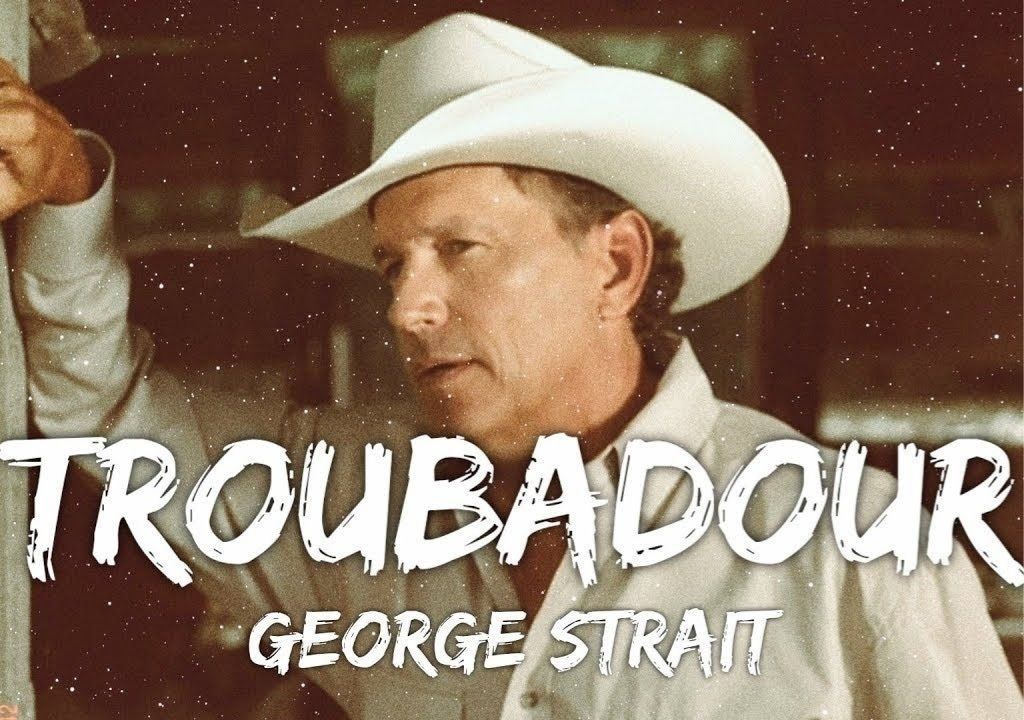
There is a unique, quiet magic that happens when an artist who has spent his entire life under the neon lights turns around to look at his own reflection in the rearview mirror. Released in 2008 as the title track of his hit album, “Troubadour” by the legendary King of Country, George Strait, is not just a song; it is a cinematic masterpiece wrapped in three and a half minutes of pure, unadulterated nostalgia. It feels like a late-August sunset over a dusty Texas ranch—warm, slightly fading, yet breathtakingly beautiful. For those of us who have spent decades tracing the lines of classic country music, this particular track strikes a chord that vibrates deep within the soul, serving as a gentle reminder of the unstoppable march of time and the enduring power of a man’s true identity.
George Strait has always been the gold standard of neotraditional country, a towering figure who rescued the genre from the slick, over-produced pop influences of the 1980s by bringing back the fiddle, the steel guitar, and the honest, understated storytelling of western swing and honky-tonk. By the time he recorded “Troubadour,” he had already accumulated dozens of number-one hits and cemented his status as a living legend. Yet, instead of resting on his laurels with a boisterous anthem, Strait delivered a profoundly vulnerable soliloquy. The song opens with a melancholic acoustic guitar strum, soon joined by a weeping steel guitar that sets a deeply reflective atmosphere. When Strait sings about seeing an old man in the mirror and realizing how quickly the youth slipped away, his baritone voice carries a seasoned weight. It is smooth, grounded, and entirely devoid of theatrical pretense, making the listener feel as though they are sitting across from an old friend sharing a quiet drink at a dimly lit corner bar.
The lyrical brilliance of the piece lies in its bittersweet duality. It acknowledges the physical reality of aging—the graying hair, the slower stride—but fiercely protects the eternal flame of passion burning inside. When the chorus swells with the backing vocals of Patty Loveless, creating a hauntingly beautiful harmony, Strait proclaims that he was a troubadour then, and he is a troubadour now. The word itself evokes images of wandering poets and traveling musicians of old, individuals whose sole purpose was to carry stories from town to town. Strait embodies this ancient tradition perfectly. The song evokes vivid imagery of empty arenas after the crowd has gone home, old rhinestones losing their luster, and long stretches of highway at midnight. It captures the universal human experience of looking back at our younger days not with bitter regret, but with a profound sense of gratitude and pride. For any true lover of traditional music, listening to this track is an emotional journey that transcends country music, touching upon the very essence of what it means to live a life dedicated to a craft and to remain unapologetically true to oneself until the final curtain falls.