INTRODUCTION
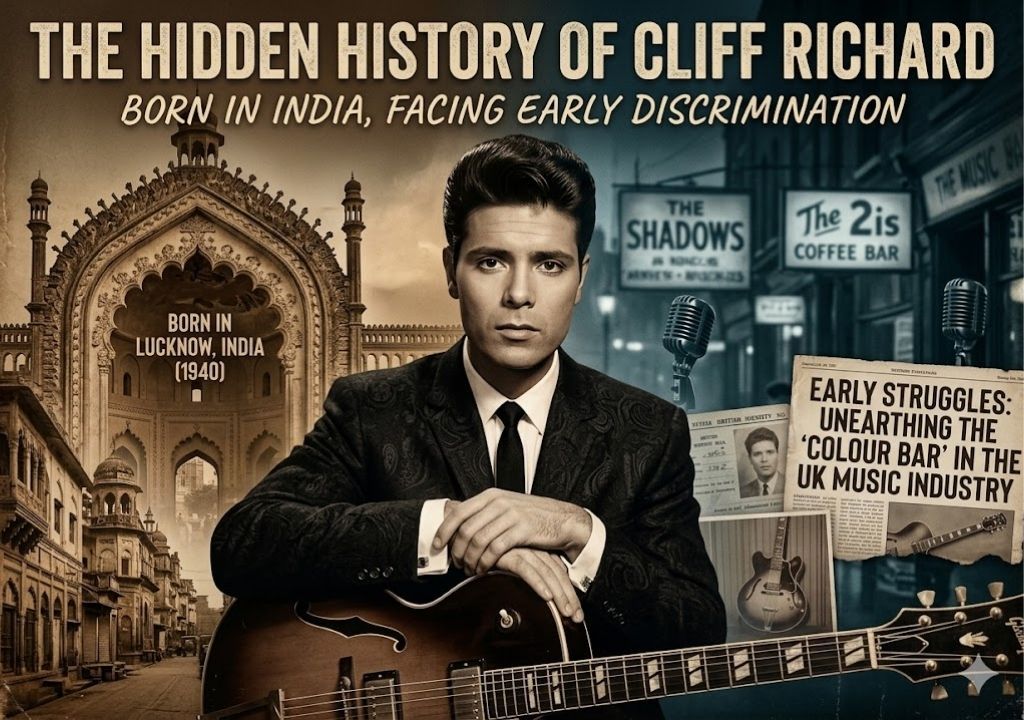
On 10/14/1940, at King George’s Medical Hospital in Lucknow, India, Harry Rodger Webb was born into the fading twilight of the British Raj. Decades later, under the moniker Cliff Richard, he would become Britain’s premier rock-and-roll icon, a clean-cut phenomenon often framed as the UK’s answer to Elvis Presley. Yet, beneath the slick pompadour and infectious charisma lay a complex, carefully guarded family history. To the post-war British public of the late 1950s, Richard was the ultimate boy next door from Surrey. In reality, his formative years were shaped by the sudden, tumultuous migration from the Indian subcontinent following partition in 1947. This displacement introduced an unspoken undercurrent of racial stratification that Richard and his family had to navigate with immense discretion as they adjusted to a cold, monocultural British society that was highly intolerant of imperial complexities.
THE DETAILED STORY
When the Webb family arrived in England aboard the SS Ormonde, they possessed limited financial resources, facing a starkly different environment than the vibrant railway colonies of Uttar Pradesh. The UK music industry of the late 1950s was deeply traditional, seeking marketable archetypes that mirrored conventional British sensibilities. Industry executives at EMI and early talent managers preferred an idealized, domestic origin story. Consequently, Richard’s Anglo-Indian heritage—specifically his maternal great-grandmother’s South Asian ancestry—was deliberately minimized in early press releases. This omission was less about malice and more about navigating a rigid entertainment landscape where any hint of foreign lineage could alienate mainstream radio programmers and conservative audiences.
The psychological toll of masking one’s origins while climbing the ranks of show business was immense. While contemporary trade publications like Billboard and Variety focused on his intense chart battles with American rock-and-roll imports, Richard quietly engineered an impeccably polished persona. He chose a path of absolute artistic excellence over confrontation, using his flawless vocal delivery and magnetic stage presence to dissolve cultural barriers. Instead of allowing himself to be marginalized by the subtle institutional racism that characterized post-colonial Britain, he brilliantly sublimated his outsider status into a universally appealing, tireless work ethic.
By the time seminal tracks like “Move It” and “Living Doll” achieved historic commercial success, generating millions of dollars across global markets, Richard had fundamentally shifted the pop cultural paradigm. His monumental success proved that pure talent could transcend the strictures of mid-century identity politics and hidden societal biases. By maintaining a dignified, positive focus on his musicianship, he subtly but effectively challenged the entertainment industry’s narrow, insular definitions of British identity. Ultimately, his journey from the humid plains of Lucknow to the absolute pinnacle of global entertainment stands as a timeless masterclass in resilience, transforming a potential vulnerability into an enduring, multi-decade testament to artistic sovereignty and grace.