Introduction
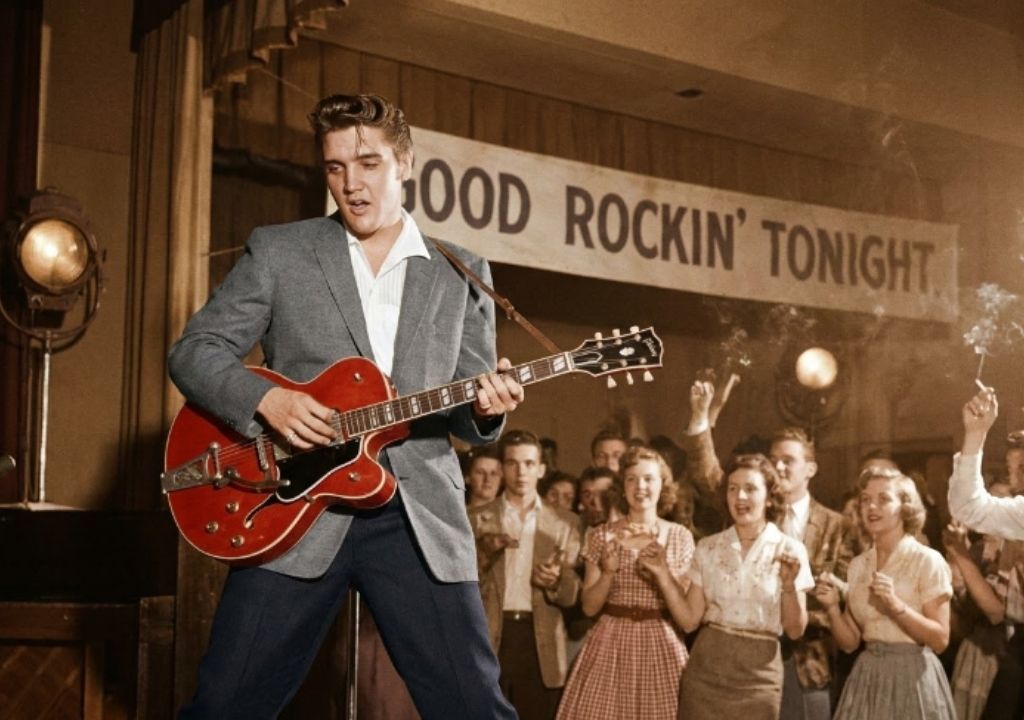
In September 1954, inside the sun-scorched, sacred walls of Sun Studio in Memphis, Tennessee, a young nineteen-year-old former truck driver was busy dismantling the traditional boundaries of popular music. Fresh off the local success of his debut single “That’s All Right,” Elvis Presley, alongside lead guitarist Scotty Moore and double bassist Bill Black, returned to 706 Union Avenue under the guided ear of producer Sam Phillips. They were searching for a follow-up—a song that could prove their initial lightning strike was no mere fluke. What they captured on analog magnetic tape that late summer evening was “Good Rockin’ Tonight,” a track that did not merely invite listeners to dance, but practically demanded a complete surrender to the wild spirit of early rock ‘n’ roll.
Originally written and recorded in 1947 by jump blues singer Roy Brown and later made famous by Wynonie Harris, “Good Rockin’ Tonight” was already a stomping Rhythm & Blues staple. However, when Elvis picked up his Martin acoustic guitar, he stripped away the heavy horn sections of the original big-band arrangements and injected the song with a raw, uptempo country-blues swing that defined the birth of rockabilly. Bill Black’s furious, percussive slap-bass rhythm substituted for a full drum kit, driving the groove forward like a runaway freight train, while Scotty Moore’s iconic Gibson ES-295 crackled with sharp, bluesy guitar fills. Over top of this infectious rhythm section, Sam Phillips applied his signature slapback tape echo, giving the entire recording a reverberating, midnight-dancehall warmth that felt larger than life.
At the center of this musical revolution was Elvis Presley’s unstoppable vocal authority. From the very moment he opens the track with his famous acapella shout—inviting “Roy” and “Deacon Jones” to join the party—Elvis sings with a playful, intoxicating swagger. His voice glides effortlessly between soulful blue notes, hiccuping vocal accents, and an unrestrained, joyous energy that felt entirely radical for 1950s conservative America. He was taking the passionate urgency of rural Southern R&B and blending it seamlessly with hillbilly country, creating a sound that was dangerous, liberating, and utterly irresistible to a young generation hungry for something real.
To listen to “Good Rockin’ Tonight” today on a spinning vinyl record or a warm analog radio is to step back into a magical, transformative moment in American cultural history. It transports the mind to neon-lit diners, crowded wooden dance floors, and dark country roads illuminated by automobile headlights under a starry Southern sky. It reminds us of a time when music was unpolished, spontaneous, and ignited by pure human passion rather than digital perfection. Elvis Presley did not just record a cover version; he set a standard for youth culture, proving that a guitar, a bass, and a rebellious spirit could shake the world to its very core.
Decades after those historic tapes spun in Memphis, “Good Rockin’ Tonight” stands as an untouchable monument of golden-era music. It continues to capture the timeless, unbridled excitement of an era when rock ‘n’ roll was young, free, and burning with an eternal flame.