INTRODUCTION
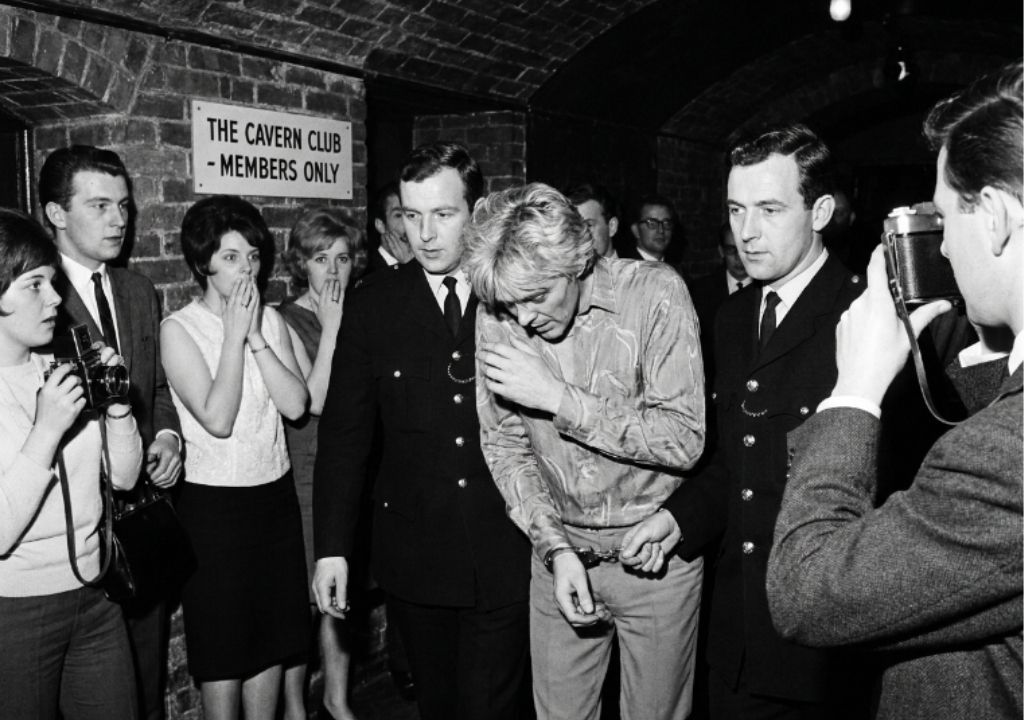
For decades, a shadowy rumor has circulated within the European music underground, claiming that Britain’s premier rock-and-roll icon was secretly handcuffed during a midnight police raid at a smoke-filled London basement club. Fans and rock historians have frequently whispered about this alleged legal catastrophe, framing it as the hidden turning point that tarnished the singer’s pristine, heartthrob image. The narrative feels entirely plausible, especially given the chaotic, drug-fueled landscape of the post-war British music scene where rock stars routinely clashed with aggressive local authorities. However, an exhaustive investigation into historical police records and entertainment archives reveals a completely different reality. The sensational tale of an illicit substance arrest is not a hidden historical truth, but rather a profound case of mistaken identity and geographic distortion that has successfully blurred the line between fact and fiction for generations.
THE DETAILED STORY
To understand how this myth took root, one must examine the strict reality of the mid-century British entertainment industry. Managed by the legendary and uncompromising impresario Larry Parnes, the singer was held to exceptionally rigid behavioral standards designed to maintain his massive commercial appeal. More importantly, the artist faced severe personal health struggles that made participation in the era’s emerging drug counterculture physically impossible. Having suffered from debilitating rheumatic fever as a child, his cardiovascular system was permanently damaged, a condition that required him to preserve his physical energy and avoid the dangerous substance binges that claimed many of his peers. He ultimately passed away from heart failure on 01/28/1983, leaving behind a clean legal record completely devoid of narcotics convictions.
The actual origin of the underground drug arrest myth stems from a fascinating instance of modern geographic conflation rather than vintage criminal activity. In the West Hampstead district of London, an alleyway off Lithos Road was formally named Billy Fury Way to honor the legendary performer’s artistic contributions to the area. Over the decades, however, this specific dark passage became a notorious hotspot for local law enforcement interventions due to persistent illicit activities. The Metropolitan Police and the local Safer Neighbourhoods Team have routinely launched targeted anti-narcotics campaigns in this exact zone. The confusion reached a peak following an official police update issued on 06/01/2026, which confirmed the successful arrest of a male suspect on Billy Fury Way for the possession and intent to supply Class A drugs.
When digital news aggregates and automated social media feeds broadcasted headlines regarding a major drug arrest occurring on Billy Fury Way, casual readers and distant pop culture enthusiasts misread the spatial designation as a personal biography. The contemporary police raid inside a dark London alleyway was instantly warped into a sensationalized retro rumor about the singer himself being caught in an underground club bust. By separating contemporary urban geography from historical biography, investigative analysis definitively proves that the singer remained entirely untainted by the dark underbelly of the rock world, preserving his status as an unblemished icon of his generation.