Introduction
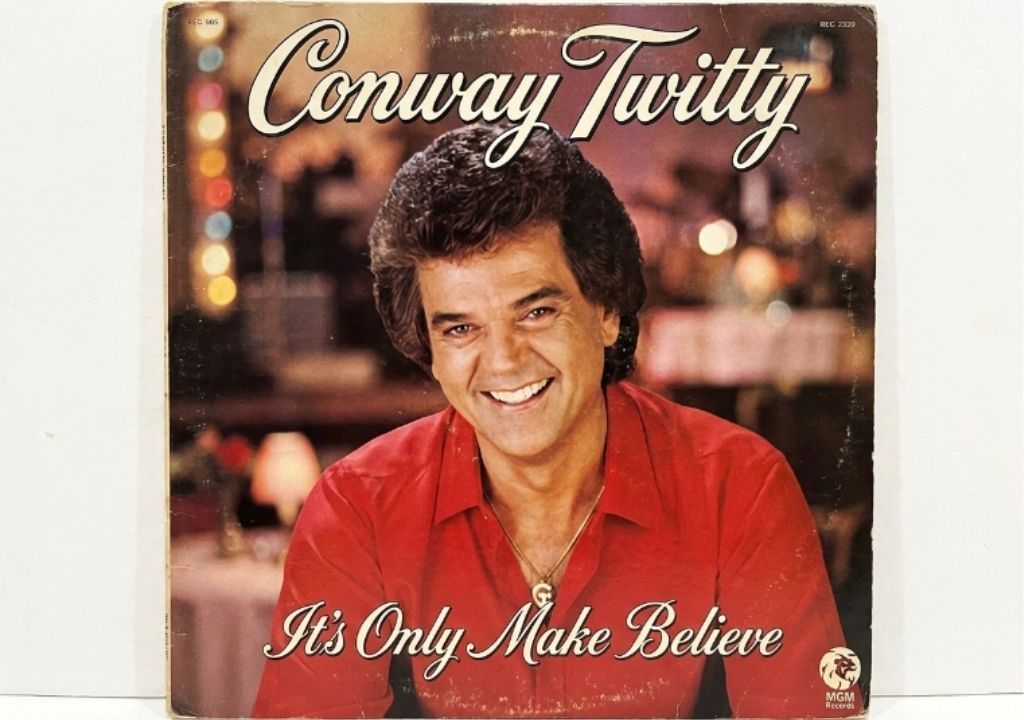
The late 1950s was a magical, transitional twilight in the landscape of popular music. The raw, rebellious thunder of early rock and roll was beginning to intertwine with the deep, soulful storytelling of traditional country and the polished arrangements of pop. In the middle of this sonic evolution stood a young man from Mississippi named Harold Jenkins, who would soon change his name to Conway Twitty and alter the course of music history forever. Long before he became the definitive titan of country music in the 1970s and 1980s, Conway was a fierce, leather-jacketed rocker with a voice that could rattle the walls of any roadhouse. In 1958, he walked into a recording studio and unleashed a song that would not only define his early career but would also become an eternal monument to human heartbreak: “It’s Only Make Believe.”
To listen to “It’s Only Make Believe” today is to step inside a smoky, dim-lit diner from a bygone era, where the neon sign hums softly and the jukebox glows in the corner. The song does not just play; it envelops the room like a heavy, cinematic fog. It begins with a deceptively quiet, brooding intimacy. The gentle strumming of an acoustic guitar and a steady, metronomic drumbeat set a somber stage. When Conway begins to sing, his voice is a low, trembling whisper, heavy with the weight of an agonizing secret. He introduces us to the ultimate tragedy of unrequited love—the desperate, exhausting act of pretending that the person you adore feels the exact same way about you.
What makes this track an absolute masterpiece is its breathtaking structural dynamics. The composition is a slow, masterfully controlled burn. As the narrative progresses, the orchestration swells, and Conway’s vocals begin to climb an impossibly steep emotional ladder. The background vocalists provide a haunting, angelic cushion, contrasting sharply with the raw, masculine desperation of the lead performance. By the time the song reaches its iconic crescendo, Conway abandons all restraint. His voice transitions from a bruised whisper into a soaring, operatic cry of pure, unadulterated anguish. When he hits those towering high notes, his vocals crackle with a gravelly intensity that is so visceral you can almost feel the phantom ache in your own chest. It was a vocal delivery so powerful and dramatic that many listeners at the time initially mistook it for a new release by Elvis Presley, yet Conway possessed a unique, bluesy grit that was entirely his own.
“It’s Only Make Believe” went on to top the charts on both sides of the Atlantic, proving that the language of a broken heart is entirely universal. Decades after its release, the record has lost none of its devastating potency. It remains a masterclass in musical storytelling, capturing a moment in time when artists poured their entire souls into a single microphone without the safety net of modern studio production. It is a nostalgic time capsule that reminds us of the sheer power of the human voice to transform private sorrow into a communal, timeless piece of art. For anyone who has ever loved in vain, this song is not just a melody; it is a mirror.