INTRODUCTION
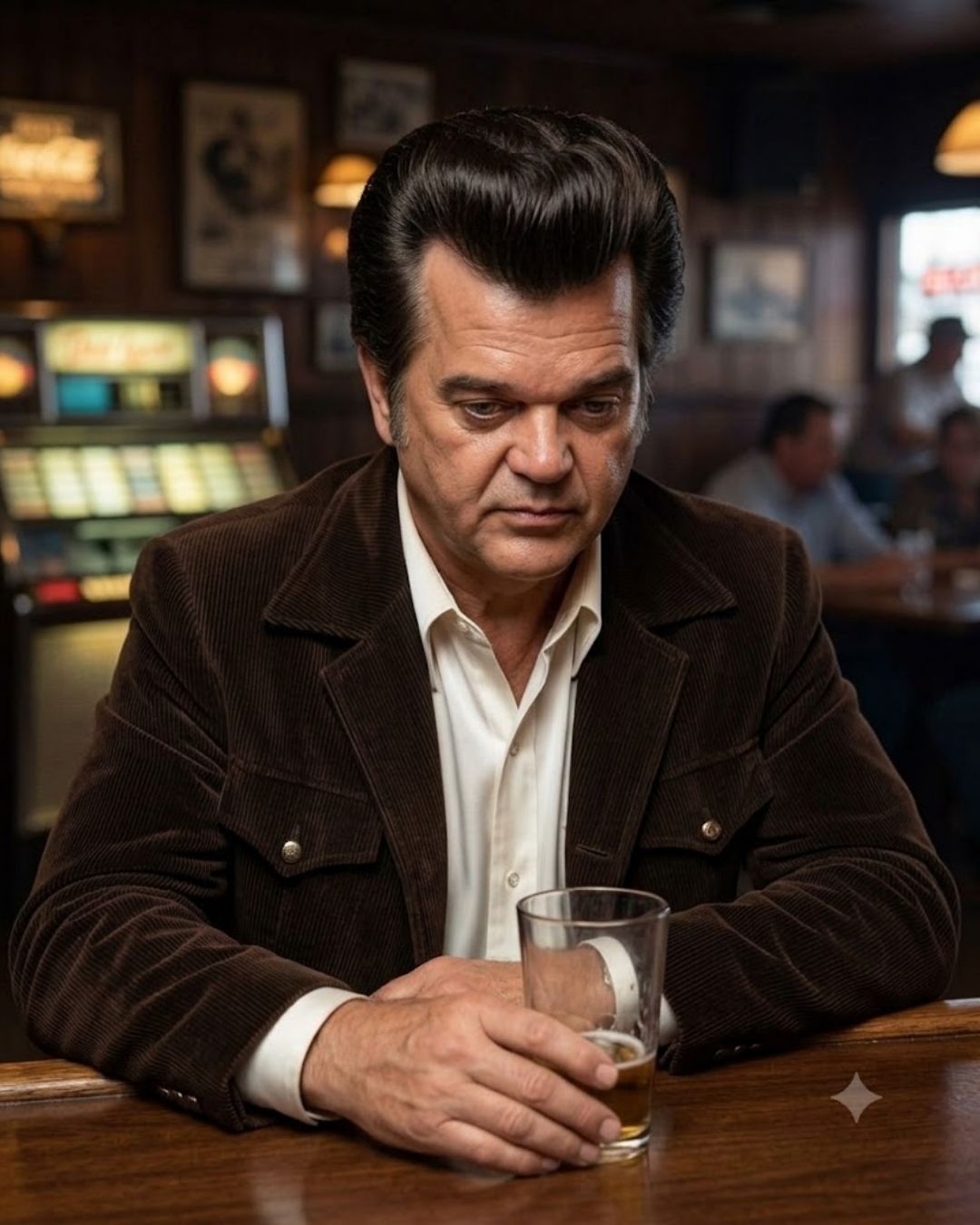
On an early spring afternoon in 03/1973, producer Owen Bradley rolled tape at Bradley’s Barn in Mt. Juliet, Tennessee, capturing a performance stripped of all theatrical bombast. Harold Jenkins, known to the world as Conway Twitty, stepped up to the microphone not to belt out a booming country anthem, but to deliver a quiet study in sudden abandonment. The opening notes did not signal anger or vengeance; instead, they introduced an eerie stillness—the quiet of an empty house where footsteps echo against hollow floorboards. Country radio had spent decades celebrating raucous heartbreak, yet Twitty chose an approach of hushed psychological tension. How did a minimalist ballad about an unannounced departure become one of the most compelling narratives in modern country music history?
THE DETAILED STORY
Co-written by Twitty alongside songwriter Billy Parks, “Baby’s Gone” arrived during a pivotal era for country music. By 1973, the Nashville Sound was expanding into smoother, pop-adjacent production, yet Twitty understood that true emotional resonance required narrative precision rather than orchestral excess. Released as MCA single 40027, the track bypassed predictable breakup tropes to focus on the sensory shock of immediate loss. The song details a man unlocking his front door, only to find the lingering scent of perfume and the unmistakable absence of the woman he loved.
Twitty’s vocal performance stands as a masterclass in dynamic control. Rather than relying on his trademark growl, he employed a trembling, conversational cadence that mirrored the physical shock described in the lyrics. His delivery highlighted the realization that the relationship had collapsed not through a dramatic shouting match, but through quiet exhaustion. Bradley’s understated production—anchored by weeping steel guitar and subtle rhythm accompaniment—allowed Twitty’s nuanced phrasing to remain the focal centerpiece.
The commercial impact was immediate. The single rapidly surged through the trade publications, peaking at number two on the Billboard Hot Country Singles chart in May 1973 and cementing its place on the definitive album You’ve Never Been This Far Before. Beyond chart statistics, the track fundamentally reshaped how male vulnerability was presented on mainstream airwaves. It proved that commercial country audiences craved emotional authenticity over manufactured bravado.
Decades later, “Baby’s Gone” remains a cornerstone in Twitty’s historic catalog of forty chart-topping and top-tier hits. The composition endures not merely as a nostalgic relic of 1970s Nashville, but as an enduring blueprint for narrative songwriting. By chronicling the precise second when love vanishes, Twitty transformed a private domestic tragedy into universal art.