INTRODUCTION
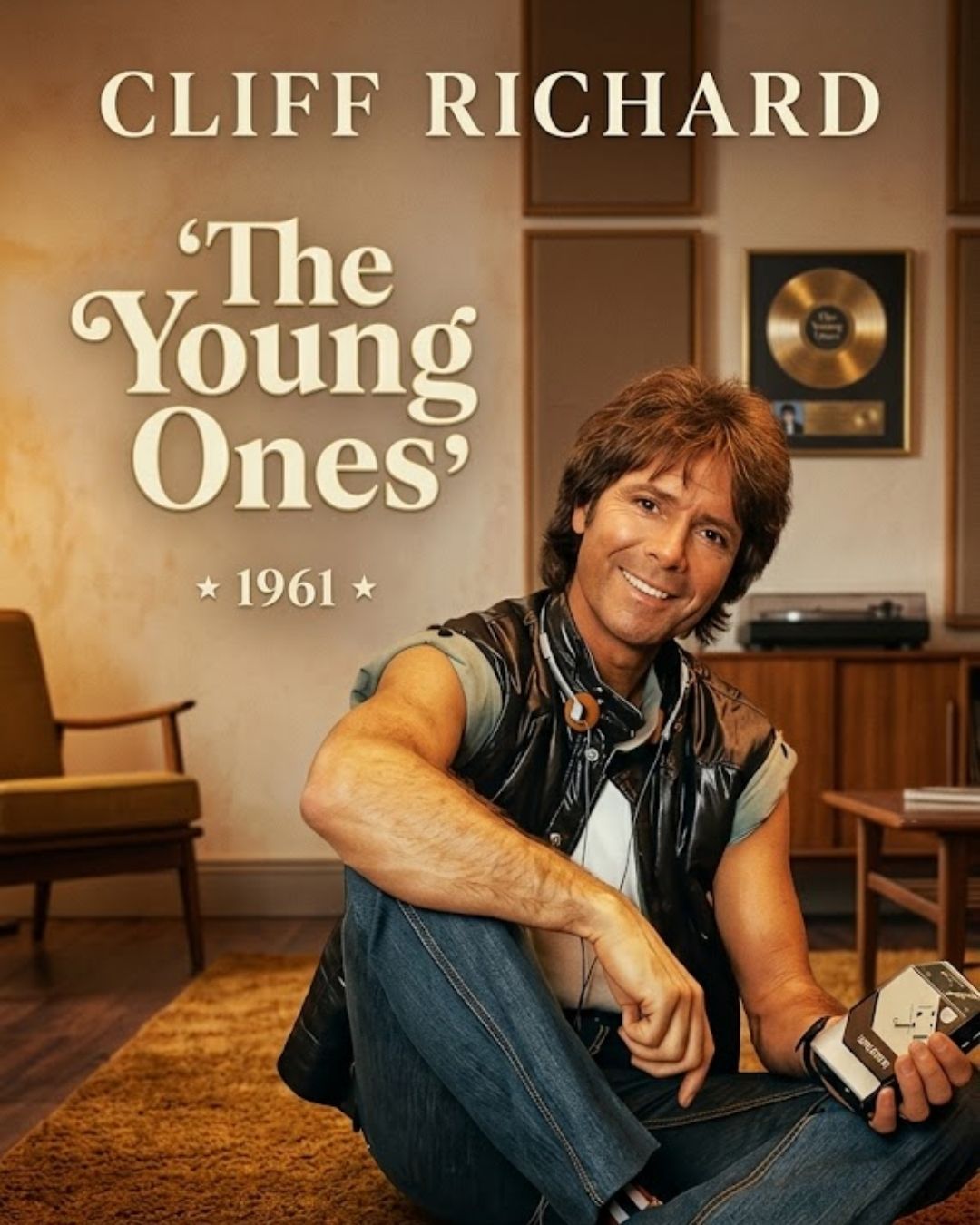
In late 1961, inside Abbey Road Studios, a young British pop sensation stepped up to the microphone to record the title track for an ambitious musical film. With soaring harmonies and chiming guitars, the song became a defining cultural phenomenon that reshaped European youth culture in January 1962. But how did this breezy pop tune overcome industry skepticism to make British chart history?
THE DETAILED STORY
Before the explosive arrival of Beatlemania redefined modern popular culture, Britain’s thriving musical landscape belonged indisputably to Cliff Richard and his virtuoso backing group, The Shadows. By late 1961, director Sidney J. Furie was preparing a groundbreaking British musical film centered around passionate working-class youngsters fighting to save their beloved youth club from an unsympathetic property tycoon. To provide the movie with an indelible emotional anchor, the production turned to the prolific American songwriting team of Sid Tepper and Roy C. Bennett, who crafted an uplifting anthem dedicated to the invincible spirit of teenage optimism.
Recording at EMI’s legendary Abbey Road Studios, musical director Norrie Paramor constructed an ingenious arrangement that bridged traditional orchestral pop with the kinetic electricity of early British rock and roll. Paramor framed the arrangement with sweeping, dramatic violin lines that gracefully countered the steady acoustic rhythm provided by Bruce Welch. Meanwhile, lead guitarist Hank Marvin delivered his iconic, chime-like melodic fills on a sunburst Fender Stratocaster, bathed in gentle tape echo. At the center of this rich sonic tapestry stood Richard’s crystal-clear tenor vocal, delivering each lyrical phrase with sincerity, warmth, and effortless melodic charm.
Public anticipation for the single reached an unprecedented fever pitch across the country. When officially released in January 1962, staggering advance orders catapulted the track straight to number one on the UK Singles Chart upon debut—making history as only the second single ever to achieve an instant top debut after Elvis Presley set the benchmark. Dominating the charts for six consecutive weeks, the single quickly achieved sales of over one million copies in the United Kingdom alone, firmly cementing Richard’s status as the definitive superstar of pre-Beatles British music.
Beyond its extraordinary commercial records, the song encapsulated a transformative social epoch as post-war Britain transitioned into an era defined by youthful self-expression and modern vitality. The lyrics articulated a universal truth: that youth is a fleeting, precious season meant to be cherished before time slips away. By capturing that exuberant spirit without cynicism, the record created a bridge between fifties rockabilly and the melodic pop explosion that soon conquered the globe. More than six decades later, its lush orchestrations, sparkling guitar harmonies, and radiant vocal performance remain an enduring masterclass in mid-century pop perfection.