Introduction
There is a deeply evocative stillness that lives inside the classic pop recordings of the late 1950s and early 1960s—a lingering romance born before the world turned fast and loud. Released early in 1960 as part of the soundtrack to the film Expresso Bongo, “A Voice in the Wilderness” remains one of the most mesmerizing gems in the vast catalog of Cliff Richard & The Shadows. Long before rock music became defined by towering amplifiers and explosive distortion, this song demonstrated how immense feeling could be conveyed through understated beauty, quiet longing, and intentional space.
Composed by Norrie Paramor and Bunny Lewis, the track showcases Cliff Richard at a crucial turning point in his early artistic evolution. Moving away from the raw, high-energy Elvis Presley-inspired rockabilly of his earliest singles like “Move It,” Richard revealed a voice capable of exquisite vulnerability and tender emotional depth. In “A Voice in the Wilderness,” his vocals drift with an ache that feels profoundly sincere. He sings not as a grandstanding pop star, but as a lonely soul wandering through the quiet midnight of an unrequited love, calling out into an empty sky in hopes that a distant heart might hear.
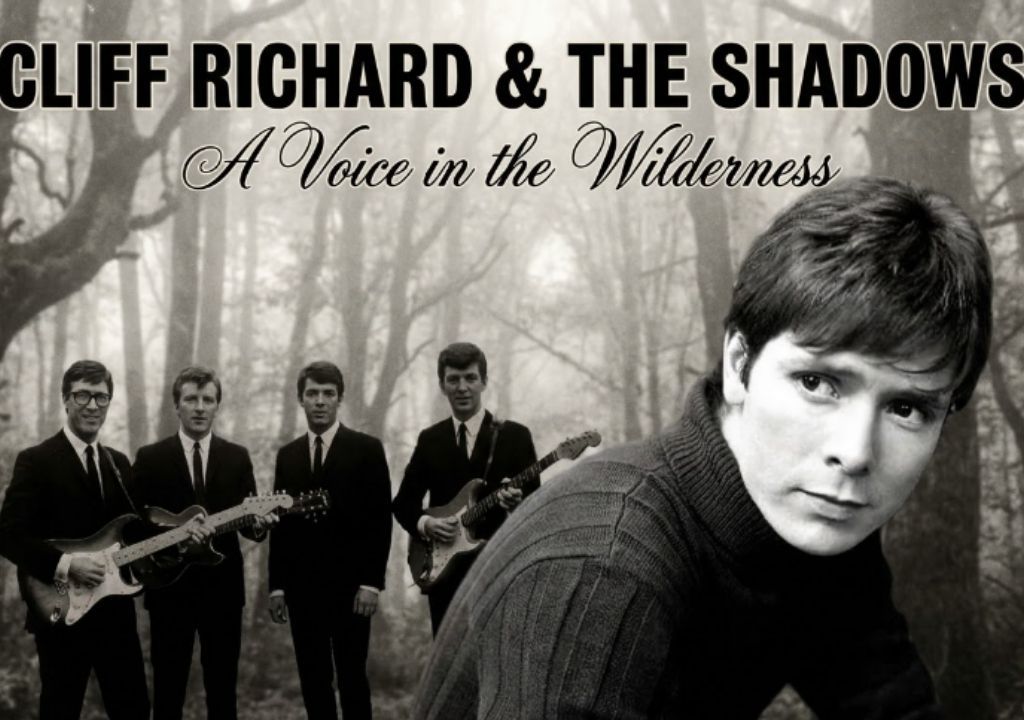
The instrumentation provided by The Shadows—featuring Hank Marvin on lead guitar, Bruce Welch on rhythm guitar, Jet Harris on bass, and Tony Meehan on drums—creates a velvet-textured soundscape that frames Richard’s tender performance seamlessly. Hank Marvin’s iconic guitar work is especially stunning here: soft, shimmering notes kissed with gentle echo, falling like faint starlight against a pitch-black canvas. Jet Harris’s warm, rounded bassline pulses like a quiet heartbeat, while Tony Meehan’s subtle brushwork on the drums gives the track an elegant, swaying cadence. Together, they create an atmosphere that feels like intimacy defined—like sitting near a tube radio in a dimly lit room while rain falls softly against the window glass.
What makes “A Voice in the Wilderness” so enduring after all these decades is its sheer universality. It captures the shared human experience of feeling isolated in one’s deepest emotions, yearning for a connection that remains tantalizingly out of reach. For those who grew up in the golden era of mid-century British pop, hearing this track instantly rekindles memories of jukeboxes humming in quiet cafes, vinyl records spinning under warm lamplight, and the bittersweet ache of adolescent romance. It stands as a brilliant testament to the early genius of Cliff Richard and The Shadows, proving that true musical elegance never fades with time.
Even today, as musical styles continue to shift and evolve, the tender authenticity of this recording shines as brightly as ever. It reminds us that long before slick digital production techniques dominated the music industry, it took only four musicians, a gifted vocalist, and a deeply felt lyric to create magic that lingers in the heart forever.