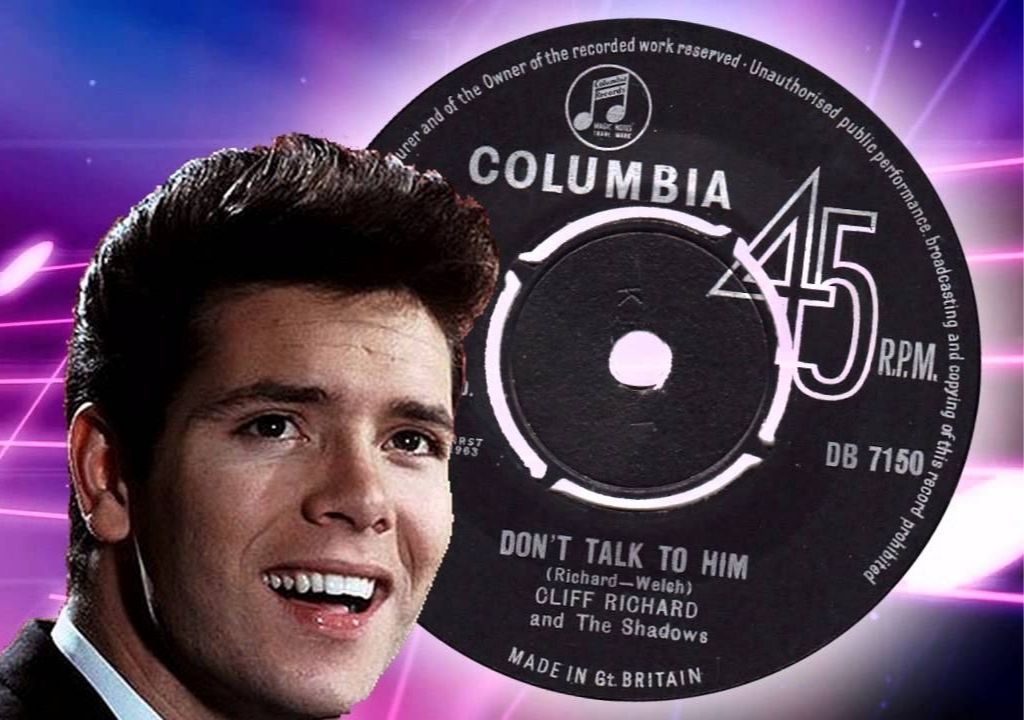
Introduction
There is a unique, irreplaceable magic that happens when a needle drops onto a vintage record, or when the opening chords of a classic melody drift through the airwaves, instantly transporting us back to a simpler, more innocent era. In the vast landscape of British popular music, few partnerships have ever captured the essence of youthful longing and melodic perfection quite like Cliff Richard and The Shadows. They were the pioneers, the trendsetters who defined the pre-Beatles era of British rock and roll and pop, creating a blueprint of crystalline guitar sounds and smooth, charismatic vocals that resonated across generations. Among their stellar catalog of hits, “Don’t Talk To Him” stands out as a shimmering masterclass in pop-rock songwriting—a track that beautifully encapsulates the bitter-sweet pangs of young love and romantic protection.
Originally released in late 1963, “Don’t Talk To Him” was a collaborative triumph, co-written by Cliff Richard himself alongside the brilliant rhythm guitarist of The Shadows, Bruce Welch. It was an era when the music industry was transitioning, yet the distinctive sonic signature of this legendary collective remained completely unmatched. Hank Marvin’s iconic, clean Fender Stratocaster lines combined effortlessly with the driving, rhythmic foundation of the band, providing the perfect harmonic canvas for Cliff’s velvety, earnest vocals. The song addresses a familiar theme of jealousy and protective devotion, warning a lover to turn away from the deceptive charms of a rival. It speaks directly to the heart, carrying a cinematic vulnerability that feels both intensely personal and universally relatable.
Fast forward to 1984, the “Together” era reunited these old friends and musical soulmates, proving that true artistry never loses its luster. When they performed “Don’t Talk To Him” during this period, it wasn’t just a rendition of an old hit; it was a celebratory journey down memory lane, wrapped in decades of shared history, deep mutual respect, and an undeniable onstage chemistry. By 1984, the youthful innocence of the 1960s had matured into a profound, golden nostalgia. The performance retained every ounce of its original charm, but it was now elevated by a rich, weathered warmth that only time can bestow. Cliff’s voice, still remarkably supple and expressive, traded lines perfectly with the sophisticated, timeless instrumentation of The Shadows, reminding audiences worldwide why their bond remains one of the most celebrated chapters in music history. Listening to this track is like opening a beautifully preserved time capsule, where the echoes of past heartaches are transformed into a comforting, melodic embrace that lingers long after the final note fades.