Do you remember when a vocal performance could pierce straight through the noise of an era? In 1964, Billy Fury revived a rock classic with unmatched romantic desperation. Did this dramatic masterpiece prove his raw emotional power outshone the rising beat boom, or was it the ultimate ballad of heartbreak?
INTRODUCTION
In the summer of 1964, as the British Invasion reshaped global pop music, Billy Fury walked into London’s Decca Studios with a formidable mission. Rather than imitating modern trends, he confronted an American rock classic armed only with towering orchestral drama and aching vulnerability. How did this brooding Liverpool icon transform a familiar ballad into one of the most electrifying vocal triumphs of his entire career?
THE DETAILED STORY
By the mid-1960s, the explosive rise of Merseybeat and guitar-driven pop groups dramatically altered the British music landscape. While many early solo pioneers struggled to maintain cultural relevance amid the changing tides, Billy Fury possessed an extraordinary artistic weapon that transcended fleeting industry fads: sheer vocal grandeur. Originally composed and recorded by American rock legend Conway Twitty in 1958, It’s Only Make Believe was already celebrated worldwide as a classic cornerstone of dramatic rock ‘n’ roll. Yet Fury recognized within its despairing lyrics and soaring melodic architecture an ideal canvas for his own brand of majestic, operatic melancholy.
Entering London’s recording studios alongside skilled arranger and producer Mike Leander, Fury approached the track not as a routine cover version, but as an intense psychological drama. The recording begins in delicate restraint, framed by gentle acoustic guitar arpeggios, a haunting female choir, and an ominous bass line that sets a brooding nocturnal atmosphere. Fury delivers the opening verses in a velvety, wounded baritone, capturing the quiet agony of unrequited romantic devotion. But as the symphonic arrangement steadily swells, Fury unleashes the full, untamed resonance of his voice, executing breathtaking dynamic leaps that shift effortlessly from fragile whispers to thunderous, impassioned cries of absolute romantic desperation.
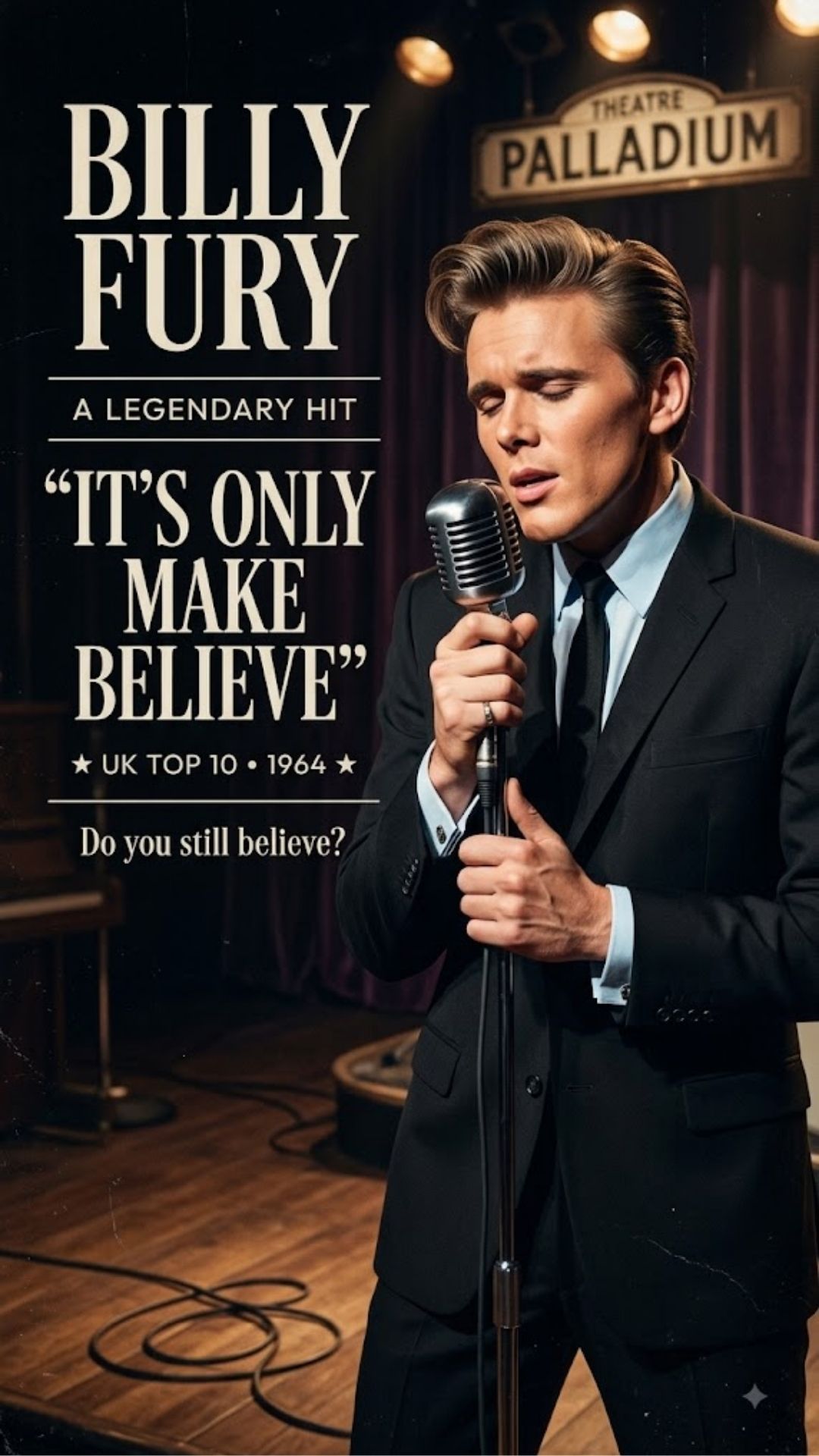
What sets Fury’s interpretation apart is the total emotional commitment vibrating behind every single syllable. While other contemporary vocalists favored theatrical melodrama, Fury channeled a deep personal sincerity honed through years of chronic illness and private solitude. Every note felt raw, authentic, and dangerously exposed. Released by Decca Records in July 1964, the single rapidly captured the British public’s imagination despite fierce competition from the booming Merseybeat explosion. It surged steadily up the national charts, peaking at number 10 on the UK Singles Chart during October 1964, securing another prestigious top-tier triumph for the Liverpool star.
Ultimately, It’s Only Make Believe stands as a defining monument to Fury’s vocal supremacy and fearless artistic integrity. In a pivotal year defined by loud rhythm groups, he proved that profound emotional vulnerability wrapped in sweeping orchestral power could still dominate the pop sphere. The recording remains one of the most magnificent vocal achievements in British pop history, forever preserving Billy Fury as a timeless master of romantic majesty.