Introduction
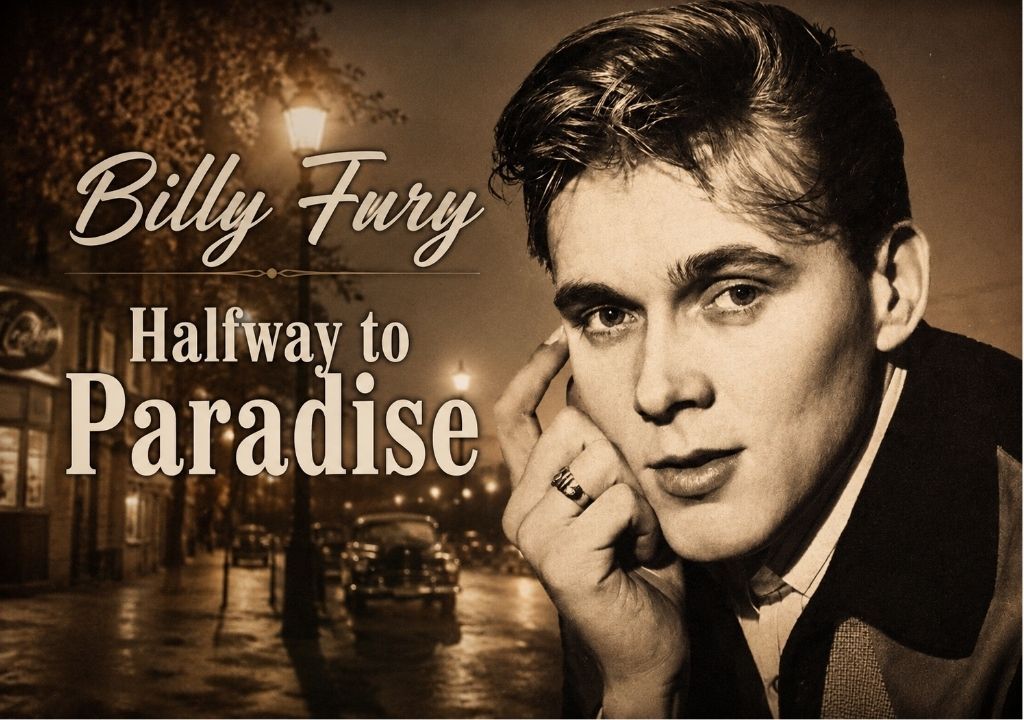
There is a distinct, shimmering magic that belongs exclusively to the early 1960s—a fleeting transitional era when the raw, electrifying energy of early rock and roll began to merge with the opulent orchestral romance of pop balladry. At the absolute epicenter of this British musical renaissance stood Billy Fury, an artist whose moody charisma, smoldering vulnerability, and velvet-smooth vocal delivery captured the heart of a generation. When listening to “Halfway to Paradise,” one is immediately transported back to a twilight world of neon-lit diners, jukeboxes humming softly in cozy corner cafes, and the quiet heartache of youth standing at the threshold of real love.
Penned by the legendary songwriting duo Gerry Goffin and Carole King, “Halfway to Paradise” was originally recorded by American artist Tony Orlando, but it was Billy Fury who gave the song its definitive, soul-stirring power. Released in 1961 on Decca Records, Fury’s rendition transformed a charming pop tune into a magnificent, cinematic masterpiece. From the very first subtle bar of the introduction, the song wraps around the listener like a warm autumn coat. The lush string arrangements swell gracefully, creating a rich tapestry of sound that perfectly complements Fury’s silky, effortless croon. There is an exquisite tension built into the melody—a lingering sense of yearning that feels both painfully tender and exhilaratingly grand.
What truly elevated Billy Fury above his contemporaries was his profound ability to convey authentic emotion. Often hailed as Britain’s answer to Elvis Presley, Fury possessed something distinctly his own: a soft, delicate shadow of melancholia that echoed in every note he sang. In “Halfway to Paradise,” his voice drifts between whispered devotion and desperate passion. As he sings of being close enough to smell the flowers of paradise yet remaining trapped outside its gates, the listener feels every ounce of that emotional suspension. It is a universal human experience—holding happiness within arm’s reach, yet agonizingly waiting for that final, crucial sign of surrender from the person you love.
Beyond its emotional resonance, the track stands as a masterclass in mid-century music production. The sweeping orchestration, rhythmic backbeat, and velvety backing harmonies build toward a dramatic crescendo that defined the golden standard of 1960s British pop. Decades later, the song has lost none of its original gloss or emotional weight. It remains a timeless sanctuary for anyone who has ever loved deeply, waited patiently, or looked back fondly at the gentle innocence of yesteryear. Listening to Billy Fury today is not merely an act of musical appreciation; it is a deep dive into an era when music was crafted to touch the soul directly, leaving an indelible imprint on the heart.