INTRODUCTION
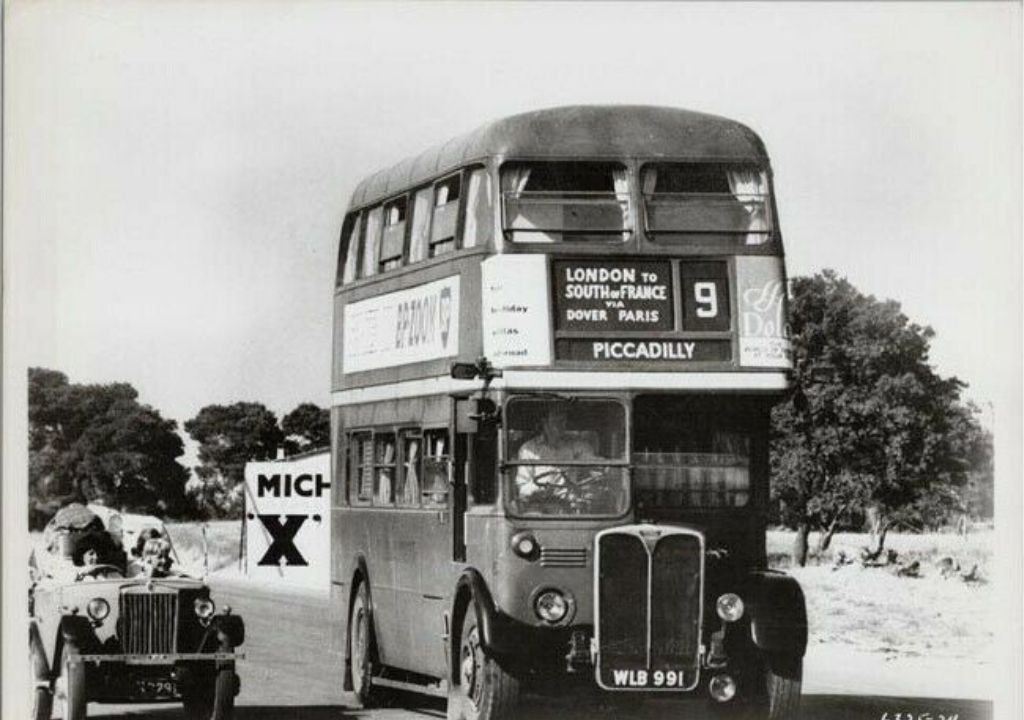
The visual presentation of the vehicle on location underscores the fundamental peril of the shoot: a massive, top-heavy municipal transit bus completely detached from its urban environment, precariously positioned on unpaved, rustic foreign terrain.
THE DETAILED STORY
The illusion of effortless leisure in Summer Holiday was systematically dismantled the moment the cast crossed into continental territory. Driving a fourteen-ton British metropolitan bus along the underdeveloped, winding mountain passes of Yugoslavia and Greece proved to be an administrative and physical nightmare. Co-star Melvyn Hayes later revealed the profound anxiety that gripped the crew during filming. The actors received mere half-hour instructional crash courses on a skid pan in London before being entrusted with the lives of Britain’s premier entertainment assets. On the very first day of location shooting along the perilous Grecian cliffs under a scorching sun reaching 95 Fahrenheit, Hayes found himself behind the wheel of the lumbering vehicle, navigating sharp, unbarricaded hairpins with Cliff Richard, Una Stubbs, and members of The Shadows seated directly behind him. The margins for error were non-existent. To guide the terrified actors, the film crew devised a rudimentary system of hand signals: waving the right arm indicated the bus was grinding too close to the rock walls, while waving the left arm meant they were slipping dangerously over the precipice. The terror captured on the actors’ faces during these high-speed tracking shots was completely authentic, born from the imminent threat of a catastrophic plunge into the rocky ravines below. Beyond the logistical hazards of cliffside driving, the production faced unexpected external perils. Three separate vintage London buses were utilized for the film—one driven overland for active filming, a second shipped directly to Athens as a mechanical safeguard, and a third retained in the United Kingdom. Archival records later noted that when the primary overland bus returned to its depot ahead of the film’s international marketing push, its rear chassis bore a clean, unmistakable dent from a live bullet strike sustained in the Balkans. This astonishing juxtaposition of carefree pop escapism and genuine physical danger defines the unrepeatable nature of the film, which eventually debuted on 01/10/1963 to massive box-office acclaim.