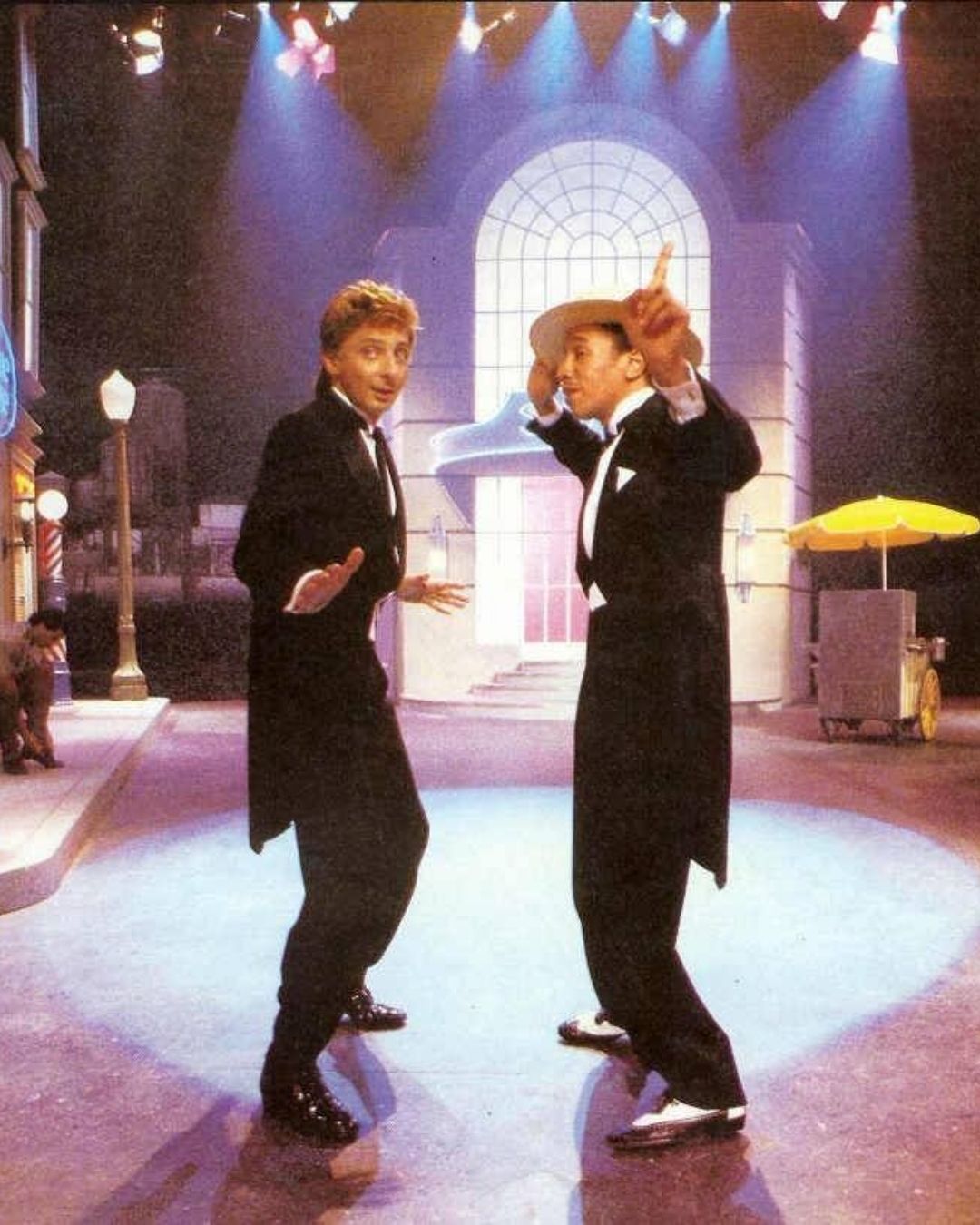
Introduction
There are moments in popular music history when an artist takes a bold, unexpected detour into a world of pure, unadulterated rhythm, leaving an indelible splash of color across the musical landscape. In 1987, the showman supreme Barry Manilow did precisely that with the exhilarating track “Hey Mambo.” Released as a standout single from his conceptual album Swing Street, the song stands as a vibrant testament to Manilow’s extraordinary versatility as an arranger, songwriter, and performer. Known predominantly for his swooning romantic ballads and soaring orchestral pop anthems that dominated the 1970s, Manilow pivoted toward the infectious, brassy heat of classic Latin rhythms and big-band swing, creating an unforgettable sonic party that captured the imagination of fans across generations.
At its core, “Hey Mambo” is a joyous celebration of mid-century dance culture, paying homage to the legendary tropical nightclubs where mambo kings and Latin jazz icons once held sway. To bring this electric atmosphere to life, Manilow collaborated with the brilliant August Darnell, better known as Kid Creole from Kid Creole and the Coconuts. This dynamic pairing infused the track with an irresistible blend of theatrical swagger, razor-sharp horn arrangements, and a pulsating tropical rhythm section. From the opening burst of fiery brass to the irresistible call-and-response vocals, the track ignites with a kinetic energy that makes it virtually impossible to sit still. Manilow handles the lead vocals with a playful, charismatic confidence, proving that his legendary musicality could command a chaotic, sweltering dance floor just as easily as a quiet piano bar.
Beyond its dazzling surface layer of horns and percussion, “Hey Mambo” represents a fascinating bridge between musical eras. It took the vintage charm of the 1940s and 1950s mambo craze and filtered it through the sophisticated production polish of the late 1980s. The track captures a sense of timeless escapism—a musical portal where listeners can cast aside their daily anxieties and lose themselves in the intoxicating swirl of rhythm, laughter, and movement. It reminds us of an era when pop music was unafraid to be lavish, theatrical, and unapologetically fun.
Decades after its initial release, “Hey Mambo” retains its irresistible spark. For those who remember spinning Swing Street on turntable decks or cassette players back in 1987, the song brings back fond memories of late-night dance clubs, neon lights, and the infectious excitement of an icon at the top of his creative game. Barry Manilow delivered far more than just a dance track; he crafted a timeless invitation to celebrate the pure, unfiltered joy of living through music.