Introduction
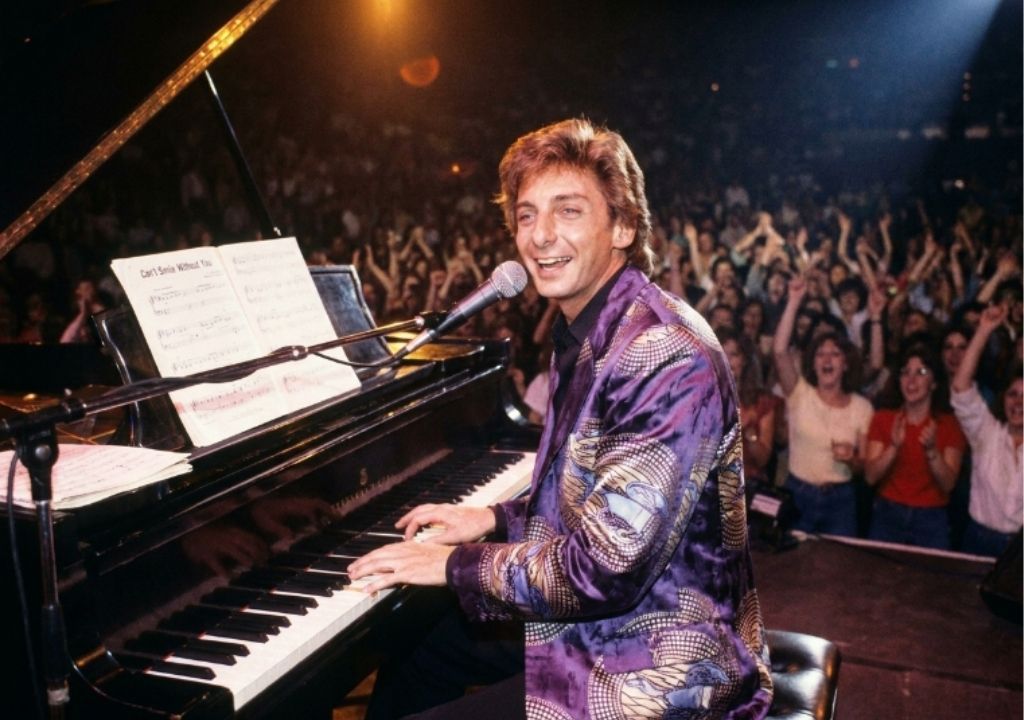
There is a precise frequency of joy that only 1970s pop music could tune into—a bright, unfiltered warmth that felt entirely unburdened by the complexities of the modern world. In that golden afternoon of analog recordings, music didn’t just reflect our lives; it gave us a sunny baseline to live by. At the heart of this feel-good revolution stood Barry Manilow, a master of sweeping arrangements who understood that sometimes, the most profound human emotion isn’t profound sadness, but the simple, dizzying realization of love. His 1978 definitive version of “Can’t Smile Without You” is the ultimate monument to this realization. It is a three-minute capsule of sheer, unadulterated happiness that feels less like a song and more like a warm ray of sunshine breaking through a cloudy morning.
The magic of “Can’t Smile Without You” begins long before the first lyric is spoken. It opens with that iconic, jaunty whistle—a casual, conversational melody that instantly sets the stage. It invites the listener into a world that is comfortable, intimate, and profoundly nostalgic. When the rhythm drops in, it brings a bouncy, finger-snapping tempo that captures the literal physical sensation of skipping a step when you are thinking of someone special. Unlike the sweeping, dramatic crescendos of Manilow’s operatic ballads like “Mandy” or “Could It Be Magic,” this track thrives on its breezy simplicity. The orchestration is light and layered, blending bright horns, soft backing vocals, and a rhythmic bassline that acts like a steady heartbeat running beneath the melody.
Lyrically, the song captures the sweet vulnerability of complete emotional dependence. Written by Christian Arnold, David Martin, and Geoff Morrow, the verses outline the small, relatable miseries of being apart from the one you love—finding no joy in the morning paper, feeling sad when others are happy, and realizing that the world simply loses its color without their presence. Yet, despite the underlying theme of longing, the song never feels heavy or melancholy. Barry Manilow’s vocal performance is masterfully calibrated; he sings with an open-hearted, smiling sincerity that transforms what could have been a sad confession into a celebratory declaration of love. You can literally hear the grin in his voice, an infectious charm that instantly invites the listener to sing along.
Decades after its release, “Can’t Smile Without You” remains an essential artifact of a time when pop music was unafraid to be genuinely sweet. It carries the rich, organic texture of the late 70s adult contemporary era, where real instruments and brilliant songwriting coalesced to create cross-generational anthems. To listen to it today is to step into a time machine, revisiting an era of transistor radios, vinyl crackle, and innocent romances. Barry Manilow took a simple sentiment and turned it into a universal truth: that our happiness is tied to the connections we cultivate. It is a timeless reminder that true musical warmth never fades, and it continues to bring an involuntary smile to anyone lucky enough to hear it play.