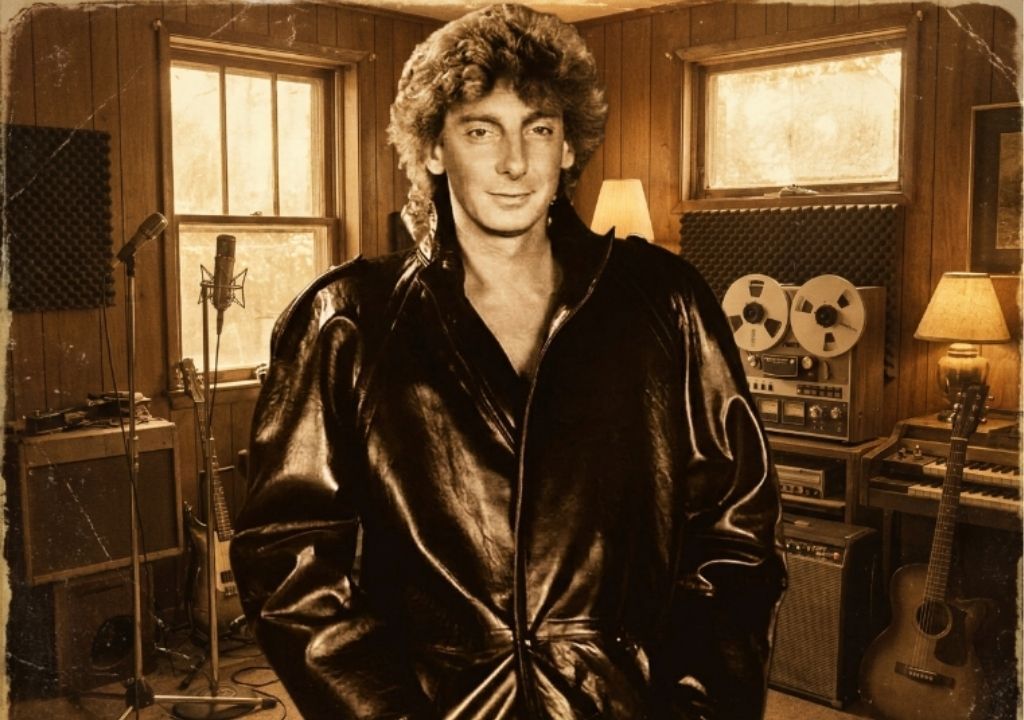
INTRODUCTION
In a cramped apartment in Williamsburg, Brooklyn, during the late 1950s, a young, introverted boy named Barry Alan Pincus stared at a brand-new spinet piano. The instrument had not been purchased by a wealthy patron, but by a blue-collar truck driver who had just married the boy’s mother. That man was Willie Murphy. In an era when traditional stepfathers were often depicted as distant authority figures, Murphy stepped into the young boy’s life with an entirely different agenda. He did not seek to suppress the child’s sensitivity; instead, he armed him with a record player and an eclectic stack of jazz, classical, and Broadway albums. This singular act of profound generosity effectively set the stage for one of the most remarkable transformations in American entertainment history, turning a hesitant Brooklyn youth into a future global icon.
THE DETAILED STORY
For decades, music biographers have scrutinized the sudden ascent of Barry Manilow, searching for the hidden machinery behind his unparalleled string of twenty-five consecutive Top 40 hits. Cynics frequently point to the sudden name change from Pincus to Manilow as a sign of external manipulation, wondering if the young musician was merely a puppet steered by an ambitious stepfather. However, archival records and industry history paint a fundamentally different picture of Willie Murphy. Far from an opportunistic puppet master, Murphy acted as the ultimate emotional and cultural vanguard for a talent that might have otherwise gone completely unnoticed.
When Murphy entered the household, he instantly recognized that Barry’s artistic inclination was a rare gift rather than a hobby. By introducing him to the sophisticated orchestrations of Judy Garland at Carnegie Hall and the intricate arrangements of contemporary jazz masters, Murphy expanded the boy’s musical vocabulary far beyond the standard pop radio of the era. The truck driver invested hard-earned dollars into formal music education, ensuring that Barry could attend the New York College of Music and subsequently the Juilliard School. This critical backing provided the technical foundation required to orchestrate massive hits like “Mandy” and “I Write the Songs.”
Furthermore, it was Murphy who actively encouraged Barry to step out from behind the piano as a commercial jingle writer and embrace the spotlight as a solo performer. The emotional security Murphy provided allowed the young artist to confidently shed his birth name in honor of his mother’s lineage, a decision rooted in familial pride rather than corporate engineering. When Manilow eventually achieved multi-platinum status, grossing millions in global tours and shifting over eighty-five million records worldwide, he continuously credited Murphy as his true savior. Ultimately, Willie Murphy was never a manipulator of fate; he was the visionary architect who recognized that a boy from Brooklyn possessed the melodies to captivate the entire world.