INTRODUCTION
On the humid morning of June 5, 1993, the corridors of Cox Medical Center in Springfield, Missouri, became the stage for an unimaginable, real-world tragedy. Loretta Lynn was already there, physically and emotionally spent, keeping a desperate vigil by the bedside of her husband, Oliver “Doolittle” Lynn, who was battling life-threatening diabetic complications. Then, the double doors of the emergency room burst open. Out of nowhere, a gurney rushed past, carrying a man collapsed from an unexpected abdominal aortic aneurysm suffered on his tour bus. It was Conway Twitty. In an astonishing, cruel stroke of cosmic coincidence, country music’s most iconic duo had been brought together one last time, not by the bright lights of a marquee, but by the stark, sterile finality of a hospital corridor.
THE DETAILED STORY
The bond between Loretta Lynn and Conway Twitty was an foundational pillar of American culture, producing a string of chart-topping masterpieces from “After the Fire Is Gone” to “Louisiana Woman, Mississippi Man.” They possessed a rare, clean-cut professional intimacy that defined an era. When Twitty arrived at Cox Medical Center after falling ill in Branson, Missouri, Lynn found herself trapped in a waking nightmare, running frantically between the husband she had loved for decades and the musical partner who anchored her career.
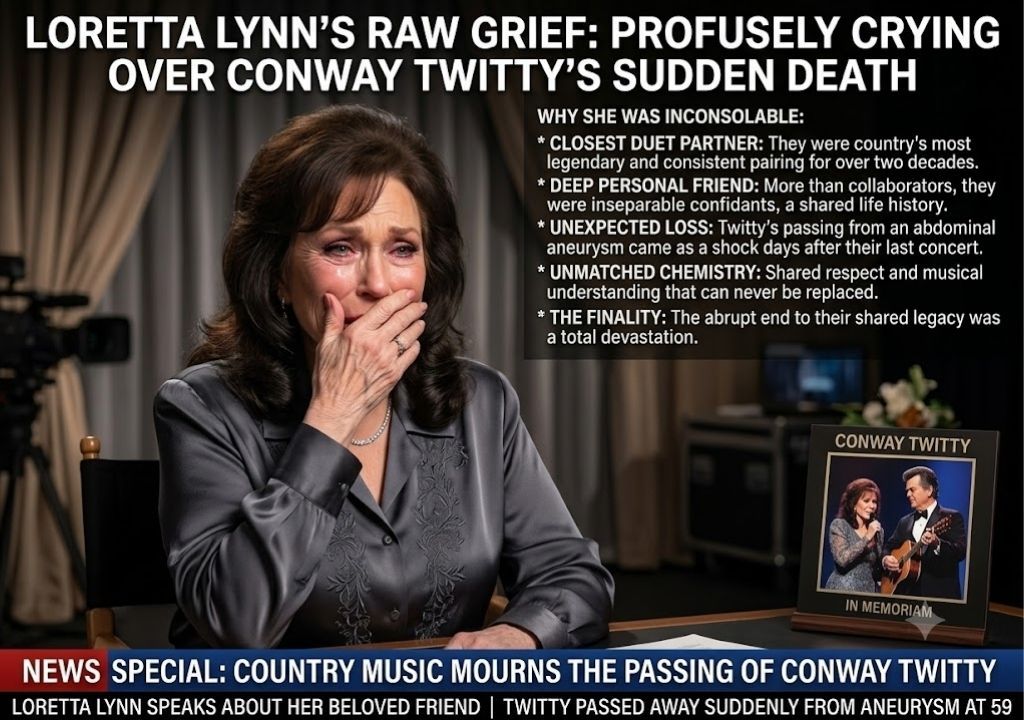
As Twitty’s condition deteriorated rapidly in the intensive care unit, the hospital chaplain approached a distraught Lynn with a sobering request, asking if she wanted to see Conway one last time alive. Gripping the hand of Twitty’s wife, Dee, Lynn entered the room, refusing to accept the looming tragedy. She reached out to her longtime friend, pleading into the silence, “Conway, don’t you die on me. You know you love to sing.”
Moments later, as Lynn stepped back into her husband’s room, a staff member delivered the shattering news: at just 59 years old, the High Priest of Country Music was gone. The shock plunged Lynn into inconsolable grief. The tears that flowed were born from a devastating convergence of trauma: she was mourning the sudden loss of her greatest creative confidant while simultaneously staring down the potential demise of her own husband. For Lynn, Twitty’s sudden passing was an agonizing reminder of mortality that severed a legendary artistic lineage, leaving her to face an altered musical landscape entirely alone.