INTRODUCTION
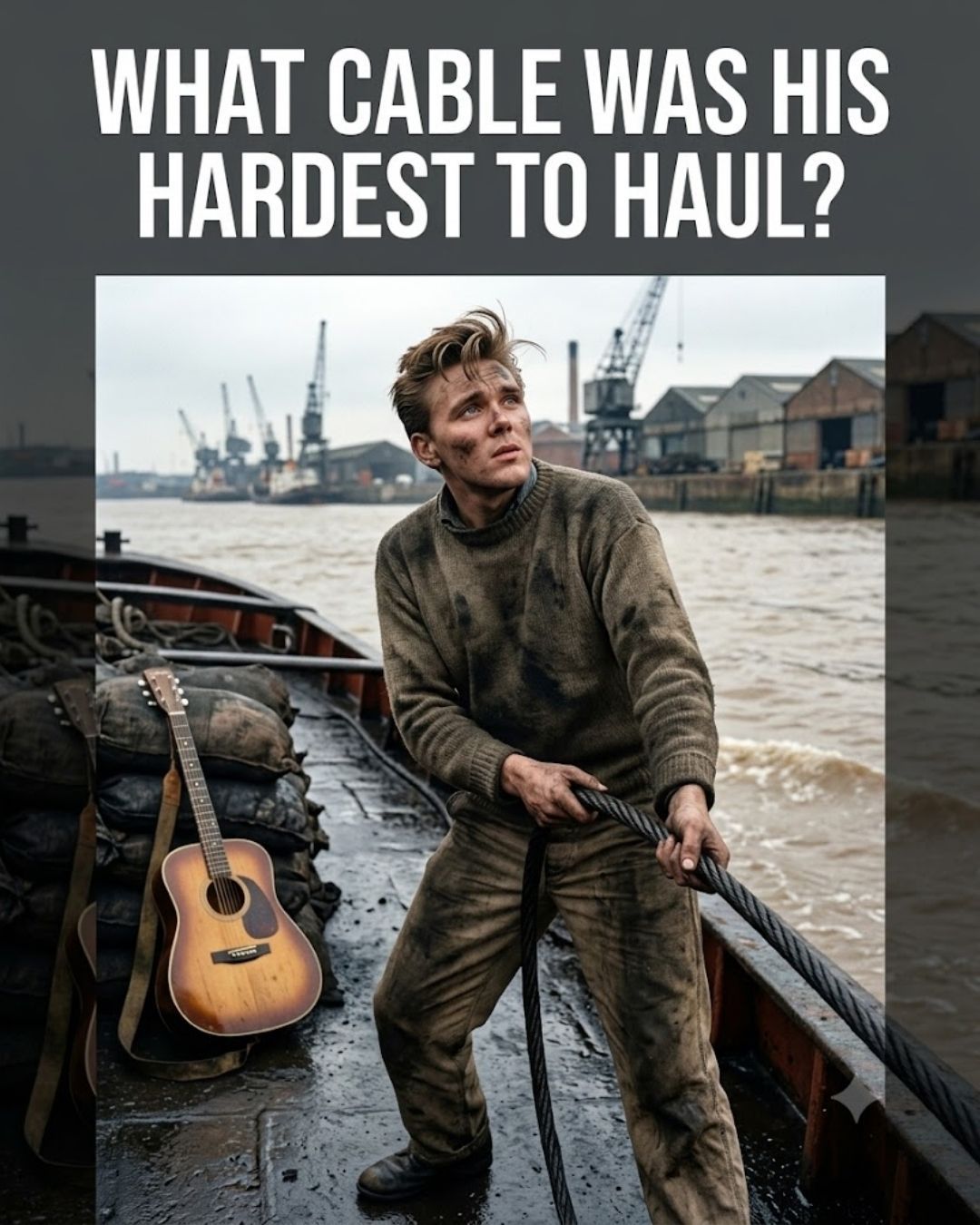
In the damp chill of 1955, the River Mersey was not a romantic backdrop for teenage daydreams, but an unforgiving crucible of industrial maritime trade. A fragile fifteen-year-old named Ronald Wycherley spent dawn to dusk hauling freezing, brine-soaked mooring cables and breathing heavy coal dust as a deckhand aboard the tugboat Formby. His hands, calloused and stiff from the heavy labor, seemed destined for a lifetime of anonymous dockside graft. Yet inside the cramped, noisy crew quarters, he cradled a cheap acoustic guitar, quietly strumming original chords against the rhythm of churning river water. What drove a sickly Liverpool deckhand to believe his maritime diary sketches could dismantle the rigid conventions of British rock and roll?
THE DETAILED STORY
Before adopting the electrifying stage persona of Billy Fury, Ronald Wycherley lived at the sharp end of post-war northern working-class life. Weakened by severe rheumatic fever in childhood, he was physically ill-suited for the relentless strain demanded by the Mersey Docks and Harbour Board. Yet aboard the tugboat Formby, between tying heavy ropes and shoveling coal into boilers, Wycherley found an unexpected sanctuary. The relentless churn of the diesel engines and the vast, open grey estuary provided the tempo and emotional space for his earliest musical experiments. While his peers merely imitated American records, he drafted raw, vulnerable compositions reflecting genuine yearning and isolation.
That grounded resilience proved decisive on October 01, 1958, at the Birkenhead Essoldo theatre. Intending only to pitch his original songs backstage to impresario Larry Parnes, Wycherley was pushed straight into the spotlight by the promoter, who immediately christened him Billy Fury. Without rehearsal or stage polish, he delivered his self-penned numbers with a gritty sincerity directly rooted in his river days. The reaction was instantaneous, securing him an immediate management contract and a recording deal with Decca Records.
Throughout the early 1960s, Fury went on to secure 24 UK hit singles, equaling the consecutive chart run of Elvis Presley and standing alongside The Beatles as a dominant force in British popular music. Unlike many teen idols manufactured by London managers, Fury retained complete artistic authenticity because his foundation was thoroughly tested in coal dust and manual labor. The physical exhaustion of the Mersey docks never left his music; it gave his delivery an aching depth and quiet defiance that distinguished his seminal 1960 album The Sound of Fury. Those early days hauling heavy cables on the Formby ultimately built the backbone of a performer who reshaped the landscape of rock.