Remember when a single song on the radio could freeze time? While stationed in Germany, Elvis Presley fell in love with a classic Italian melody, transforming an operatic standard into a global masterpiece in July 1960. Did you realize this passionate ballad permanently reshaped his entire vocal legacy?
INTRODUCTION
In the early morning hours of April 3, 1960, inside RCA Studio B in Nashville, Elvis Presley stepped up to the microphone to tackle the most demanding vocal of his career. Having just returned from military service, he was determined to reinvent himself beyond pure rock and roll. But could a southern rocker truly master an authentic Neapolitan opera standard?
THE DETAILED STORY
The genesis of the track began thousands of miles away from Memphis. While serving in the United States Army in Bad Nauheim, Germany, Elvis Presley heard Tony Martin’s 1949 ballad “There’s No Tomorrow,” an English adaptation of the 1898 Italian classic “‘O Sole Mio.” The dramatic melody haunted him constantly. Upon his discharge from military duty, Elvis tasked his music publisher Freddy Bienstock with finding writers who could craft fresh, tailored lyrics specifically for his changing vocal style. Songwriters Aaron Schroeder and Wally Gold completed the new lyrics in less than thirty minutes, birthing what would become a timeless romantic anthem.
Recording the track at Nashville’s legendary studio proved to be an intense artistic trial. Moving decisively away from his signature rockabilly rhythm, Elvis pushed his vocal range into demanding tenor territory, aiming for an operatic climax that required exceptional breath control. Take after take failed because hitting the soaring high G note at the finish in full chest voice pushed his physical limits. Session producer Steve Sholes watched closely as the singer demanded absolute perfection. Rather than settling for a falsetto compromise or studio edit, Elvis insisted on repeating the performance until he nailed the dramatic ending in a single, passionate take. The acoustic guitar flourishes, subtle Latin cha-cha cadence, and backing harmonies by The Jordanaires framed his delivery with breathtaking elegance.
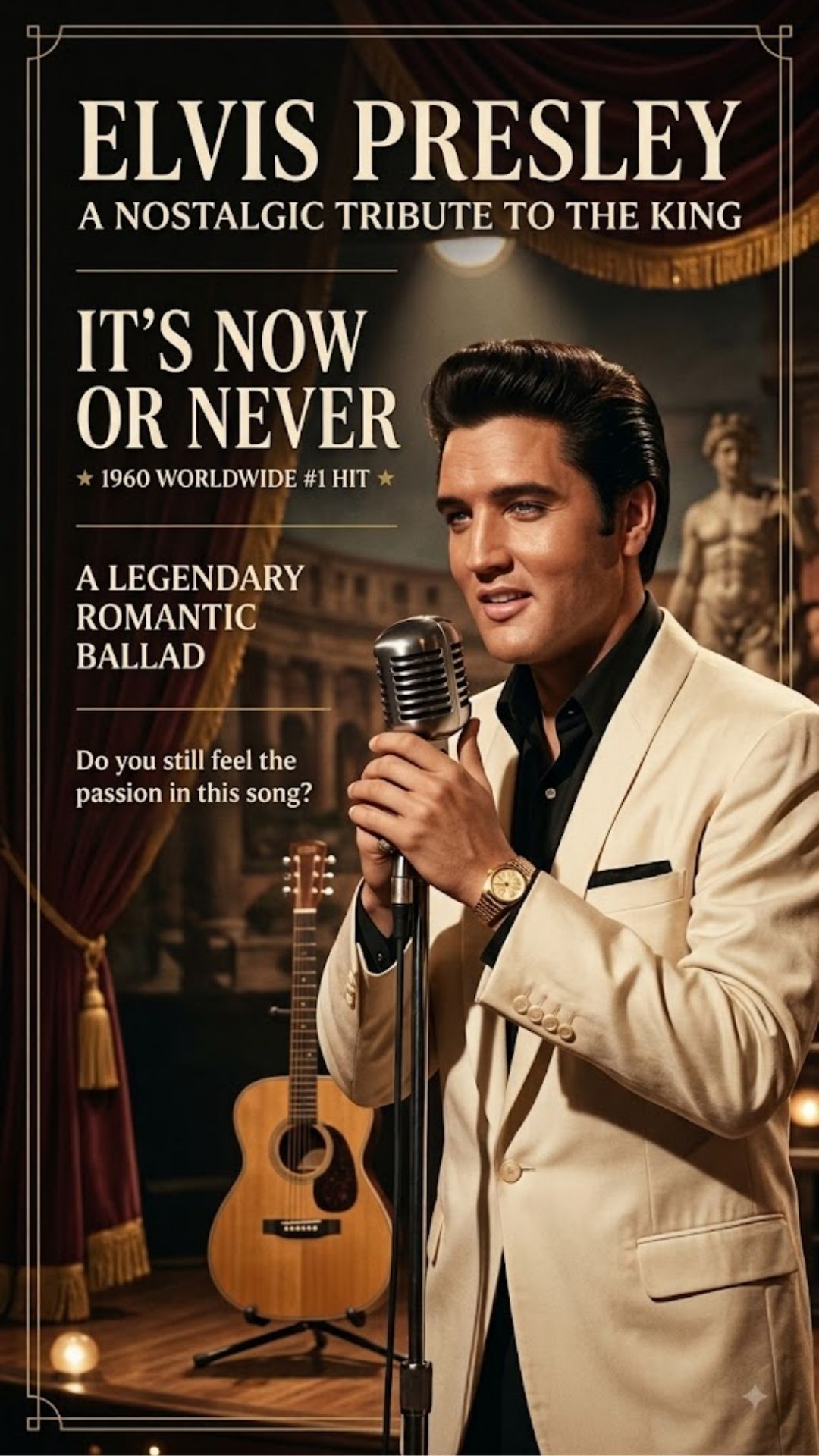
Released in July 1960, the single shattered sales records and permanently silenced critics who dismissed him as a temporary teen fad. The record soared immediately to the top of the Billboard Hot 100, where it spent five weeks at number one, while also commanding the UK Singles Chart for eight weeks. It eventually achieved over 20 million copies worldwide, earning its place among the best-selling physical singles in the history of recorded sound.
Beyond its staggering commercial triumph, the record marked a definitive turning point in twentieth-century popular music. It bridged the gap between traditional European bel canto melody and modern American pop sensibilities, proving that the King of Rock and Roll possessed legitimate classical power and emotional sophistication. More than six decades later, the soaring climax and Mediterranean warmth of this landmark recording endure as a masterclass in vocal courage and timeless romantic drama.