Do you remember when British rock and roll first discovered its own vulnerability? Before becoming a superstar, an unknown dock worker sang his heart out backstage hoping merely to sell a tune. Did this haunting ballad change the fate of UK music forever, or was it pure luck?
INTRODUCTION
On an autumn evening in October 1958, an eighteen-year-old Liverpool deckhand named Ronald Wycherley nervously clutched an acoustic guitar backstage at the Essoldo Theatre. He only intended to pitch his self-written songs to another artist, yet within minutes, he was pushed straight into the spotlight. What transpired during that impromptu audition to turn a shy songwriter into an overnight rock sensation?
THE DETAILED STORY
When young Ronnie Wycherley stepped into the dressing room of London talent manager Larry Parnes, his expectations were remarkably humble. Plagued by chronic rheumatic heart damage from childhood, the frail dock worker from Liverpool had poured his inner loneliness into private notebooks. He arrived backstage hoping established star Marty Wilde might record a few of his original songs. Instead, upon witnessing Ronnie strum with astonishing emotional vulnerability, Parnes recognized that the young musician possessed something far rarer than mere songwriting ability: a magnetic, brooding presence. Shoving him onto the stage that very evening in front of two thousand startled spectators, Parnes watched the audience instantly surrender to his charm. Within hours, Ronnie was signed and rechristened Billy Fury.
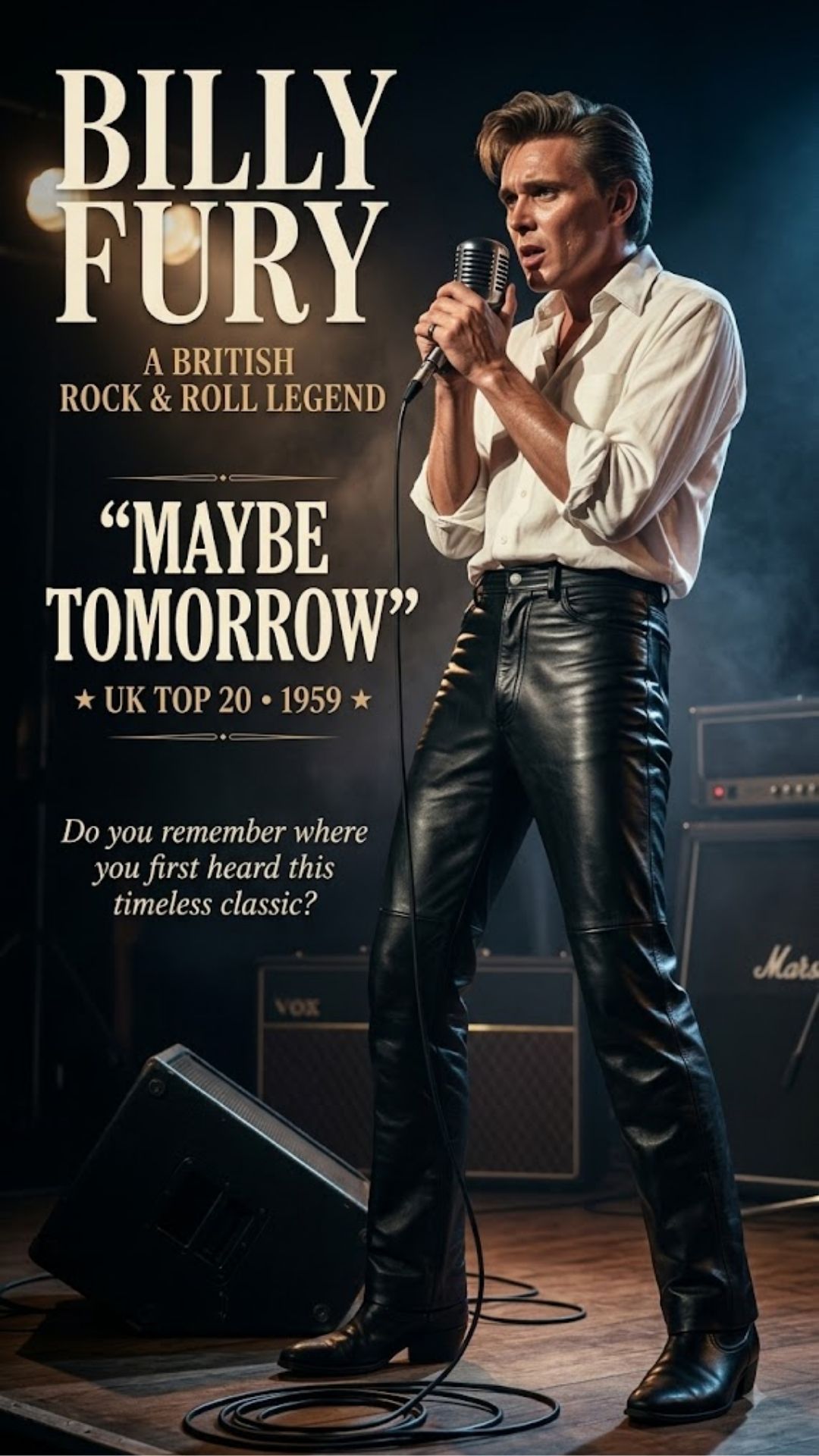
On November 26, 1958, Fury entered London’s famous Decca Studios to cut his debut single, Maybe Tomorrow. While contemporaries were scrambling to mimic fast-tempo American rockabilly standards, Fury chose an entirely different aesthetic. The self-written composition was quiet, moody, and steeped in genuine adolescent yearning. Built upon subtle acoustic strumming, understated percussion, and a ghostly female vocal chorus, Fury delivered the lyrics with a trembling, wounded baritone. His voice delicately balanced fragile vulnerability with smoldering intensity, capturing the heartbreak of unrequited teenage devotion with an authenticity that British pop had never previously witnessed on record.
Released on January 16, 1959, the record initially faced hesitation from conservative radio programmers before passionate late-night broadcasts ignited strong word-of-mouth sales across the country. Over subsequent weeks, the track steadily built momentum. By April 1959, the groundbreaking ballad climbed up the national hit parades, peaking at number 18 on the prestigious NME Top 30 chart and officially announcing Fury as a major new force in British entertainment.
Beyond its chart success, Maybe Tomorrow represented a monumental milestone in the evolution of British rock music. In an era dominated by corporate Svengalis who forced sanitized Tin Pan Alley formulas onto manufactured teen idols, Fury dared to present his own intimate poetry. His bold artistic autonomy shattered industry conventions, paving the way for the historic Merseybeat explosion and proving that British musicians could produce deeply authentic, world-class rock classics rooted in their own lived experiences without relying on American imports.