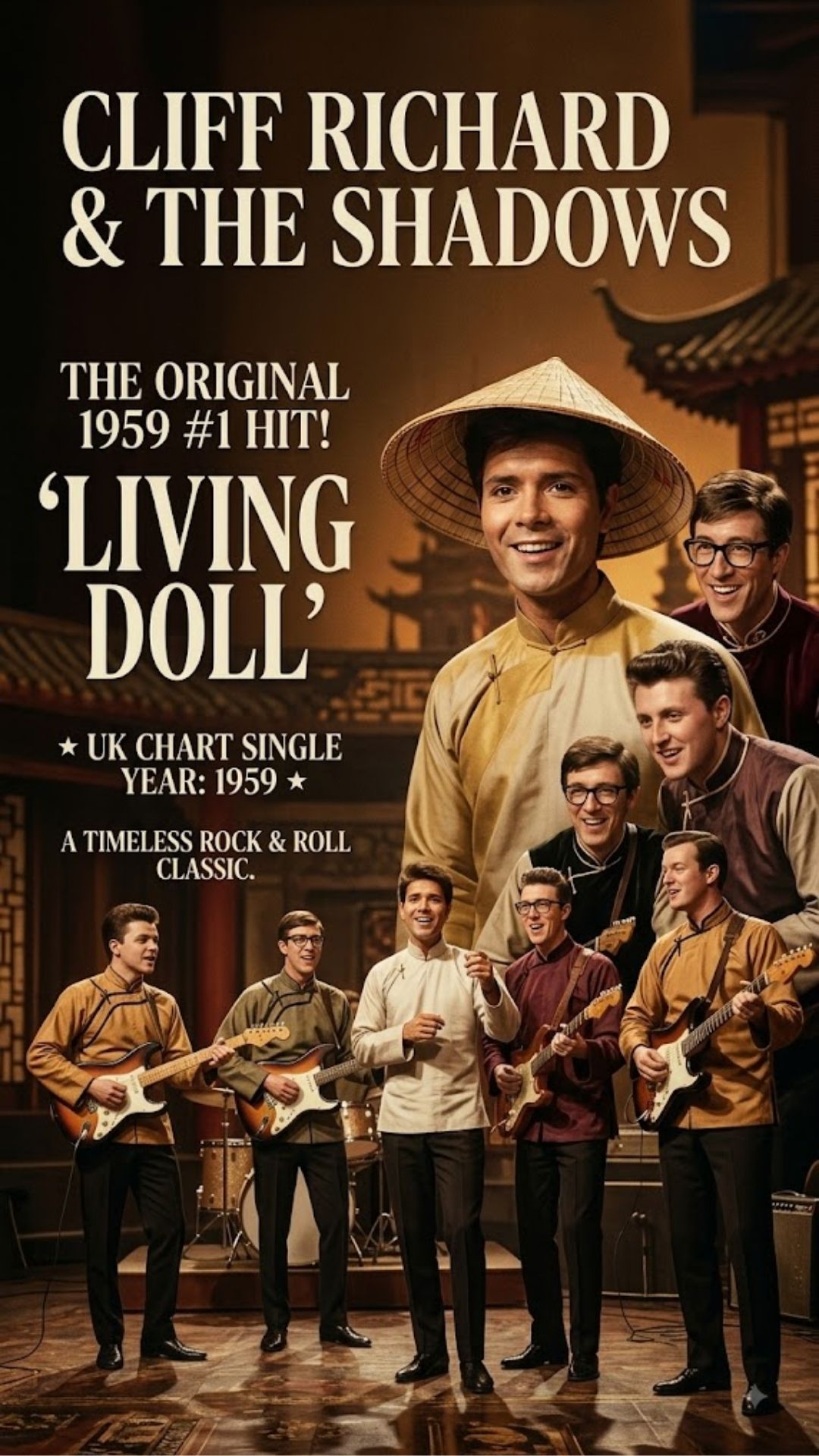
Do you remember the gentle melody that defined a generation’s youth? In July 1959, Cliff Richard scored his first number one single with Living Doll, transforming a disliked, rushed movie tune into an immortal acoustic ballad. What sudden studio reinvention turned this reluctant recording into Britain’s biggest sensation?
INTRODUCTION
Inside Abbey Road Studios during the spring of 1959, young musicians openly rejected a brassy theatre tune assigned for an upcoming film. Convinced the tempo was disastrous, they completely dismantled the rhythm moments before tape rolled. How did a desperate last-minute acoustic makeover transform a reluctant studio assignment into the defining anthem of early British pop history?
THE DETAILED STORY
In early 1959, British pop music stood on the brink of an elegant evolution. Having established his reputation as a fiery rock and roller with gritty, raw tracks, eighteen-year-old Cliff Richard faced an intriguing new creative challenge: starring in the British teenage melodrama film titled Serious Charge. Tasked with providing soundtrack material, prolific theatrical songwriter Lionel Bart presented a composition originally titled Living Doll. However, when the young band examined the sheet music, their initial reaction was intense artistic dissatisfaction. Bart had originally constructed the song as an up-tempo, satirical skiffle piece that felt frantic and unnatural. Richard and his backing musicians, then performing as The Drifters before permanently adopting their legendary moniker The Shadows, feared that recording such a corny, rushed arrangement would instantly damage their authentic rock credibility.
Determined to salvage the high-stakes session, rhythm guitarist Bruce Welch and lead guitarist Hank Marvin took matters into their own hands during rehearsals. Rather than outright abandoning the tune, Welch proposed a radical rearrangement: drastically slowing down the tempo, stripping away aggressive distortion, and rebuilding the piece around delicate acoustic guitars. When they entered EMI Studio Two on April 28, 1959, legendary producer Norrie Paramor embraced the intimate rethink. Marvin picked a crystalline acoustic intro, complemented by Welch’s warm strumming, Jet Harris’s subtle bassline, and Tony Meehan’s gentle brushed percussion. Unveiling a tender, understated vocal delivery, Richard replaced his usual rebellious growl with breathless romantic vulnerability, imbuing the simple lyrics with genuine warmth and youthful intimacy.
Released on July 3, 1959, the record achieved instantaneous, earth-shattering commercial impact. The gentle ballad captured the hearts of record buyers across generations, surging straight up the charts to become Richard’s first UK number one triumph. The single dominated the UK Singles Chart for six consecutive weeks, selling over a million copies worldwide and earning a prestigious Ivor Novello Award for Bart. By fearlessly pivoting from harsh teenage rebellion to sophisticated melodic pop, the group pioneered a polished British sound that reshaped popular radio forever. That fateful studio compromise did not merely save a difficult movie soundtrack; it cemented a legendary musical partnership whose enduring cultural magic still resonates through the decades.