Introduction
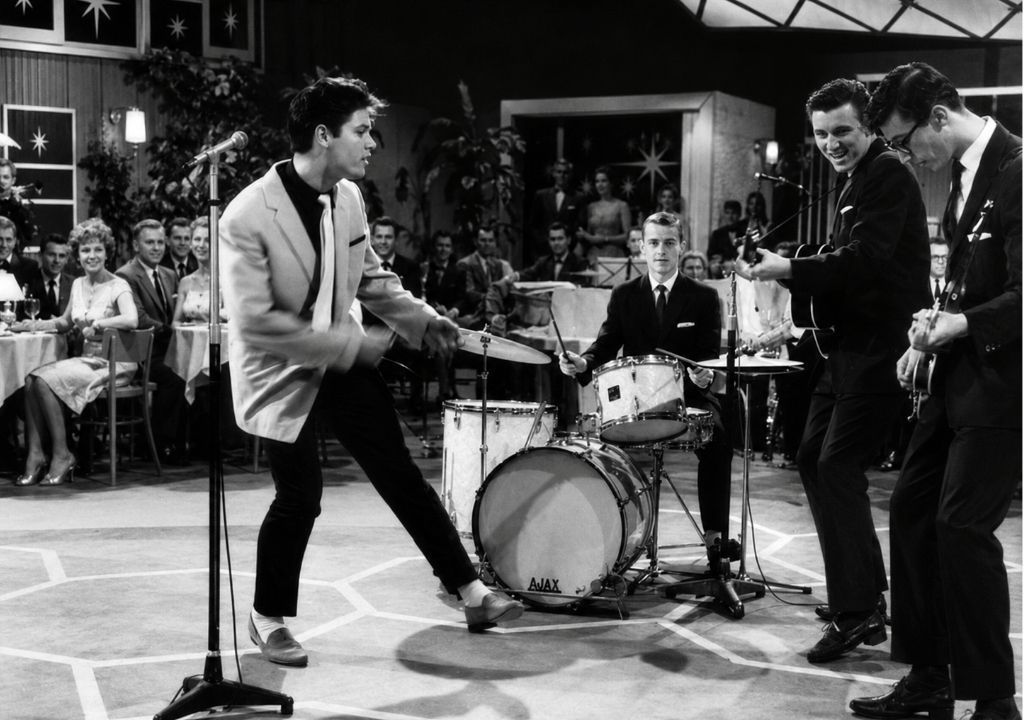
There is a distinct, irreplaceable warmth that lives inside the grooves of a 1960s vinyl record. It is the sound of an era finding its feet, catching its breath, and learning how to move. Long before the British Invasion completely rewrote the rulebook of global popular music, a young man from Hertfordshire and his exceptionally sharp backing band were already setting the gold standard for European rock and roll. In May of 1962, when Cliff Richard & The Shadows released their rendering of “Do You Wanna Dance,” they did not just cover a Bobby Freeman rhythm and blues track—they transformed it into an anthem of sheer, unadulterated youth.
To truly understand the magic of this recording, one must step back into the atmosphere of the early 1960s. The world was changing rapidly, shifting from the post-war austerity of the fifties into a vibrant, neon-lit landscape driven entirely by teenage energy. Music was the focal point of this cultural revolution. In the UK, Cliff Richard was the undisputed king of this new frontier. With his clean-cut yet subtly rebellious charm, he possessed an uncanny ability to capture the romanticism and innocence of his generation. But Cliff was never alone in this endeavor; the contribution of The Shadows was absolutely monumental.
When you drop the needle on “Do You Wanna Dance,” the first thing that strikes you is the absolute precision of the sonic landscape. Hank Marvin’s legendary Fender Stratocaster introduces a bright, chiming texture that instantly pierces through the air. Alongside Bruce Welch’s driving rhythm guitar, Jet Harris’s anchoring bassline, and Brian Bennett’s immaculate drum work, the band creates a rolling, irresistible wave of sound. Unlike the raw, grit-driven American rockabilly versions of the late fifties, this interpretation leans into a polished, melodic pop-rock structure that feels beautifully sophisticated yet effortlessly danceable. The tempo is brisk, carried forward by a relentless, infectious backbeat that practically commands the listener to move their feet.
Cliff’s vocal performance here is a masterclass in youthful exuberance. He delivers each line with a brilliant blend of sweet urgency and confident swagger. There is no cynicism in his voice, only the pure, open-hearted invitation of a young man looking across a crowded, smoky dancehall. When he sings the titular question, it feels intensely personal, evoking vivid imagery of checkered floors, swirling skirts, and the sweet, fleeting butterflies of teenage romance. It is a time machine wrapped in melody.
Decades have passed since that glorious summer of 1962, and the musical landscape has evolved beyond recognition. Yet, listening to Cliff Richard & The Shadows perform this timeless classic reminds us why early rock and roll remains so profoundly impactful. It possesses a soulfulness that cannot be replicated by algorithms or digital synthesizers. It is the sound of real musicians standing in a room together, sharing a singular heartbeat, and capturing lightning in a bottle. For those who lived through it, the track is a glorious portal to their youth; for the rest of us, it is a beautiful reminder of a time when the world felt simpler, brighter, and infinitely more romantic.